What Size Air Compressor Do I Need For Car Tires Now
Choosing the right air compressor for car tires is simpler than most people think. You need to match the right PSI and CFM ratings to your vehicle. Whether you drive a sedan, SUV, or truck, this guide covers everything you need to know.
Keeping your car tires properly inflated is one of the simplest things you can do for safety and fuel economy. Yet so many drivers ignore it until they get a flat or notice poor handling. The good news is that a what size air compressor do I need for car tires question has a straightforward answer once you know the basics.
A portable air compressor can save you time and money. You never need to visit a gas station air pump again. In this guide, we break down everything you need to know about selecting the right car tire air compressor. From PSI ratings to tank sizes, we cover it all in plain, simple language.
Whether you are a daily commuter or a weekend road-tripper, having the right compressor in your garage or trunk makes a huge difference. Let us walk through the details together.
Key Takeaways
- Most car tires need 30-35 PSI: A small portable compressor handles this easily.
- CFM matters just as much as PSI: Look for at least 2 CFM for fast inflation.
- Pancake and hot-dielectric compressors are top choices: They are compact, affordable, and reliable.
- Tank size affects refill speed: Larger tanks mean fewer pauses while inflating.
- Always check your tire pressure before buying: Your vehicle manual has the exact numbers you need.
- Portability is key for road trips: A compact 12V compressor fits in your trunk perfectly.
📑 Table of Contents
- Why Tire Pressure Matters So Much
- Understanding Compressor Specs: PSI and CFM
- Best Air Compressor Types for Car Tires
- How to Choose the Right Size Compressor
- Quick Tips for Tire Inflation With Your Compressor
- Common Mistakes People Make When Buying a Compressor
- Expert Insights: What Professionals Recommend
- Key Takeaways
Why Tire Pressure Matters So Much
Before we talk about compressors, let us quickly cover why tire pressure is so important. Underinflated tires cause a long list of problems. They reduce fuel efficiency, wear out faster, and make your car harder to handle. Overinflated tires are just as bad. They give you a rough ride and reduce the contact patch on the road.
The right tire pressure keeps you safe and saves money at the pump. Most passenger cars run between 30 and 35 PSI. You can find the exact number on a sticker inside your driver’s door frame. Your owner’s manual also lists the recommended pressure.
Checking your tire pressure at least once a month is a great habit. Temperature changes affect PSI levels too. Cold weather can drop your pressure by a pound or two. This is why having a reliable tire inflator at home is so valuable.
What Happens When Tire Pressure Is Wrong
Driving on tires that are not properly inflated is risky. Here are some common issues:
- Reduced fuel economy: Underinflated tires create more rolling resistance. Your engine works harder and uses more gas.
- Uneven tire wear: The outer edges of the tread wear down faster when pressure is low.
- Poor handling: Your car may pull to one side or feel sluggish in turns.
- Increased blowout risk: Low pressure causes excess flex in the tire sidewall. This can lead to sudden failure.
- Longer braking distances: Underinflated tires take longer to stop on wet roads.
These are all avoidable problems. A good air compressor for tires makes checking and adjusting pressure quick and easy.
Understanding Compressor Specs: PSI and CFM
Now let us get into the technical details. Every air compressor has two key ratings: PSI and CFM. These numbers tell you what the machine can do. Understanding them helps you pick the right unit.
PSI stands for pounds per square inch. It measures the maximum pressure the compressor can deliver. Most car tires need 30 to 35 PSI. Some trucks and SUVs may need 40 to 65 PSI. Your compressor needs to reach at least the pressure your tires require.
CFM stands for cubic feet per minute. It measures the volume of air the compressor pushes out per minute. Higher CFM means faster inflation. For car tires, you want a compressor rated at least 2 CFM at 90 PSI. This ensures you can fill a tire in just a few minutes.
PSI vs CFM: Which Matters More?
Both numbers matter, but they serve different purposes. PSI determines whether your compressor can reach the pressure your tires need. CFM determines how quickly it gets there. You need both numbers to be sufficient for the job.
For most passenger cars, a compressor with 100 to 150 PSI max and 2 to 4 CFM is ideal. This gives you plenty of headroom above the 30 to 35 PSI you need for tire inflation.
Best Air Compressor Types for Car Tires
Not all compressors are the same. Different types suit different needs and budgets. Let us look at the most popular options for inflating car tires.
Pancake Compressors
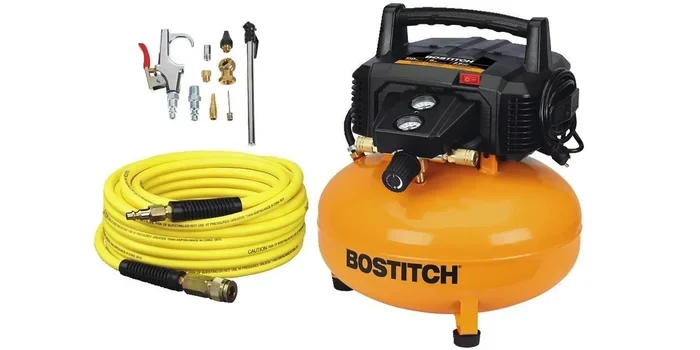
Pancake compressors are flat and compact. They get their name from their low-profile tank shape. These units are lightweight and easy to store in a garage or shed. They typically have a small tank, around 1 to 6 gallons.
Pancake compressors work well for car tires. They can reach the 30 to 35 PSI you need quickly. However, they may pause to refill the tank if you are inflating multiple tires at once. For most people with one or two cars, this is not a problem.
These compressors are affordable too. You can find a solid pancake unit for under $100. They are a great entry point for anyone asking, “what size air compressor do I need for car tires.”
Hot-Dielectric Compressors
Hot-dielectric compressors are a step up from pancake models. They have a larger tank and a more powerful motor. This means they can inflate tires faster and handle more tires in a row without stopping.
These units are ideal if you have multiple vehicles or a larger SUV or truck. The bigger tank holds more compressed air. You can fill two or three tires before the motor kicks in to refill the tank.
Hot-dielectric compressors cost more, usually between $150 and $300. But they offer better performance and durability. If you use your compressor often, this is a solid investment.
Portable 12V Tire Inflators
If you want something you can keep in your trunk, a 12V tire inflator is the way to go. These small units plug into your car’s cigarette lighter or 12V outlet. They are perfect for emergencies on the road.
Most 12V inflators can reach 100 to 150 PSI. They are not as fast as a full-size compressor, but they get the job done. You can inflate a flat tire in about 5 to 10 minutes.
Brands like Viair, Slime, and AstroAI make reliable 12V inflators. They are compact, affordable, and a must-have for any road trip kit.
Stationary Compressors for the Garage
If you have a dedicated garage space, a larger stationary compressor might be the best choice. These units have big tanks, often 30 to 60 gallons. They can power pneumatic tools too, like impact wrenches and nail guns.
Stationary compressors are overkill if you only need to inflate tires. But if you do DIY car maintenance or woodworking, they offer great versatility. Just keep in mind they are heavy and need a permanent spot in your garage.
How to Choose the Right Size Compressor
So how do you actually pick the right unit? The answer depends on your vehicle, how often you use it, and what else you plan to do with the compressor. Let us walk through the decision process step by step.
Step 1: Check Your Tire Pressure Requirements
Open your driver’s door and look for the tire pressure sticker. Or check your owner’s manual. Write down the recommended PSI for your front and rear tires. Most cars need 30 to 35 PSI. Trucks and SUVs may need 40 to 65 PSI.
This number is your starting point. Your compressor must be able to reach at least this pressure. Most compressors listed for car tires go well above 100 PSI, so this is rarely a problem.
Step 2: Consider How Many Tires You Inflate at Once
If you only need to top off one tire now and then, a small pancake compressor works fine. But if you want to inflate all four tires in one session, you need a unit with a larger tank and higher CFM.
A compressor with a 6-gallon tank and 4 CFM can handle all four car tires without stopping. Smaller tanks will need to pause and refill between tires. This is not a dealbreaker, but it adds a few extra minutes to the job.
Step 3: Think About Portability
Where will you store your compressor? If you have a garage, a larger unit is fine. If you need to move it around or take it on trips, go for something lightweight and compact.
Portable 12V inflators are the most travel-friendly option. Pancake compressors are also easy to move around the garage. Stationary compressors stay in one place.
Step 4: Factor in Your Budget
Compressors range from $30 for a basic 12V inflator to $300 or more for a large stationary unit. You do not need to spend a lot for great tire inflation results.
A solid portable compressor for car tires costs between $50 and $150. This gives you good performance without breaking the bank. Think about how often you will use it and what other tasks you need it for.
Also, consider the cost of running your compressor at home. If you use a generator to power it during outages, you might want to check out our guide on how much generator do I need to make sure your power setup can handle it. And if you are shopping for a generator for your home, our article on what kind of generator do I need for my house can help you find the right match.
Quick Comparison Table
| Compressor Type | Tank Size | PSI Range | CFM | Best For | Price Range |
|---|---|---|---|---|---|
| 12V Portable Inflator | None (no tank) | Up to 150 PSI | 0.5 – 1.5 | Road trips, emergencies | $30 – $80 |
| Pancake Compressor | 1 – 6 gallons | Up to 150 PSI | 2 – 4 | Home garage, light use | $50 – $120 |
| Hot-Dielectric Compressor | 6 – 20 gallons | Up to 200 PSI | 4 – 6 | Multiple tires, frequent use | $150 – $300 |
| Stationary Compressor | 30 – 60+ gallons | Up to 200+ PSI | 5 – 10+ | Garage workshop, multi-use | $300 – $800+ |
This table should help you compare your options quickly. Each type has its strengths. Pick the one that fits your needs and budget best.
Quick Tips for Tire Inflation With Your Compressor
Using your compressor the right way makes a big difference. Follow these simple tips for the best results every time.
- Check tire pressure when tires are cold. Driving heats up the air inside the tire and raises the PSI reading. Check before you drive or wait at least three hours after driving.
- Use a quality tire pressure gauge. The gauge on your compressor may not be perfectly accurate. A separate digital gauge gives you a more reliable reading.
- Do not overinflate. Going above the recommended PSI is just as bad as going below. Stick to the number on your door sticker.
- Check your compressor’s duty cycle. This is the amount of time the motor can run continuously before it needs to cool down. Most home compressors have a 50% duty cycle, meaning 5 minutes on and 5 minutes off.
- Keep your compressor clean and maintained. Drain the tank moisture after each use. Check hoses for leaks. A well-maintained compressor lasts for years.
- Store your compressor in a dry place. Moisture and dust can damage the motor and tank over time.
These small habits go a long way. They keep your compressor running smoothly and your tires properly inflated.
Common Mistakes People Make When Buying a Compressor
There are a few common pitfalls that buyers fall into. Avoiding these mistakes saves you time, money, and frustration.
Mistake 1: Buying based on PSI alone. PSI is important, but CFM matters just as much. A compressor with high PSI but low CFM will take forever to fill a tire. Always check both numbers.
Mistake 2: Ignoring tank size. A tiny tank means the compressor stops frequently to refill. If you need to inflate all four tires, a larger tank makes the process much smoother.
Mistake 3: Choosing the wrong power source. Some compressors need 120V AC power. Others run on 12V DC from your car. Make sure you have the right power source where you plan to use the compressor.
Mistake 4: Overlooking the hose and fittings. A short or stiff hose makes the job harder. Look for compressors that come with a flexible air hose and the right tire chuck for your valve stems.
Mistake 5: Not reading reviews. Price matters, but so does reliability. Spending a few extra dollars on a well-reviewed compressor saves you from buying a replacement later. If you are also considering a generator to power your compressor at home, you might want to learn about how to size a generator to make sure your electrical setup is adequate.
Expert Insights: What Professionals Recommend
Professional mechanics and tire shops have strong opinions about the best compressors for car tires. Here is what the experts say.
Most tire professionals recommend a compressor with at least 4 CFM and a tank size of 6 gallons or more for home use. This combination inflates all four car tires in under 10 minutes without the motor stopping.
For on-the-go needs, experts swear by 12V portable inflators. They are compact, reliable, and can save you from a roadside emergency. Many tire shops carry these units at the counter for a reason.
The experts also emphasize the importance of a good tire pressure gauge. Even the best compressor can have a slightly inaccurate built-in gauge. A separate digital gauge costs under $15 and gives you peace of mind.
One final expert tip: always keep a tire inflator in your car, even if you have a full-size compressor at home. Flat tires do not wait for you to get home. A portable inflator gets you to the nearest gas station or tire shop safely.
Key Takeaways
- Most car tires need 30-35 PSI: A small portable compressor handles this easily.
- CFM matters just as much as PSI: Look for at least 2 CFM for fast inflation.
- Pancake and hot-dielectric compressors are top choices: They are compact, affordable, and reliable.
- Tank size affects refill speed: Larger tanks mean fewer pauses while inflating.
- Always check your tire pressure before buying: Your vehicle manual has the exact numbers you need.
- Portability is key for road trips: A compact 12V compressor fits in your trunk perfectly.
Finding the right what size air compressor do I need for car tires does not have to be confusing. Focus on PSI, CFM, and tank size. Match these to your vehicle and how often you plan to use the compressor. You will be inflating tires like a pro in no time.
A good compressor is a smart investment. It saves you trips to the gas station. It keeps your tires at the right pressure for safety and fuel economy. And it gives you peace of mind knowing you are prepared for a flat or a pressure drop.
Start with your vehicle’s recommended PSI. Pick a compressor that meets or exceeds that number with at least 2 CFM. Choose a tank size and portability level that fits your lifestyle. Whether you go with a pancake compressor, a hot-dielectric unit, or a 12V portable inflator, you are making a smart move for your car and your wallet.
Take a few minutes today to check your tire pressure. If it is low, grab your new compressor and get to work. Your tires will thank you with better performance, longer life, and safer driving every single day.
Frequently Asked Questions
Can I use any air compressor for car tires?
Most air compressors can inflate car tires, but you need to check the PSI and CFM ratings first. Your compressor must reach at least 30 to 35 PSI, which is the typical pressure for passenger car tires. A unit with at least 2 CFM will inflate tires quickly and efficiently.
Is a 1-gallon air compressor big enough for car tires?
A 1-gallon compressor can inflate car tires, but it will pause frequently to refill the tank. It works fine for topping off one or two tires. However, if you need to inflate all four tires at once, a larger tank is much more convenient.
Do I need a generator to run my air compressor at home?
If you experience power outages or do not have a reliable outlet, a generator can power your compressor. The wattage you need depends on your compressor’s motor size. Check out our guide on how much generator do I need to determine the right size for your setup.
How often should I check my tire pressure?
You should check your tire pressure at least once a month. Temperature changes can cause pressure to drop over time. Also check your tires before any long road trip. A quick check takes just a few minutes and can prevent costly tire damage.
What is the difference between a pancake and a hot-dielectric compressor?
A pancake compressor has a small, flat tank and is lightweight and affordable. A hot-dielectric compressor has a larger tank and a more powerful motor. It can inflate tires faster and handle multiple tires without stopping. Hot-dielectric models cost more but offer better performance for frequent use.
Can a 12V portable inflator fill a completely flat tire?
Yes, a 12V portable inflator can fill a flat tire, but it takes longer than a full-size compressor. Most 12V inflators can reach 100 PSI or more. However, they work best for topping off tires that are low rather than completely flat. For a completely flat tire, you may want to call for roadside assistance first.
=== CONCLUSION ===
Choosing the right air compressor for car tires comes down to matching a few key specs to your needs. Know your tire pressure requirements. Understand PSI and CFM ratings. Pick the compressor type that fits your lifestyle and budget.
Whether you choose a compact 12V inflator for the road, a pancake compressor for the garage, or a larger hot-dielectric unit for frequent use, the right tool makes tire inflation quick and painless. Keep this guide handy for reference, and you will always know exactly what to look for.
Take action today. Check your tire pressure, pick the right compressor, and enjoy safer, more efficient driving. Your car and your wallet will thank you.