
How Long Can You Safely Drive With a Bad Ac Compressor
Driving with a bad AC compressor is possible in the short term, but it comes with real risks to your engine and wallet. Most experts say you can safely drive a few days to a couple of weeks if the compressor is failing but not seized. However, ignoring the problem can lead to costly repairs, engine overheating, and even breakdowns on the road. This guide breaks down exactly how long you can go, what warning signs to watch for, and when it is time to stop driving and get help.
You are cruising down the highway, and the air conditioning suddenly stops blowing cold air. Maybe it was a gradual decline. Maybe it was a loud clunk that made you jump. Either way, the question hits you right away: how long can you drive with a bad AC compressor? It is a stressful situation, especially during a heatwave. You want to keep driving to your destination, but you also do not want to cause more damage to your car.
The short answer is that you can often drive for a few days to a couple of weeks with a failing AC compressor. But the longer answer depends on what kind of failure you are dealing with. Is the compressor clutch worn out? Is the compressor seized? Is there a refrigerant leak? Each scenario changes the timeline and the risk level. In this article, we will walk through everything you need to know about driving with a bad AC compressor, the warning signs to watch for, and what to do next.
Let us be clear from the start. Your AC compressor is not just about comfort. It plays a role in your car’s overall engine health. Ignoring a bad compressor can snowball into bigger, more expensive problems. So whether you are dealing with a noisy compressor or a completely dead one, this guide will help you make the right call.
Key Takeaways
- Short-term driving is possible: You can typically drive 3 to 14 days with a bad compressor if it is not seized.
- Watch for warning signs: Loud noises, warm air, and refrigerant leaks mean the compressor is failing fast.
- Risks are real: A seized compressor can damage the serpentine belt, overheat the engine, and cause stalling.
- Repair costs vary: AC compressor replacement runs between $500 and $1,500 depending on your vehicle.
- Prevention saves money: Regular AC maintenance and early detection can prevent full compressor failure.
- Know when to stop: If you notice smoke, grinding, or belt damage, pull over and seek help immediately.
📑 Table of Contents
What Does an AC Compressor Do?
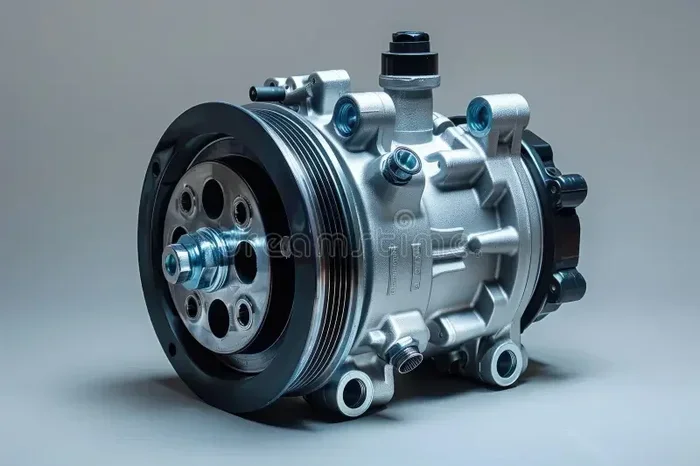
Before we talk about how long you can drive with a bad one, it helps to understand what the compressor actually does. The AC compressor is the heart of your car’s air conditioning system. It pressurizes the refrigerant and moves it through the system. This process is what makes the air inside your car feel cool and comfortable.
Here is a simple way to think about it. The compressor works like a pump. It takes low-pressure refrigerant gas and squeezes it into high-pressure gas. That gas then flows to the condenser, where it releases heat and becomes a liquid. From there, it moves through the expansion valve and evaporator, which cools the air that blows into your cabin.
When the compressor starts to fail, this whole cycle breaks down. You might still get some airflow, but it will not be cold. In worse cases, the compressor can seize entirely, which causes a domino effect of mechanical problems.
Signs Your AC Compressor Is Going Bad
Not all compressor failures happen overnight. Most of the time, there are warning signs. Catching them early can save you from a roadside breakdown. Here are the most common symptoms of a failing AC compressor:
Warm Air From the Vents
This is the most obvious sign. If your AC is blowing room-temperature air or even warm air, the compressor may not be pumping refrigerant properly. It could be a simple refrigerant leak, or it could mean the compressor itself is failing.
Strange Noises
A healthy AC compressor runs quietly. If you hear grinding, squealing, or loud clicking when you turn on the AC, that is a red flag. These sounds often mean internal components are wearing out or breaking apart.
AC Compressor Clutch Not Engaging
The compressor has a clutch that engages and disengages the system. If the clutch is stuck, the compressor will not work at all. You might notice that the AC button does nothing, or the system cycles on and off randomly.
Refrigerant Leaks
If you see oily residue or puddles under your car near the front, you may have a refrigerant leak. Low refrigerant puts extra strain on the compressor and can cause it to overheat and fail.
Tripping Circuit Breakers or Fuses
In some vehicles, a failing compressor can cause electrical issues. If your AC keeps blowing fuses or tripping breakers, the compressor may be drawing too much power.
How Long Can You Drive With a Bad AC Compressor?
This is the question everyone wants answered. The truth is, there is no single answer. How long you can drive depends on the type of failure and how badly damaged the compressor is. Let us break it down by scenario.
Scenario 1: The Compressor Clutch Is Worn but the Compressor Still Spins
This is the best-case scenario. If the clutch is worn out but the compressor itself is still turning, you can usually keep driving for a week or more without major issues. The AC simply will not work, but the rest of your car should be fine. You are losing comfort, but not risking engine damage.
In this case, you can drive to a nearby mechanic at your convenience. There is no rush. Just get it fixed when you have the time and budget. Think of it like a broken radio in your car. Annoying, but not dangerous.
Scenario 2: The Compressor Is Making Noise but Still Working
If the compressor is noisy but still functioning, you might have a few days before it completely fails. The noise usually means internal bearings or pistons are wearing down. You should get it checked soon, but you do not need to stop driving immediately.
Keep an eye on the temperature gauge. If you notice the engine running hotter than usual, pull over and let it cool down. A noisy compressor can put extra load on the engine, especially in stop-and-go traffic.
Scenario 3: The Compressor Is Seized
This is the worst-case scenario. A seized compressor means the internal parts have locked up. When you try to start the car or turn on the AC, you might hear a loud bang or feel a shudder. In this situation, driving is risky.
A seized compressor can snap the serpentine belt, which powers other critical systems like the alternator and water pump. If the belt breaks while you are driving, you could lose power steering, battery charging, and engine cooling. That is a dangerous situation. Do not drive with a seized compressor unless it is an absolute emergency and you can get the belt removed first.
Scenario 4: Refrigerant Leak with Compressor Damage
If you have a refrigerant leak along with compressor damage, the timeline shortens. The compressor relies on refrigerant for lubrication. Without enough refrigerant, the internal parts grind and overheat. You might get a few days of driving, but the compressor could seize at any moment.
In this case, the safest move is to get the car towed to a repair shop. Continuing to drive with low refrigerant and a damaged compressor almost always leads to a complete breakdown.
Risks of Driving With a Bad AC Compressor
It is tempting to keep driving when the AC goes out, especially if the weather is mild. But there are real risks you should know about. Here is what can go wrong if you ignore a bad compressor:
- Engine overheating: A failing compressor puts extra load on the engine. In hot weather or heavy traffic, this can cause the engine to overheat.
- Serpentine belt damage: A seized compressor can damage or snap the serpentine belt, which powers multiple engine systems.
- Stalling and breakdowns: If the belt fails, the engine may stall. You could be left stranded on the side of the road.
- Compressor debris: When a compressor fails internally, metal fragments can circulate through the AC system and clog other components.
- Higher repair costs: The longer you drive with a bad compressor, the more damage you cause. What starts as a $600 repair can turn into a $1,500+ job.
Think of it this way. Driving with a bad AC compressor is like driving with a flat tire. You can do it for a short distance, but you risk damaging the rim, the suspension, and other parts. The longer you wait, the more it costs to fix.
Now, you might wonder about the broader picture of vehicle maintenance and costs. For example, many car owners also deal with generator-related expenses when preparing for emergencies or power outages. If you are curious about how long a portable generator can run continuously, that is a separate topic entirely. But it is worth noting that just like generators, car components have a lifespan, and understanding that timeline helps you plan and budget better.
AC Compressor Repair vs. Replacement Costs
Once you know you have a bad compressor, the next question is usually about cost. How much will it cost to fix? Should you repair or replace? Here is a general breakdown of what to expect.
| Repair Option | Average Cost | When It Makes Sense |
|---|---|---|
| AC Compressor Clutch Replacement | $200 – $500 | When the compressor itself is fine but the clutch is worn |
| AC Compressor Rebuild | $400 – $800 | When internal parts are worn but the housing is intact |
| AC Compressor Full Replacement | $500 – $1,500 | When the compressor is seized or severely damaged |
| AC System Flush + Replacement | $800 – $2,000 | When debris has contaminated the entire AC system |
The cost depends on your vehicle make and model, the extent of the damage, and labor rates in your area. Luxury vehicles and newer models tend to cost more because the parts are more complex.
If the compressor is under warranty or covered by an extended service plan, you may pay little to nothing out of pocket. Always check with your dealer or mechanic before committing to a repair.
Cost is also a factor when considering other vehicle investments. For instance, if you are thinking about purchasing a whole-home generator for backup power, the price point can vary widely. Understanding how much a whole-home generator costs can help you compare long-term investments in home and vehicle reliability.
Can You Save Money by Repairing Instead of Replacing?
In some cases, yes. If only the clutch has failed, replacing just the clutch is much cheaper than replacing the entire compressor. A skilled mechanic can often do this in a few hours.
However, if the compressor has seized internally or has significant damage, a rebuild is not always an option. In those cases, full replacement is the safest and most reliable choice. Trying to repair a badly damaged compressor often leads to repeat failures and more expenses down the road.
How to Prevent AC Compressor Failure
The best way to deal with a bad AC compressor is to prevent one from happening in the first place. Regular maintenance can extend the life of your AC compressor and save you from unexpected breakdowns. Here are some simple tips:
- Run your AC regularly: Even in winter, run the AC for a few minutes once a week. This keeps the seals lubricated and prevents them from drying out.
- Check refrigerant levels: Low refrigerant is one of the top causes of compressor failure. Have a mechanic check the levels during routine service.
- Replace the cabin air filter: A clogged filter forces the AC system to work harder, which puts extra strain on the compressor.
- Listen for unusual sounds: If you hear grinding or squealing from the front of the car, get it checked right away.
- Address leaks immediately: If you notice refrigerant leaks, have them repaired before they cause compressor damage.
- Keep the condenser clean: Debris like leaves and dirt can block the condenser and reduce AC efficiency, stressing the compressor.
These steps are easy and inexpensive. They can add years to the life of your AC compressor and keep you cool on every drive.
When Should You Stop Driving and Get Help?
There are certain situations where you should not keep driving at all. If you experience any of the following, pull over safely and call for roadside assistance:
- Smoke or burning smells: This could mean the serpentine belt has snapped or the compressor has seized and is damaging other components.
- Engine temperature gauge in the red: A failed compressor can cause the engine to overheat quickly.
- Complete loss of power steering: If the serpentine belt has broken, you will lose power steering. This makes the car very hard to control.
- Loud grinding or metal-on-metal sounds: This means internal compressor parts have broken and are damaging the system further.
In these situations, it is not worth the risk. Call a tow truck and have the car taken to a trusted mechanic. Your safety matters more than getting to your destination on time.
If you are also dealing with other vehicle systems and wondering about maintenance timelines, it is worth noting that generators have their own lifespan expectations. Understanding how long a generator lasts can give you a broader perspective on maintaining mechanical systems in your life, whether in your car or at home.
The Bottom Line
So, how long can you safely drive with a bad AC compressor? In most cases, you have a few days to a couple of weeks. But that timeline shrinks fast if the compressor is seized, leaking refrigerant, or making loud noises. The smartest thing you can do is get the problem diagnosed early and fixed before it causes more damage.
Your AC compressor is more than just a comfort feature. It is an essential part of your car’s engine system. Taking care of it saves you money, keeps you safe, and prevents unexpected breakdowns. Do not ignore the warning signs. Listen to your car, and it will tell you exactly when it needs help.
Whether you are dealing with a noisy compressor today or trying to plan for future vehicle and home maintenance costs, staying informed is your best defense. A little attention now can save you a lot of trouble later.
And if you are ever in the market for a reliable power source for your home, knowing the cost of a generator or understanding how to size a generator properly can make all the difference in making a smart investment.
Frequently Asked Questions
Can I drive with a bad AC compressor if the AC is off?
In most cases, yes. If the compressor is not seized and the serpentine belt is intact, you can drive with the AC turned off. However, if the compressor has seized, it may still lock the belt and cause problems even with the AC off. Always listen for unusual noises and watch your temperature gauge.
How much does it cost to replace an AC compressor?
The average cost to replace an AC compressor ranges from $500 to $1,500, including parts and labor. The exact price depends on your vehicle make, model, and the extent of the damage. Luxury vehicles and newer models tend to cost more.
Will a bad AC compressor affect engine performance?
Yes, it can. A failing compressor puts extra load on the engine, which can reduce fuel efficiency and cause overheating. In severe cases, a seized compressor can snap the serpentine belt and cause the engine to stall.
Can low refrigerant cause AC compressor failure?
Absolutely. Low refrigerant means the compressor does not get proper lubrication. This causes the internal parts to grind, overheat, and eventually fail. Keeping refrigerant levels topped off is one of the best ways to prevent compressor damage.
How do I know if my AC compressor is seized?
Signs of a seized compressor include a loud bang when you start the car, the serpentine belt snapping, grinding noises from the front of the engine, and the AC not working at all. If you suspect a seized compressor, do not keep driving. Have the car towed to a mechanic.
Can I just replace the AC compressor clutch instead of the whole compressor?
Yes, if the compressor itself is still in good condition but the clutch has worn out, replacing just the clutch is a cost-effective option. This repair typically costs between $200 and $500 and takes a few hours at a repair shop.
=== CONCLUSION ===
Driving with a bad AC compressor is something many car owners face at some point. The good news is that short-term driving is usually safe, as long as the compressor is not seized and there are no other serious symptoms. But you should not treat this as a long-term solution. The risks of engine damage, belt failure, and escalating repair costs are real.
Pay attention to the warning signs. Get your compressor checked as soon as you notice problems. And when in doubt, trust a professional mechanic to give you an honest assessment. Your wallet and your safety will thank you.
Stay proactive with your car maintenance, and you will avoid most AC compressor problems before they start. Drive safe, stay cool, and do not let a bad compressor ruin your day.


One Comment