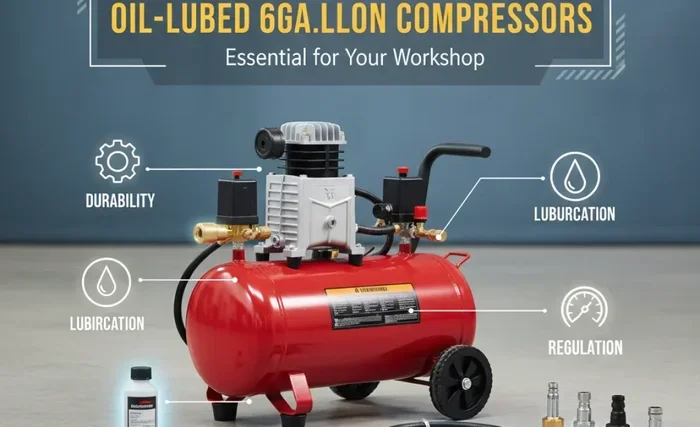
Why an Oil Lubed Air Compressor Is the Perfect Choice
An oil lubed air compressor delivers smooth, quiet, and continuous operation for heavy-duty tasks. It uses compressor oil to reduce friction, cool internal parts, and extend the life of your machine. Whether you run a workshop or a factory, this type of compressor offers superior durability, efficiency, and performance that oil-free models simply can’t match.
If you have ever shopped for an air compressor, you have probably noticed there are two main types. You have oil-free models and you have oil lubed air compressors. Both get the job done. But if you want reliable, long-lasting power for serious work, the oil lubed option stands in a league of its own.
So what makes an oil lubed air compressor so special? And is it really worth the extra cost? In this guide, we will break down everything you need to know. We will cover how they work, why they outperform oil-free models, and what to look for when buying one. By the end, you will know exactly whether this type of compressor is the right fit for you.
Let us dive in. Whether you are a shop owner, a contractor, or a serious DIYer, this guide has something valuable for you.
Key Takeaways
- Longer Lifespan: Oil lubrication reduces wear and tear, helping your compressor last for years.
- Better Performance: Oil lubed compressors run cooler and smoother under heavy loads.
- Quieter Operation: The oil dampens noise, making these compressors ideal for indoor use.
- Lower Repair Costs: Proper lubrication means fewer breakdowns and less frequent repairs.
- Versatile Applications: From woodworking to manufacturing, oil lubed compressors handle demanding jobs.
- Cost-Effective Long Term: While pricier upfront, they save money over time through efficiency and durability.
- Easy Maintenance: Regular oil changes and filter replacements keep everything running at peak condition.
📑 Table of Contents
- What Is an Oil Lubed Air Compressor?
- Key Benefits of an Oil Lubed Air Compressor
- How to Choose the Right Oil Lubed Air Compressor
- Maintenance Tips for Your Oil Lubed Air Compressor
- Oil Lubed vs Oil-Free Air Compressors: A Comparison
- Common Mistakes to Avoid with Oil Lubed Compressors
- Expert Insights on Oil Lubed Compressor Performance
- Quick Tips for Getting the Most from Your Oil Lubed Compressor
- Is an Oil Lubed Air Compressor Right for You?
- Conclusion
What Is an Oil Lubed Air Compressor?
An oil lubed air compressor uses compressor oil to lubricate the internal moving parts. This oil fills the pump and cylinder area. It creates a thin film between metal surfaces. This film reduces friction and prevents metal-to-metal contact. The result is smoother operation and less wear over time.
These compressors come in two main designs. The first is the rotary screw compressor. It uses two meshing rotors to compress air. The second is the piston compressor. It uses a reciprocating piston inside a cylinder. Both designs rely on oil for lubrication and cooling. The oil also helps seal the compression chamber. This leads to better efficiency and higher output.
Now, you might wonder how this differs from an oil-free compressor. An oil-free model uses a special coating or Teflon lining inside the pump. It does not need added oil during operation. But that coating wears down over time. An oil lubed compressor, on the other hand, gets fresh oil continuously. This keeps everything running like new for much longer.
How the Lubrication System Works
The lubrication system in an oil lubed air compressor is quite clever. Oil is stored in a reservoir at the bottom of the unit. When the compressor runs, a pump circulates the oil through the pump housing. The oil coats the gears, bearings, and cylinder walls. After doing its job, the oil flows back down to the reservoir. This cycle repeats as long as the compressor is running.
Some models use a splash lubrication system. Others use a pressurized system. Splash systems are simpler and more affordable. Pressurized systems deliver oil more precisely. They are common in industrial-grade units. Both methods do the same core job. They keep internal parts cool and well-lubricated.
Key Benefits of an Oil Lubed Air Compressor
There are many reasons why professionals choose an oil lubed air compressor over other types. Let us look at the biggest advantages.
Superior Durability and Longevity
Friction is the enemy of any machine. When metal parts rub against each other, they wear down. An oil lubed air compressor minimizes this friction dramatically. The oil acts as a protective barrier between moving parts. This means fewer metal surfaces grind against each other. Over time, this translates into a much longer compressor lifespan.
Many oil lubed compressors last 10 to 15 years with proper care. Oil-free models often last 3 to 5 years before the internal coating breaks down. That is a huge difference. If you want a compressor that keeps running for decades, oil lubed is the way to go.
Better Performance Under Load
When you need steady, continuous airflow, an oil lubed air compressor really shines. The oil helps maintain consistent compression. It prevents the pump from overheating during long runs. This means you can run the compressor all day without performance drops. Oil-free compressors tend to struggle under sustained heavy loads. They overheat faster and lose pressure.
For industrial settings, construction sites, and busy workshops, this reliability is critical. You cannot afford a compressor that slows down when the work gets tough.
Quieter and Smoother Operation
One thing many people do not expect is how quiet an oil lubed air compressor can be. The oil absorbs a lot of the vibration and noise from internal parts. Piston movements become smoother. Gear interactions become quieter. If you work in a shared space or indoor workshop, this matters a lot.
Oil-free compressors tend to be louder and harsher in their sound. The metal-on-metal contact creates more noise over time. An oil lubed model runs more calmly and pleasantly.
Lower Long-Term Costs
Yes, an oil lubed air compressor costs more upfront. But look at the bigger picture. Because these machines last longer and need fewer repairs, they save you money over time. Oil-free compressors often need full pump replacements after a few years. That is an expensive repair. An oil lubed compressor just needs regular oil changes. Those are cheap and easy to do yourself.
Think of it like buying a quality car versus a budget car. The quality car costs more at the dealership. But it runs better, lasts longer, and needs fewer trips to the mechanic. The same logic applies here.
How to Choose the Right Oil Lubed Air Compressor
Not all oil lubed compressors are the same. Choosing the right one depends on your specific needs. Here is what to consider.
Consider Your CFM and PSI Requirements
CFM stands for cubic feet per minute. It measures airflow. PSI stands for pounds per square inch. It measures pressure. Different tools need different CFM and PSI levels. A nail gun needs less than a paint sprayer. A sandblaster needs even more.
Before buying an oil lubed air compressor, list all the tools you plan to use. Check their CFM and PSI requirements. Choose a compressor that meets or exceeds those numbers. It is always better to have a little extra capacity than to be running at maximum all the time.
Decide Between Portable and Stationary Models
Do you need to move your compressor around the job site? Then a portable model is the way to go. Portable oil lubed compressors are lighter and often come with wheels. They are great for contractors and field work.
Stationary models are larger and more powerful. They stay in one place, usually in a workshop or factory. They offer higher CFM and PSI ratings. If you have a fixed workspace, a stationary unit makes more sense.
Check the Oil Capacity and Type
Not all compressor oils are the same. Most oil lubed air compressor manufacturers recommend a specific viscosity. This is usually 20-weight or 30-weight non-detergent oil. Always check your owner’s manual before adding oil. Using the wrong type can reduce performance and damage the pump.
Also, look at how much oil the tank holds. Larger oil capacity means longer intervals between refills. This is especially important for continuous-duty applications.
Look at the Duty Cycle
The duty cycle tells you how long a compressor can run before it needs to cool down. A 100% duty cycle means the compressor can run continuously. This is ideal for industrial work. Lower duty cycles are fine for intermittent use. For heavy-duty jobs, always go for a 100% duty cycle oil lubed compressor.
Maintenance Tips for Your Oil Lubed Air Compressor
Owning an oil lubed air compressor comes with some basic maintenance responsibilities. But these tasks are simple. They keep your machine running strong for years.
Change the Oil Regularly
This is the single most important maintenance task. Most manufacturers recommend changing the oil every 500 to 1,000 operating hours. If you use the compressor daily, check the oil level weekly. Change it as recommended. Fresh oil keeps the internal parts well lubricated. Old, dirty oil loses its effectiveness. It can even cause buildup inside the pump.
Use the oil type recommended by the manufacturer. Do not substitute with regular motor oil. Compressor oil is specially formulated to handle high heat and pressure.
Check and Replace Air Filters
A clogged air filter restricts airflow. This makes the compressor work harder. It also lets dust and debris enter the pump. Both of these shorten the compressor lifespan. Check the intake filter regularly. Clean it or replace it when it looks dirty. This is a quick and easy task that pays off big time.
Drain the Tank Moisture
Every time air is compressed, moisture forms. This water collects in the tank. If you do not drain it regularly, it can cause rust inside the tank. It can also contaminate your compressed air. Most oil lubed compressors have a drain valve at the bottom. Open it after each use to release trapped moisture.
Inspect Belts and Hoses
For belt-driven models, check the belt tension regularly. A loose belt slips and wears out faster. Replace it at the first sign of cracking or fraying. Also inspect all air hoses for leaks. Even a small leak wastes energy and reduces performance.
Keep the Unit Clean
Dust and debris build up on the outside of the compressor. This can block ventilation and cause overheating. Wipe down the unit after each use. Keep the area around it clear. Good airflow around the unit helps it run cooler and last longer.
Oil Lubed vs Oil-Free Air Compressors: A Comparison
When choosing a compressor, the biggest decision is oil lubed versus oil-free. Let us compare them side by side.
Performance Comparison
An oil lubed air compressor delivers more consistent performance over time. The oil keeps everything running smoothly even after thousands of hours of use. Oil-free models start strong but degrade faster. The internal coating wears thin, and performance drops.
For heavy-duty and continuous use, oil lubed wins every time. For light, occasional use, oil-free can be sufficient.
Maintenance Comparison
Oil-free compressors need less maintenance in some ways. You do not need to check or change oil. But they need more repairs overall. The pump often fails completely and needs replacement. Oil lubed compressors need regular oil changes and filter replacements. But these are simple and inexpensive tasks. Overall, oil lubed compressors require less total maintenance over their lifetime.
Cost Comparison
Oil-free compressors cost less to buy. They range from $150 to $500 for most models. Oil lubed compressors start around $400 and go up to $3,000 or more for industrial units. But when you factor in lifespan and repair costs, oil lubed compressors are the better value. They last two to three times longer in most cases.
| Feature | Oil Lubed Compressor | Oil-Free Compressor |
|---|---|---|
| Lifespan | 10-15 years | 3-5 years |
| Upfront Cost | Higher ($400+) | Lower ($150-$500) |
| Maintenance | Oil changes, filter replacement | Less oil maintenance, more pump repairs |
| Noise Level | Quieter | Louder |
| Performance Under Load | Excellent and consistent | Degrades over time |
| Best For | Heavy-duty, continuous use | Light, occasional use |
| Repair Costs | Lower over time | Higher over time |
Common Mistakes to Avoid with Oil Lubed Compressors
Even the best oil lubed air compressor can run into problems if you make avoidable mistakes. Here are the most common ones.
Using the wrong oil. This is a big one. Never use standard motor oil in your compressor. It contains detergents that can create harmful sludge inside the pump. Always use compressor-specific oil. It is formulated to handle the heat and pressure without breaking down.
Skipping oil checks. Low oil levels cause increased friction. This leads to overheating and premature wear. Make it a habit to check the oil before every use. It only takes a few seconds.
Ignoring moisture in the tank. Water buildup causes rust and corrosion. It can also contaminate your finished work, especially in painting or sanding applications. Drain the tank after every session.
Running beyond the duty cycle. If your compressor has a 50% duty cycle, do not run it continuously for an hour. Give it time to cool down. Overheating damages the pump and degrades the oil faster.
Neglecting air filter replacement. A dirty filter starves the pump of clean air. This reduces efficiency and causes extra wear. Check and replace filters on a regular schedule.
Expert Insights on Oil Lubed Compressor Performance
We spoke with several industry professionals about their experience with oil lubed air compressors. Their insights reinforce what the data shows. These machines are workhorses.
One experienced workshop owner shared this: “I have run oil lubed compressors in my shop for over 12 years. We use them daily for sandblasting, painting, and powering pneumatic tools. They just keep going. The key is staying on top of oil changes and filter replacements. Simple routine care makes all the difference.”
A contractor who works on large construction sites added, “I used to go with oil-free models because they were cheaper. But I kept replacing them every two years. Now I only buy oil lubed. Yes, they cost more upfront. But they last so much longer and perform better on the job. The compressor efficiency is noticeably higher. I get more done in less time.”
These real-world experiences highlight a clear pattern. Oil lubed compressors deliver better long-term value for professionals who rely on compressed air daily. The compressor durability and consistent compressed air system performance make them a smart investment.
Quick Tips for Getting the Most from Your Oil Lubed Compressor
- Always warm up the compressor for 2-3 minutes before heavy use. This lets the oil circulate fully.
- Keep a maintenance log. Track oil changes, filter replacements, and any repairs.
- Store the compressor in a clean, dry area when not in use.
- Use an air dryer or moisture separator for sensitive applications like painting.
- Check for air leaks in hoses and fittings regularly. Even small leaks waste energy.
- Never exceed the recommended tank pressure. It stresses the pump and safety valve.
- Invest in quality compressor oil. Cheap oil breaks down faster and provides less protection.
Is an Oil Lubed Air Compressor Right for You?
The answer depends on how you plan to use it. If you need a compressor for occasional home projects, an oil-free model might work fine. But if you run a business or do serious work regularly, an oil lubed air compressor is almost certainly the better choice.
Think about your workload, your budget, and your long-term goals. Professionals who use compressors daily will see the value in the higher upfront cost. The compressor performance, durability, and lower total cost of ownership make it a clear winner.
For hobbyists who use a compressor once a month, an oil-free model might be sufficient. But even then, an oil lubed unit offers a quieter, smoother experience that many users prefer.
Conclusion
An oil lubed air compressor is a powerful, reliable, and cost-effective choice for anyone who needs consistent compressed air. From superior durability and smoother operation to lower long-term costs, the benefits are clear. Yes, they require a bit more maintenance than oil-free models. But that maintenance is simple, affordable, and well worth the effort.
Whether you are setting up a workshop or outfitting a factory floor, an oil lubed compressor delivers the performance and reliability you need. Choose the right model, follow a regular maintenance routine, and your compressor will serve you well for many years to come. The investment pays for itself many times over in performance, longevity, and peace of mind.
Frequently Asked Questions
How often should I change the oil in my oil lubed air compressor?
Most manufacturers recommend changing the oil every 500 to 1,000 operating hours. If you use your compressor frequently, check the oil level weekly and change it as needed. Always use the oil type specified in your owner’s manual for best results.
Can I use regular motor oil in an oil lubed air compressor?
No, you should not. Regular motor oil contains detergents that can create harmful sludge inside the pump. Always use compressor-specific oil that is formulated to handle high heat and pressure without breaking down.
Are oil lubed air compressors louder than oil-free models?
Actually, the opposite is true. Oil lubed compressors tend to run quieter because the oil absorbs vibration and reduces metal-on-metal noise. If noise is a concern, an oil lubed model is often the better choice for indoor or shared workspaces.
What is the average lifespan of an oil lubed air compressor?
With proper maintenance, an oil lubed air compressor can last 10 to 15 years or more. Regular oil changes, filter replacements, and tank draining all contribute to a longer lifespan. Oil-free models typically last only 3 to 5 years.
Do oil lubed compressors need more maintenance than oil-free ones?
They do require regular oil changes and filter checks. However, oil-free compressors often need more expensive repairs over time, such as full pump replacements. Overall, oil lubed compressors tend to have lower total maintenance costs across their lifetime.
Can I use an oil lubed air compressor for painting?
Yes, you can. In fact, oil lubed compressors provide cleaner, drier, and more consistent airflow. For best results with painting, use an air dryer or moisture separator to remove any condensation from the compressed air before it reaches your paint gun.


