Air Conditioner Compressor Not Working Here Are the Fixes
An air conditioner compressor not working is one of the most common HVAC problems homeowners face. Whether your AC compressor won’t start, keeps shutting off, or fails to cool, the causes are often fixable with the right knowledge. This guide covers the most common reasons your AC compressor not working and gives you clear, step-by-step solutions to restore cooling fast.
There are few things more frustrating than walking into your home on a hot day and realizing your air conditioner compressor not working. The house is getting hotter by the minute, and you have no cold air coming from the vents. Before you panic or call for expensive repairs, take a breath. Many compressor problems have simple causes that you can check and fix yourself.
This guide walks you through every common reason your AC compressor not working and gives you practical fixes. We cover electrical issues, refrigerant problems, mechanical failures, and maintenance tips. By the end, you will know exactly what to check and what to do next. Let’s get your cooling system back up and running.
Key Takeaways
- Check the thermostat and power supply first: Many compressor issues are caused by simple electrical problems that are easy to fix.
- Low refrigerant is a leading cause: A refrigerant leak can prevent your compressor from starting or cause it to short cycle.
- Capacitor and relay failures are common: These small parts are inexpensive and often the real culprit behind a compressor that won’t kick on.
- Dirty coils and clogged filters strain the system: Regular maintenance prevents many compressor problems before they start.
- Know when to call a professional: Some compressor issues require expert diagnosis and repair to avoid costly mistakes.
📑 Table of Contents
Common Signs Your AC Compressor Is Failing
Spotting the warning signs early can save you from a full compressor breakdown. Here are the most common symptoms that your AC unit compressor is struggling:
Warm Air From the Vents
The most obvious sign is warm or room-temperature air blowing from your registers. If your compressor is not running, it cannot circulate refrigerant through the system. Without refrigerant flow, there is no cooling. This is often the first clue that something is wrong with your air conditioning compressor.
Frequent Short Cycling
Short cycling means your compressor turns on and off repeatedly in short bursts. A healthy system runs in longer cycles. If you notice your compressor short cycling every few minutes, there is an underlying problem. This could be a refrigerant issue, a faulty thermostat, or an overheating compressor motor.
Unusual Noises
Grinding, clicking, buzzing, or rattling sounds coming from the outdoor unit are red flags. A compressor not turning on might still make noise as it tries to start. Clicking sounds often point to a failing relay. Grinding noises can mean internal mechanical damage to the motor.
Ice Buildup on the Unit
If you see ice forming on the copper lines or the outdoor coil, your compressor may not be working properly. Ice buildup usually happens when there is low refrigerant or poor airflow. Both of these issues put extra stress on the compressor and can lead to complete failure.
Why Your AC Compressor Won’t Start
When your AC compressor not working means it won’t start at all, the causes usually fall into a few categories. Let’s look at each one in detail.
Electrical Problems
Electrical issues are the number one reason a compressor fails to start. Your system relies on a steady power supply to run the compressor motor. If there is a tripped breaker, a blown fuse, or a loose connection, the compressor will not kick on. Always check your electrical panel first before assuming something bigger is wrong.
Another common electrical culprit is a bad compressor relay. The relay sends power to the compressor when the thermostat calls for cooling. If the relay is worn out or stuck, the compressor stays off even when the system is calling for cold air. Replacing a relay is inexpensive and straightforward.
Hard starting is also an electrical problem. When a compressor struggles to start, it may hum or buzz for a few seconds before shutting off. This often points to a weak compressor capacitor. The capacitor gives the motor a boost to get running. A failing capacitor means the compressor cannot build enough torque to start.
Low Refrigerant Levels
Refrigerant is the lifeblood of your air conditioning system. When refrigerant levels drop too low, the compressor has to work harder. Eventually, it may not start at all or will shut off shortly after starting. Will low freon cause compressor not to come on? Absolutely. Low refrigerant is one of the most common reasons for compressor failure.
Low refrigerant is almost always caused by a leak somewhere in the system. You cannot just add refrigerant and call it fixed. The leak must be found and repaired. After the repair, the system is recharged with the correct amount of refrigerant. If you suspect a leak, it is best to have a professional handle the diagnosis and repair.
Thermostat Issues
Sometimes the problem is not the compressor at all. A faulty thermostat can send the wrong signals to your system. If the thermostat is not telling the compressor to turn on, you will have no cooling even if the compressor is perfectly healthy. Try replacing the batteries or recalibrating your thermostat before assuming the compressor is bad.
Compressor Overheating and Its Causes
Overheating is a silent killer of compressors. When a compressor runs too hot, it shuts down as a safety measure. If the root cause is not fixed, the compressor will keep overheating and eventually fail. Here are the top reasons your air conditioning compressor might overheat.
Dirty Condenser Coils
The outdoor condenser coil releases heat from your home. Over time, dirt, dust, leaves, and debris build up on the coil. A dirty coil cannot release heat efficiently. This causes the compressor to run hotter and longer. Eventually, the system overheats and trips the high-pressure switch.
Cleaning your condenser coils is one of the easiest maintenance tasks. Use a garden hose to gently spray off the coil fins. Never use a pressure washer, as it can bend the delicate fins. Clean the coils at least once a year, ideally before the cooling season starts.
Poor Airflow Around the Unit
Your outdoor unit needs plenty of space for airflow. If bushes, grass, or furniture are blocking the sides or top of the unit, the compressor cannot cool itself properly. Trim back any vegetation and remove debris from around the unit. Aim for at least two feet of clearance on all sides.
Blocked or Clogged Air Filters
A clogged filter restricts airflow through the entire system. When the evaporator coil gets too cold due to limited airflow, ice can form. This ice can block the refrigerant flow and cause the compressor to work harder than it should. Check your filter every month during heavy use and replace it when it looks dirty.
How to Troubleshoot Your AC Compressor
Before you call a technician, there are several troubleshooting steps you can take. These simple checks can save you time and money.
Step 1: Check the Power Supply
Go to your electrical panel and look for a tripped breaker. Reset it if you find one. If the breaker trips again immediately, do not keep resetting it. That signals a serious electrical problem that needs professional attention. Also check the disconnect box near your outdoor unit. Make sure it is in the on position.
Step 2: Inspect the Thermostat
Set your thermostat to cooling mode and lower the temperature below the room temperature. Listen for the outdoor unit to click on. If nothing happens, the problem could be the thermostat itself or the signal between the thermostat and the compressor. Try replacing the batteries or upgrading to a smart thermostat for better reliability.
Step 3: Look at the Capacitor
The compressor capacitor is a small cylindrical component near the compressor. If it is bulging, leaking, or looks burnt, it needs replacement. How to test compressor windings is a related skill that professionals use to diagnose capacitor and motor issues. Unless you are experienced with electrical work, leave capacitor testing to a licensed technician.
Step 4: Check for Refrigerant Leaks
Look for oily residue around the copper lines or fittings. This is a sign of a refrigerant leak. You may also hear a hissing sound near the lines. Low refrigerant will cause your AC compressor not working situation. A professional can use leak detection tools to find and repair the leak safely.
When to Call a Professional for Compressor Repair
Not every compressor problem is a DIY fix. Some situations require the skills and tools of a trained HVAC technician. Here are the times when you should stop troubleshooting and call for help.
The Compressor Is Clicking but Not Starting
A clicking sound that repeats every few minutes usually means the compressor is trying to start but cannot. This is often a capacitor or relay issue, but it could also be a seized compressor motor. If you have already checked the capacitor and relay, it is time to call a professional.
You Smell Burning or Notice Smoke
Any burning smell or smoke coming from the outdoor unit is a serious warning sign. Turn off the system immediately at the breaker and call for service. A burning smell could mean an electrical short in the compressor motor or wiring. Continuing to run the system could cause a fire or further damage.
The Compressor Trips the Breaker Repeatedly
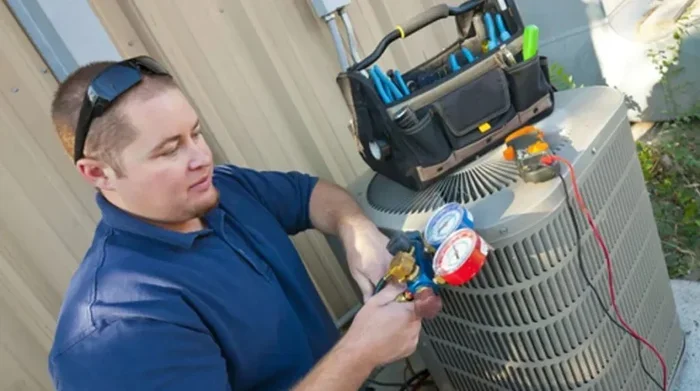
If your compressor keeps tripping the breaker, there is a deeper problem. It could be a short circuit, a grounded motor winding, or a locked compressor. Repeated breaker trips can damage your electrical system and create a fire hazard. A professional can use tools like a multimeter to test compressor windings and determine the exact cause.
You Need to Check if AC Compressor Is Bad
If you have tried all the basic checks and your compressor still will not run, you need a proper diagnosis. A technician can test the compressor windings, check the refrigerant pressure, and evaluate the overall health of your system. Sometimes the compressor needs to be replaced entirely. Knowing the how to tell AC compressor is bad signs early can help you plan for replacement without surprise costs.
Preventing Future Compressor Problems
The best way to deal with a compressor not working is to prevent it from happening in the first place. Regular maintenance goes a long way toward keeping your compressor healthy and efficient.
Schedule Annual Maintenance
Have a professional HVAC technician inspect your system once a year, ideally before summer. During a maintenance visit, the tech will check refrigerant levels, clean the coils, test electrical components, and lubricate moving parts. This proactive approach catches small problems before they become expensive repairs.
Keep the Area Around the Outdoor Unit Clean
Make sure the area around your condenser unit is clear of debris, leaves, and vegetation. Good airflow is essential for the compressor to cool itself. Trim back any plants that are growing too close to the unit. Keep grass clippings and dirt from accumulating around the base.
Replace Filters Regularly
A clean filter protects your entire system, including the compressor. During peak cooling season, check your filter every two to four weeks. Replace it when it looks dirty or gray. This simple habit improves airflow, reduces strain on the compressor, and keeps your system running efficiently.
Do Not Ignore Small Problems
Unusual noises, reduced cooling, or higher energy bills are all signs that something is off. Ignoring these small symptoms can lead to a complete compressor failure. Address issues early and your compressor will last longer and perform better.
Conclusion
A air conditioner compressor not working does not always mean you need a costly replacement. Most of the time, the causes are simple and fixable. Start with the basics: check the power supply, inspect the thermostat, and look for refrigerant leaks. Clean your coils and filters regularly to prevent many problems before they start.
When the issue goes beyond simple troubleshooting, do not hesitate to call a professional. A licensed HVAC tech can diagnose complex problems like motor failures, electrical shorts, or refrigerant leaks safely and effectively. Taking care of your compressor today saves you from a full system breakdown tomorrow. Keep your cool and keep your compressor running strong all season long.
Frequently Asked Questions
Why is my AC compressor not turning on at all?
The most common reasons are a tripped breaker, a bad capacitor, or low refrigerant. Start by checking your electrical panel and the disconnect box near the outdoor unit. If the power supply is fine, the capacitor or refrigerant level is likely the culprit. If you are not comfortable checking these yourself, call a licensed HVAC technician.
How do I know if my AC compressor is bad?
Signs of a bad compressor include warm air from the vents, frequent short cycling, unusual noises like grinding or clicking, and ice buildup on the unit. You can also check the compressor windings with a multimeter, but this should be done by a professional. If your compressor clicks but will not start, the capacitor or relay is often the issue.
Can low refrigerant cause the compressor to stop working?
Yes, absolutely. Low refrigerant puts extra strain on the compressor and can cause it to overheat and shut down. Low refrigerant is almost always caused by a leak in the system. You need to find and repair the leak before recharging the refrigerant. Running the system with low refrigerant can cause permanent compressor damage.
How much does it cost to repair an AC compressor?
The cost depends on the problem. A capacitor replacement might cost $150 to $300. A relay repair is usually under $200. However, if the compressor motor itself has failed, replacement costs can range from $1,000 to $3,000 or more. Always get a detailed quote from a reputable HVAC company before committing to major repairs.
How can I prevent my AC compressor from failing?
Regular maintenance is the best prevention. Clean or replace your air filters monthly during heavy use, keep the area around the outdoor unit clear of debris, and schedule annual professional inspections. Also, never ignore warning signs like unusual noises, reduced cooling, or higher energy bills. Catching problems early saves you from expensive compressor replacements.
Should I replace the compressor or the whole AC unit?
This depends on the age and condition of your system. If your unit is less than 10 years old and the compressor failure is the only major issue, a compressor replacement may make sense. If your system is older and has other problems, a full unit replacement is often the better long-term investment. A professional can help you evaluate the best option for your situation.