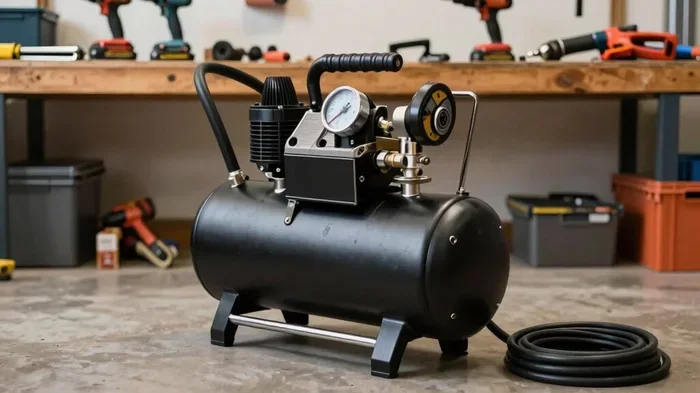
How to Pick the Right Air Compressor Size for Air Tools
Choosing the right air compressor size for air tools depends on understanding CFM, PSI, and tank capacity. This guide breaks down everything you need to know so you can match your compressor to your specific tools and avoid costly mistakes.
You just bought a new set of air tools and you are ready to get to work. But then reality hits. Your old compressor barely keeps up. It shuts off mid-job. The nail gun stalls right when you need it most. Sound familiar?
The problem almost always comes down to one thing. You picked the wrong air compressor size for air tools. It happens more often than you might think. Plenty of people buy a compressor based on price alone and then wonder why it cannot keep up with their pneumatic tools.
This guide will walk you through everything you need to know. From understanding CFM and PSI to matching your compressor to specific tools. By the end, you will know exactly what size compressor you need and why it matters so much.
Let us dive in and make sure you never have a compressor problem again.
Key Takeaways
- CFM is King: The cubic feet per minute rating determines whether your air tools will run properly or stall out.
- Match PSI to Your Tools: Every tool has a specific pressure requirement that must be met for safe and effective operation.
- Tank Size Affects Runtime: A larger tank means longer continuous use and less frequent motor cycling.
- Horsepower Matters but Isn’t Everything: A high HP motor with poor CFM output will still leave your tools wanting more air.
- Duty Cycle Counts: This tells you how long your compressor can run before needing to cool down.
- Oil-Free vs. Oil-Lubricated: Your choice affects maintenance, lifespan, and air quality for your pneumatic tools.
- Always Buy Slightly Bigger: A compressor rated above your highest tool demand gives you room to grow and operate multiple tools.
📑 Table of Contents
- Why Air Compressor Size Matters for Your Air Tools
- Understanding CFM and PSI: The Two Numbers That Matter Most
- Matching Compressor Size to Common Air Tools
- Tank Size vs Motor Size: What Really Matters?
- Common Mistakes When Choosing Compressor Size
- How to Calculate Your Exact Compressor Needs
- Final Thoughts on Choosing the Right Compressor Size
Why Air Compressor Size Matters for Your Air Tools
Think of your compressor as the heart of your pneumatic system. Just like a heart needs to pump enough blood to keep your body running, your compressor needs to deliver enough air to keep your air tools working at full capacity.
When we talk about compressor size, we are not just talking about physical dimensions. We are talking about three key performance factors. These are CFM, PSI, and tank capacity. Each one plays a huge role in how well your tools perform.
Buying a compressor that is too small means frustrated work sessions. Tools stop mid-task. You lose productivity. Buying one that is too big means wasting money and wasting energy. The sweet spot is finding a compressor unit that matches your specific needs perfectly.
Here is the thing most people miss. Your compressor needs to handle your most demanding tool. Not your average tool. Your most demanding one. If you run a framing nailer and a finish nailer, you need enough air flow rate to handle the nailer that demands the most air at any given moment.
Also keep in mind that compressor performance drops over time as components wear. A compressor that barely meets your needs today will definitely fall short in a year or two. That is why buying slightly bigger is always a smart move.
How Undersizing Hurts Your Workflow
An undersized compressor causes a cascade of problems. First, your tools do not get enough air pressure. They slow down or stop working entirely. Then the compressor motor runs constantly trying to keep up. This leads to overheating and premature wear.
You also lose time waiting for the tank to refill between bursts of work. This is called “cycle time.” A small tank fills up fast and empties fast. You end up spending more time waiting than working. That kills productivity on any job site or workshop.
How Oversizing Wastes Money
On the flip side, an oversized compressor costs more upfront. It also uses more electricity. It takes up more space in your garage or shop. And if you never push it to its limits, you are simply wasting money on capacity you do not need.
The goal is to find a compressor capacity that comfortably handles your tools with a little extra breathing room. This is the sweet spot where you get reliable performance without overspending.
Understanding CFM and PSI: The Two Numbers That Matter Most
Every air tool has two key specs. CFM and PSI. These numbers tell you exactly what your compressor needs to deliver. Let us break them down in simple terms.
What Is CFM?
CFM stands for cubic feet per minute. It measures the volume of air your compressor can deliver in one minute. Think of it as the flow rate. The higher the CFM, the more air your compressor pushes out.
Different tools need different amounts of air. A simple brad nailer might only need 0.3 CFM. A heavy-duty impact wrench could need 4 or 5 CFM. You need to add up the CFM requirements of all the tools you plan to use at the same time.
Here is a quick tip. Always check the CFM rating at 90 PSI. Some manufacturers list CFM at lower pressures to make their numbers look better. The real-world number you care about is at 90 PSI.
What Is PSI?
PSI stands for pounds per square inch. It measures the pressure of the air coming out of your compressor. Think of it as the force behind the air. Higher PSI means more pushing power.
Most pneumatic tools operate between 90 and 150 PSI. Your compressor needs to reach and maintain that pressure consistently. If it cannot hold the required PSI, your tools will not perform correctly.
The operating pressure listed on your tool is the minimum PSI it needs. Your compressor should be able to exceed that number by a comfortable margin. This gives you a buffer for air leaks and pressure drops in the hose.
CFM vs PSI: How They Work Together
CFM and PSI are a team. You need both in the right amounts. A compressor with high CFM but low PSI will not power heavy-duty tools. A compressor with high PSI but low CFM will run out of air too fast.
Here is a simple comparison table to help you visualize the relationship:
- Low CFM + Low PSI: Good for light tasks like inflating tires or using a stapler.
- Medium CFM + Medium PSI: Handles most workshop tools like sanders, drills, and brad nailers.
- High CFM + High PSI: Powers heavy-duty tools like impact wrenches, sandblasters, and spray guns.
- High CFM + Low PSI: Good for continuous air supply but not for high-pressure tasks.
- Low CFM + High PSI: Stores pressure well but runs out of air volume quickly.
Matching Compressor Size to Common Air Tools
Now let us get practical. What size air compressor do you actually need for the tools you use? Let us look at some common scenarios.
Light-Duty Tools (Brad Nailers, Staplers, Inflators)
If you are working with lightweight air tools, you do not need a big compressor. A small pancake or hot dog compressor with 0.5 to 2 CFM at 90 PSI will handle the job. These compressors are compact and affordable. They are perfect for DIYers and light home projects.
A portable compressor in this range is easy to move around. You can carry it to different rooms or even take it to a job site. The trade-off is shorter runtime between refills. For quick tasks like nailing trim or inflating a ball, this is not a problem.
Medium-Duty Tools (Sanders, Drills, Impact Drivers)
Medium-duty tools need a bit more air. Look for a compressor delivering 4 to 6 CFM at 90 PSI. A 6-gallon or 8-gallon tank works well here. This size handles sanders, air drills, and most impact drivers without breaking a sweat.
For a home workshop or garage, this is often the sweet spot. You get enough power for a wide range of tools. The tank is large enough to give you decent runtime but small enough to stay portable. If you are setting up a home shop, this is probably your target range.
Heavy-Duty Tools (Impact Wrenches, Sandblasters, Spray Guns)
Heavy-duty pneumatic tools demand serious air supply. Impact wrenches, sandblasters, and paint spray guns need 8 to 15 CFM or more at 90 PSI. You will want a larger tank, typically 20 to 60 gallons or even bigger.
A two-stage compressor is the best choice for this level of demand. These compressors have two pumps that work together to deliver more air and maintain higher pressure. They also run cooler and last longer under heavy use. The compressor motor in a two-stage unit is designed for continuous duty, which makes a big difference on long jobs.
Running Multiple Tools at Once
If you plan to run more than one tool at a time, you need to add up the CFM requirements. Say you are using a sander that needs 3 CFM and a brad nailer that needs 0.5 CFM. You need a compressor that delivers at least 3.5 CFM. Then add a 30 to 50 percent buffer for safety.
This is where many people make mistakes. They add up the numbers and pick a compressor right at that total. But compressors lose efficiency over time. Air leaks in hoses cause pressure drops. Always build in extra capacity.
Tank Size vs Motor Size: What Really Matters?
When shopping for compressors, you will see two main specs that confuse people. Tank size and motor size (horsepower). Both matter, but they serve different purposes. Let us clear up the confusion.
Why Tank Size Matters
The tank stores compressed air. A larger tank means more air is available before the motor kicks on. This gives you longer uninterrupted work time. It also reduces the number of times the motor cycles on and off.
Less cycling means less wear on the motor. It means cooler operation. And it means quieter performance. For tools that need short bursts of air like nail guns, a moderate tank size works great. For tools that need continuous air like spray guns, a larger tank makes a noticeable difference.
Why Motor Size (Horsepower) Matters
The motor is what drives the compressor pump. More horsepower means the pump can compress air faster. This means the tank refills quicker after you use air. But horsepower alone does not tell the whole story.
A motor with high horsepower but a poorly designed pump will still deliver low CFM. Always look at the actual CFM and PSI ratings rather than just the horsepower number. The compressor pump design and efficiency matter just as much as motor size.
The Duty Cycle Factor
Duty cycle is something many people overlook. It tells you what percentage of time the compressor can safely run within a 10-minute period. A 50 percent duty cycle means you can run it for 5 minutes, then it needs 5 minutes to cool down.
For light home use, a 50 percent duty cycle is fine. For professional work or continuous tasks like sanding or spraying, look for a 100 percent duty cycle compressor. These units are built to run all day without overheating.
Oil-Free vs Oil-Lubricated Compressors
Another decision you will face is oil-free versus oil-lubricated. Oil-free compressors require less maintenance. They are lighter and more portable. They also deliver cleaner air since there is no oil in the airstream.
Oil-lubricated compressors tend to last longer under heavy use. They run cooler and handle continuous duty better. The trade-off is more maintenance and potential oil contamination in your air supply. For most home workshops, an oil-free compressor is the smarter choice.
Common Mistakes When Choosing Compressor Size
Avoiding common mistakes saves you money and frustration. Here are the biggest errors people make when selecting their air compressor size for air tools.
Buying Based on Price Alone
The cheapest compressor is rarely the best value. It might save you money upfront but cost you in performance and lifespan. A cheap compressor that cannot power your tools properly is a waste of money. Invest in the right compressor size for your needs and you will save money in the long run.
Ignoring Future Tool Needs
Do not just think about the tools you have right now. What tools are you planning to buy next? A compressor that fits your current needs but leaves no room for growth will have you shopping again soon.
Forgetting About Hose and Fitting Losses
Air loses pressure as it travels through hoses and fittings. A long hose or too many adapters reduces the effective PSI and CFM at your tool. Factor in these losses when choosing your compressor size. Shorter, wider hoses help minimize pressure drops.
Not Checking the Actual CFM Rating
Some manufacturers inflate their CFM numbers to make compressors look better. Always verify the CFM at 90 PSI. Compare real-world ratings from reputable brands before you buy.
Skipping the Breaker Requirement Check
Larger compressors draw significant electrical current. If your garage or shop does not have the right circuit breaker capacity, you will not be able to run the compressor safely. This is especially important if you are also running other power tools on the same circuit. If you are considering a backup power source for your workshop, check out our guide on how to size a generator to make sure your electrical setup can handle everything.
Overlooking Portability Needs
A huge compressor that does not fit in your workspace is useless. Consider where you will store and use your compressor. If you need to move it between rooms or job sites, a smaller portable unit makes more sense. If you have a dedicated shop, a larger stationary compressor is fine.
How to Calculate Your Exact Compressor Needs
Here is a simple step-by-step process to find your perfect air compressor size for air tools.
- List all your air tools. Write down every tool you plan to use.
- Find the CFM and PSI for each tool. Check the tool specifications or the owner’s manual.
- Identify the highest CFM tool. This is your baseline requirement.
- Add 30 to 50 percent extra CFM. This gives you a comfortable buffer.
- Match the PSI requirement. Your compressor should exceed the highest PSI needed by your tools.
- Choose a tank size based on your usage. Short burst tasks need smaller tanks. Continuous tasks need larger tanks.
- Verify the duty cycle. Make sure it matches your expected usage time.
Following these steps takes the guesswork out of the equation. You end up with a clear picture of exactly what you need.
If you are setting up a full workshop and need to understand how your electrical system supports all your power equipment, our article on what kind of generator do I need for my house can help you plan your power setup properly.
And if you want to understand how different power sources compare for running your tools, you might also find our piece on what size generator to run a 1 useful for broader power planning in your workspace.
Final Thoughts on Choosing the Right Compressor Size
Picking the right air compressor size for air tools does not have to be complicated. Focus on CFM, PSI, and tank capacity. Match those numbers to your specific tools and your usage patterns. Buy slightly bigger than you think you need. And always account for real-world factors like hose length and future tool additions.
The right compressor transforms your work experience. Your tools run smoothly. Your projects finish faster. You stop fighting with equipment and start enjoying the work. That is what happens when you get the compressor size right.
Take the time to do your homework before you buy. Check the specs. Read reviews. Compare models. A little research upfront saves you from a lot of frustration down the road. Your future self will thank you every time you fire up your air tools and they work perfectly.
Now you have all the knowledge you need. Go out there, pick the right compressor, and get to work with confidence.
Frequently Asked Questions
What size air compressor do I need for a home garage?
For most home garage setups, a compressor delivering 4 to 6 CFM at 90 PSI with a 6-gallon tank works great. This handles common tools like sanders, drills, and brad nailers comfortably. If you plan to use heavier tools like impact wrenches, go up to 8 CFM or more.
Can I use an air compressor that is too big for my tools?
Yes, you can use a larger compressor, but it comes with downsides. Oversized units cost more, use more electricity, and take up more space. They also waste energy when you are only running small tools. The best approach is to match the compressor size to your actual needs with a small buffer.
How do I know if my compressor is too small for my air tools?
Signs of an undersized compressor include tools running slowly, the compressor motor running constantly without stopping, frequent tank refill cycles, and pressure dropping below your tool’s operating PSI. If you notice these issues, your compressor likely cannot deliver enough CFM or PSI for your tools.
Does tank size affect the power of my air tools?
Tank size does not directly affect tool power, but it affects consistency. A larger tank provides more stored air, which means steadier pressure and less frequent motor cycling. For tools that need continuous air like spray guns, a bigger tank delivers smoother and more consistent performance.
What is the difference between a single-stage and two-stage compressor?
A single-stage compressor uses one pump to compress air. It works well for light to medium tasks. A two-stage compressor uses two pumps in sequence, delivering higher pressure and more CFM. Two-stage compressors are better for heavy-duty tools and continuous professional use because they run cooler and last longer.
Should I buy an oil-free or oil-lubricated compressor for my air tools?
For most home users, an oil-free compressor is the better choice. It requires less maintenance, is lighter, and delivers cleaner air. Oil-lubricated compressors are better suited for professional shops and heavy continuous use where durability and cooling are more important than low maintenance.
=== CONCLUSION ===
Choosing the right air compressor size for air tools comes down to understanding three things. CFM, PSI, and tank capacity. Match these to your specific tools and your work habits. Avoid the common mistakes that trip up most buyers. And always leave yourself some room to grow.
The right compressor makes every job easier. Your tools perform better. Your work sessions are more productive. And you avoid the frustration of equipment that cannot keep up. Take what you learned here, do your research, and invest in a compressor that will serve you well for years to come.


