How Does a Solar Generator Work Everything You Need
A solar generator captures sunlight using panels, stores energy in batteries, and converts it into usable power through an inverter. It is a clean, quiet, and portable way to keep your devices running during outages or off-grid adventures. This guide breaks down every component, step, and benefit so you understand exactly how does a solar generator work from start to finish.
Have you ever wondered how does a solar generator work? It sounds like something out of a sci-fi movie, but the truth is, it is one of the simplest and most practical energy solutions available today. A solar generator takes energy straight from the sun and turns it into electricity you can use at home, on the road, or during a power outage.
The beauty of a solar generator is that it has no moving parts. There is no loud engine, no gasoline, and no fumes. It just sits there quietly, soaking up rays and storing power for when you need it. Whether you are a camper, a prepper, or someone who just wants to lower your electric bill, understanding how does a solar generator work gives you a real edge.
In this guide, we will walk through every single part of the process. You will learn what each component does, how sunlight becomes usable electricity, and why more people are switching to this clean energy source every day. By the end, you will have a clear picture of how does a solar generator work and why it might be the best investment you make this year.
Key Takeaways
- Solar panels capture sunlight: Photovoltaic cells turn rays into direct current (DC) electricity.
- Charge controllers protect your battery: They regulate the flow of power and prevent overcharging.
- Batteries store your energy: Lithium-ion and LiFePO4 batteries are the most common types used.
- Inverters convert DC to AC power: This makes solar energy compatible with most household devices.
- Solar generators are versatile: They work for home backup, camping, RV trips, and emergency preparedness.
- Maintenance is minimal: Keep panels clean and batteries charged for long-lasting performance.
📑 Table of Contents
- What Is a Solar Generator?
- The Core Components of a Solar Generator
- How Solar Panels Convert Sunlight into Electricity
- The Role of the Battery and Charge Controller
- How the Inverter Makes Solar Power Usable
- Benefits and Real-World Applications of Solar Generators
- Common Mistakes and Tips for Getting the Most Out of Your Solar Generator
- Conclusion
What Is a Solar Generator?
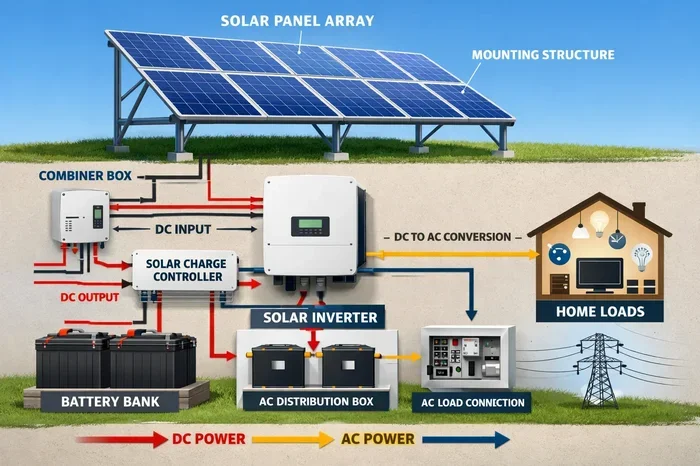
A solar generator is a portable or stationary power system that uses sunlight to create electricity. Unlike a traditional gas generator, a solar generator runs on renewable energy from the sun. It typically includes a few key parts: solar panels, a charge controller, a battery, and an inverter.
People use solar generators for many reasons. Some want backup power during blackouts. Others need a quiet energy source for camping trips or RV adventures. And some homeowners install larger solar generator systems to reduce their dependence on the grid. No matter the reason, the basic process is the same. Sunlight hits the panels, energy gets stored in a battery, and the inverter turns it into power your devices can use.
The solar generator market has grown a lot in recent years. Prices have dropped, technology has improved, and more brands are offering options for every budget. This makes it easier than ever to explore how does a solar generator work and find one that fits your needs.
Solar Generators vs. Gas Generators
It helps to compare a solar generator to a traditional gas generator. A gas generator burns fuel to create electricity. It is loud, produces fumes, and needs regular maintenance. A solar generator, on the other hand, uses sunlight. It is silent, emission-free, and requires very little upkeep.
Gas generators also depend on fuel availability. During a storm or natural disaster, gas stations may run out or be closed. A solar generator only needs one thing: sunshine. That makes it a reliable choice for emergency preparedness and off-grid living.
The Core Components of a Solar Generator
To truly understand how does a solar generator work, you need to know what is inside it. Each part plays a specific role in turning sunlight into usable power. Let us break down every component one by one.
Solar Panels (The Collector)
Solar panels are the most visible part of any solar generator setup. They sit outside and catch sunlight. Inside each panel are small units called photovoltaic cells. These cells are made of silicon and other materials that react when sunlight hits them.
When photons from the sun strike the cells, they knock electrons loose from atoms. This creates a flow of electricity. That electricity is direct current (DC), which is the raw form of solar energy. The size and number of panels you use determine how much power you can collect. A small portable panel might produce 100 watts, while a larger rooftop array can generate several kilowatts.
For a portable solar generator, you usually connect one or two panels to the unit. For a home setup, you might install many more panels on your roof or in your yard. Either way, the panels are the starting point of the entire process.
Charge Controller (The Regulator)
The charge controller sits between the solar panels and the battery. Its job is to regulate the flow of electricity. Without a charge controller, too much power could flood the battery and cause damage. Think of it as a traffic cop for energy.
There are two main types of charge controllers: PWM (Pulse Width Modulation) and MPPT (Maximum Power Point Tracking). MPPT controllers are more efficient because they adjust the voltage and current to match the battery’s needs. They squeeze the most energy out of your panels. If you want to get the best performance from your solar generator, look for a unit with an MPPT controller.
Battery (The Storage Unit)
The battery is where your solar energy gets stored for later use. Without a battery, a solar generator would only work while the sun is shining. Most modern solar generators use lithium-ion batteries because they are lightweight, long-lasting, and hold a lot of charge.
LiFePO4 (lithium iron phosphate) batteries are even better. They last longer, are safer, and can handle thousands of charge cycles. The capacity of the battery is measured in watt-hours (Wh). A higher watt-hour rating means the battery can power more devices for a longer time. For example, a 1000Wh battery can run a laptop for about 30 hours or a mini-fridge for about 12 hours.
Inverter (The Converter)
Here is a key piece of the puzzle: your battery stores DC power, but most household appliances run on alternating current (AC). The inverter bridges that gap. It takes the DC power from the battery and converts it into AC power that your fridge, TV, phone charger, and other devices can use.
There are two types of inverters: pure sine wave and modified sine wave. Pure sine wave inverters produce smooth, clean power that is safe for sensitive electronics like laptops and medical devices. Modified sine wave inverters are cheaper but can cause humming or interference with some equipment. For the best results, choose a solar generator with a pure sine wave inverter.
How Solar Panels Convert Sunlight into Electricity
The process of turning sunlight into electricity is called the photovoltaic effect. It was first discovered in 1839 by a French physicist named Edmond Becquerel. More than 180 years later, this same basic principle powers millions of solar generators around the world.
Here is how the photovoltaic effect works in simple terms. Sunlight is made up of tiny particles called photons. When these photons hit the solar panel, they pass through a special semiconductor material, usually silicon. The energy from the photons knocks electrons free from the silicon atoms. This movement of electrons creates an electrical current.
That current flows through wires in the panel and heads toward the charge controller. From there, it goes into the battery for storage. When you plug in a device, the inverter converts that stored DC power into AC power. And just like that, sunlight becomes usable electricity.
Factors That Affect Solar Panel Efficiency
Not all solar panels perform the same way. Several factors influence how efficiently a panel converts sunlight into electricity. Understanding these factors helps you get the most out of your solar generator.
First, consider the angle of the sun. Panels work best when they face directly toward the sun. That is why many portable panels come with adjustable stands. Second, cloud cover and weather matter. Panels still produce energy on cloudy days, but at a reduced rate. Third, temperature plays a role. Solar panels actually perform better in cooler temperatures, even though they need sunlight to work.
Shading is another big factor. Even a small shadow on one part of a panel can reduce the overall output. Keep your panels in open areas where nothing blocks the sunlight. Dust and dirt can also reduce efficiency, so a quick wipe-down now and then goes a long way.
Types of Solar Panels Used in Generators
There are three main types of solar panels you will find in solar generators. Monocrystalline panels are the most efficient. They are made from a single crystal of silicon and convert about 20-25% of sunlight into electricity. Polycrystalline panels are slightly less efficient but also more affordable. They are made from multiple silicon fragments melted together.
Thin-film panels are the lightest and most flexible option. They are not as efficient as crystalline panels, but they are great for portable setups where weight matters. For most solar generator users, monocrystalline panels offer the best balance of efficiency and price.
The Role of the Battery and Charge Controller
While the solar panel gets all the attention, the battery and charge controller are just as important. They work together to make sure your solar generator delivers reliable power whenever you need it.
How Battery Storage Works
When sunlight hits the panels and creates DC electricity, that power flows into the battery. The battery stores it as chemical energy. When you need to use that power, the battery releases it, and the inverter converts it to AC power.
The amount of energy a battery can store is measured in watt-hours. A 500Wh battery can deliver 500 watts for one hour, or 100 watts for five hours. This is why it is important to match your battery capacity to your power needs. If you plan to run a CPAP machine all night, you need a battery with enough stored energy to last through the entire sleep cycle.
Lithium-ion batteries are the gold standard for solar generators. They are lightweight, compact, and hold a charge well over time. Lead-acid batteries are an older option that is cheaper but much heavier and shorter-lived. For anyone serious about solar power, lithium or LiFePO4 batteries are the clear choice.
Why the Charge Controller Matters
The charge controller protects your battery and makes sure it charges properly. It monitors the voltage coming from the panels and adjusts the flow accordingly. Without this protection, overcharging can shorten the battery’s lifespan or even cause it to fail.
A good charge controller also prevents deep discharging, which happens when a battery is drained too far. Deep discharging damages battery cells and reduces their overall capacity. The charge controller steps in and shuts off the power draw when the battery reaches a safe low level. This simple feature can add years of life to your solar generator.
How the Inverter Makes Solar Power Usable
The inverter is the bridge between your stored solar energy and the devices you want to power. It takes DC power from the battery and transforms it into AC power that matches the electrical current used by most household appliances.
Pure Sine Wave vs Modified Sine Wave
Not all inverters are created equal. Pure sine wave inverters produce a smooth, steady flow of electricity that is identical to what you get from a wall outlet. This makes them safe for all types of electronics, including sensitive equipment like laptops, cameras, and medical devices.
Modified sine wave inverters produce a choppier waveform. They work fine for basic devices like lights and fans. But they can cause problems with more sensitive electronics. Some appliances may hum, run hotter, or perform poorly on modified sine wave power. If your budget allows, always choose a solar generator with a pure sine wave inverter.
Inverter Size and Power Output
The size of the inverter determines how many devices you can run at once. Inverters are rated in watts. A 1000-watt inverter can handle a continuous load of 1000 watts. It can also handle short bursts of higher power, called surge watts, which is important for devices like refrigerators and power tools that need extra juice when they start up.
When choosing a solar generator, check both the continuous watt rating and the surge watt rating. Add up the wattage of all the devices you plan to run at the same time. Then make sure your inverter can handle that total. This simple step prevents overloads and keeps your system running smoothly.
Benefits and Real-World Applications of Solar Generators
Now that you understand how does a solar generator work, let us talk about why it matters. Solar generators offer a wide range of benefits that make them appealing for all kinds of users.
Emergency Backup Power
Power outages happen. Storms, ice, equipment failures, and wildfires can knock out electricity for hours or even days. A solar generator gives you a reliable backup that does not depend on fuel deliveries or noisy engines. You can keep your fridge running, charge your phone, and power lights until the grid comes back online.
For families in areas prone to hurricanes or wildfires, a solar generator is a lifeline. It provides peace of mind knowing you have a source of power no matter what happens. Pair it with a few extra solar panels, and you have a self-sustaining power system that works as long as the sun keeps shining.
Camping and Outdoor Adventures
Campers and RV enthusiasts love solar generators because they are quiet and clean. No more waking up to the sound of a rumbling generator at 6 AM. Just set up your panels in the morning, and by afternoon, your battery is fully charged.
A solar generator can power lights, a small fan, a phone charger, a portable stove, and even a mini-fridge. It makes camping more comfortable without the noise and fumes of a gas generator. Many modern solar generators are designed to be compact and lightweight, so they are easy to carry on hikes or pack in an RV.
Off-Grid Living
For people who live off the grid, a solar generator is not just a convenience, it is a necessity. Off-grid homes rely on renewable energy to power lights, appliances, and heating systems. A well-designed solar generator system can handle all of these needs without any connection to the utility grid.
Off-grid setups usually include more panels, larger batteries, and more powerful inverters. But the core process is exactly the same. Sunlight becomes DC electricity, gets stored in batteries, and is converted to AC power by the inverter. Once you understand how does a solar generator work, scaling up to an off-grid system is a natural next step.
Lower Energy Bills
Even if you stay connected to the grid, a solar generator can help reduce your electricity bill. Use it to power small appliances, charge devices, or run lights during peak hours when electricity costs the most. Over time, these savings add up significantly.
Some homeowners also take advantage of net metering programs. They send excess solar power back to the grid and earn credits on their electric bill. This makes solar generators not just an eco-friendly choice but a smart financial investment too.
Common Mistakes and Tips for Getting the Most Out of Your Solar Generator
Learning how does a solar generator work is one thing. Using it effectively is another. Here are some common mistakes and tips to help you get the best performance.
Mistakes to Avoid
- Underestimating your power needs: Do not guess. Add up the wattage of every device you plan to run and choose a generator that exceeds that total.
- Ignoring battery type: Cheap lead-acid batteries need more maintenance and die faster. Invest in lithium or LiFePO4 for better long-term value.
- Placing panels in shade: Even partial shade cuts your power output dramatically. Always position panels in full, direct sunlight.
- Skipping the charge controller: Never connect panels directly to a battery without a charge controller. It risks overcharging and permanent damage.
- Overloading the inverter: Running too many high-watt devices at once can trip the inverter or damage connected equipment.
Tips for Maximum Performance
- Keep panels clean: A quick wipe with a damp cloth removes dust and boosts efficiency.
- Angle panels toward the sun: Adjust the angle seasonally for the best exposure throughout the year.
- Charge during peak sun hours: The hours between 10 AM and 3 PM offer the strongest sunlight and the fastest charging.
- Store batteries at 50% charge: If you are not using your solar generator for a while, store the battery at half charge to preserve its health.
- Monitor your usage: Many solar generators come with apps or displays that show your power levels. Use them to stay on top of your consumption.
Expert Insight: The Future of Solar Generator Technology
Solar generator technology is advancing fast. New battery chemistries like solid-state batteries promise even higher energy densities and longer lifespans. Solar panels are becoming more efficient every year, with some lab models exceeding 40% conversion rates. Smart inverters with built-in monitoring and app controls are making it easier than ever to track and manage your power usage.
As these technologies mature, solar generators will become even more accessible and powerful. Whether you are a casual camper or a full-time off-grid homesteader, the future looks bright for solar energy. Understanding how does a solar generator work today puts you ahead of the curve as these innovations continue to roll out.
Conclusion
Now you know exactly how does a solar generator work. From the moment sunlight hits the photovoltaic cells to the final burst of AC power that runs your appliances, every step is a marvel of modern engineering. The process is clean, quiet, and endlessly renewable.
A solar generator gives you independence from the grid, protection during emergencies, and a greener way to power your life. With minimal maintenance and no fuel costs, it pays for itself over time. Whether you need it for camping, backup power, or off-grid living, a solar generator is a smart, practical choice.
The best part is, you do not need to be an engineer to use one. Just understand the basics, choose the right components, and enjoy the benefits of solar energy. The sun delivers power every single day. A solar generator helps you capture it and put it to good use.
Frequently Asked Questions
Can a solar generator power a whole house?
Yes, but it depends on the size of the system. Small portable solar generators can power essential devices like lights, phones, and a fridge. Larger setups with many panels and big batteries can handle most or all of a home’s electrical needs. The key is matching your solar generator capacity to your power usage.
How long do solar generators last?
Most quality solar generators last between 10 and 25 years. The solar panels typically have a 25-year lifespan, while batteries may need replacement after 5 to 15 years depending on the type. Lithium-ion and LiFePO4 batteries last longer than traditional lead-acid options.
Do solar generators work on cloudy days?
Yes, solar generators still produce power on cloudy days, but at a reduced rate. Clouds filter sunlight, so panels generate less electricity. On heavily overcast days, output can drop by 50% or more. That is why battery storage is so important for consistent power.
Is a solar generator worth the cost?
For most users, absolutely. Solar generators have no fuel costs and very low maintenance. Over time, the savings on electricity and fuel add up. They also provide reliable backup during emergencies, which makes them a valuable investment for any household.
What can I run on a solar generator?
You can run almost anything that runs on regular electricity. Phones, laptops, lights, fans, mini-fridges, CPAP machines, and power tools all work well. Just check the wattage of each device and make sure your solar generator’s inverter can handle the total load.
How do I maintain my solar generator?
Maintenance is very simple. Keep the solar panels clean and free of dirt and debris. Store the battery at 50% charge if you are not using the generator for a long time. Check connections periodically for corrosion or looseness. That is really all it takes to keep your system running strong.