What Size Compressor for Air Tools Is the Right Pick
Choosing the right what size compressor for air tools comes down to matching CFM and PSI to your specific tools. A compressor that is too small will leave you waiting, while one that is too big wastes money and energy. This guide walks you through everything you need to know to make the perfect pick.
Every DIYer and professional knows the feeling. You plug in your air tools, pull the trigger, and… nothing happens. The compressor just cannot keep up. That frustrating moment usually comes down to one thing: you picked the wrong size. What size compressor for air tools is the right pick? That is the question this guide answers in full detail.
Whether you are building a home workshop, outfitting a garage, or running a professional crew, getting the compressor size right saves you time, money, and headaches. There is a lot to consider. CFM ratings, PSI levels, tank sizes, compressor types, and duty cycles all play a role. But do not worry. By the end of this guide, you will feel confident making the right choice.
The good news is that sizing a compressor for air tools is simpler than most people think. Once you understand a few key numbers and match them to your tools, the decision becomes clear. Let us break it all down step by step.
Key Takeaways
- CFM and PSI are the two numbers that matter most when deciding what size compressor for air tools you need.
- Different air tools have different air demands, so always check the tool’s requirements before buying.
- Pancake, hot dog, twin-stack, and rotary compressors each serve different needs and workspaces.
- Oversizing your compressor wastes money, and undersizing it causes frustration and downtime.
- Duty cycle and tank size play a big role in how well your compressor keeps up with continuous work.
- Portability matters if you move your tools between job sites or around the garage.
- Always add a buffer of 1.5x the total CFM to handle peak demands and future tool additions.
📑 Table of Contents
- Understanding CFM and PSI: The Two Numbers That Matter
- Common Air Tools and Their Air Requirements
- Types of Compressors for Air Tools
- How to Match Your Compressor to Your Tools
- Common Mistakes When Choosing Compressor Size
- Quick Tips for Buying the Right Compressor
- Expert Insights: What the Pros Look For
- Conclusion
Understanding CFM and PSI: The Two Numbers That Matter
When people ask about what size compressor for air tools they need, they are really asking about two measurements: CFM and PSI. These two numbers control everything about how your compressor performs. Let us look at each one closely.
What Is CFM?
CFM stands for Cubic Feet per Minute. It measures how much air your compressor can deliver at a given pressure. Think of it as the flow rate of your compressor. The higher the CFM, the more air your tools get at once.
Here is the simple truth. Every air tool has a CFM requirement. If your compressor cannot deliver enough CFM, the tool will not work properly. You will get weak performance, or it will not run at all.
What Is PSI?
PSI stands for Pounds per Square Inch. It measures the pressure of the air your compressor delivers. Some tools need high pressure to work correctly. Others need lower pressure but higher volume.
Most common air tools work fine at 90 PSI. That is the standard baseline. But some tools, like sandblasters or paint sprayers, may need more. Always check your tool’s PSI rating before buying a compressor.
The CFM vs PSI Relationship
CFM and PSI work together. A compressor might push out a lot of pressure but not enough volume. Or it might deliver high volume but at low pressure. You need both numbers to be in the right range for your tools.
Here is a quick rule of thumb. Match your compressor’s CFM output to the highest CFM requirement among all your tools. Then make sure the PSI output meets or exceeds the PSI requirements of those same tools.
Common Air Tools and Their Air Requirements
Before you can pick a compressor, you need to know what your tools actually need. Different tools use different amounts of air. Here is a breakdown of the most common air tools and their typical requirements.
Light-Duty Air Tools
These tools need the least air. They are perfect for basic home projects and light maintenance work.
- Brad nailers: 0.3 to 0.5 CFM at 90 PSI
- Pin nailers: 0.3 CFM at 90 PSI
- Inflators: 0.5 to 1.0 CFM at 90 PSI
- Light impact wrenches (3/8 inch): 2.0 to 3.0 CFM at 90 PSI
For these tools, a small compressor with 1 to 2 CFM output works great. A portable pancake compressor is often enough for home users.
Medium-Duty Air Tools
These tools are used more frequently and demand more air volume. They are common in garage workshops and light professional work.
- Framing nailers: 2.0 to 2.5 CFM at 90 PSI
- Finish nailers: 0.5 to 1.0 CFM at 90 PSI
- Rotary sanders: 5.0 to 6.0 CFM at 90 PSI
- Dual sanders: 6.0 to 8.0 CFM at 90 PSI
Medium-duty tools need a compressor in the 4 to 6 CFM range. A hot dog compressor or a small twin-stack unit usually handles these tools well.
Heavy-Duty Air Tools
Professional shops and industrial settings rely on these tools. They demand high and continuous airflow.
- Impact wrenches (1/2 inch): 4.0 to 5.0 CFM at 90 PSI
- Die grinders: 4.0 to 5.5 CFM at 90 PSI
- Paint sprayers: 5.0 to 8.0 CFM at 90 PSI
- Sandblasters: 8.0 to 14.0 CFM at 90 PSI
- Dual impact wrenches: 8.0 to 10.0 CFM at 90 PSI
Heavy-duty tools need compressors with 10 CFM or more output. These are typically larger rotary or two-stage compressors. For a full professional setup, you might even look at how how to size a generator for your shop to make sure your electrical supply can handle the compressor’s power draw.
Types of Compressors for Air Tools
Not all compressors are the same. Different types serve different needs. Understanding each type helps you pick the right one for your situation.
Pancake Compressors
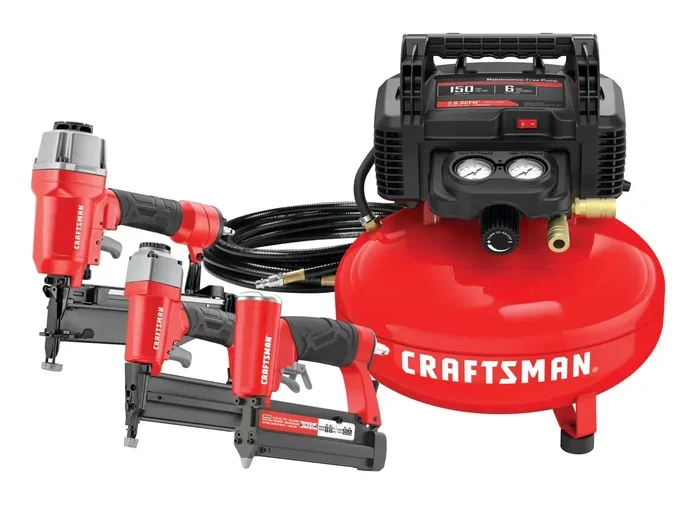
Pancake compressors are flat and round. They get their name from their shape. These units are compact and lightweight. They typically have a small tank, around 1 to 6 gallons.
Best for: Home DIYers, light-duty tasks, and users who need portability. They are affordable and easy to store. Most pancake compressors deliver 1 to 3 CFM at 90 PSI.
Downside: They run out of air quickly during continuous use. The small tank means they cycle on and off frequently. They work best for tools that need short bursts of air.
Hot Dog Compressors
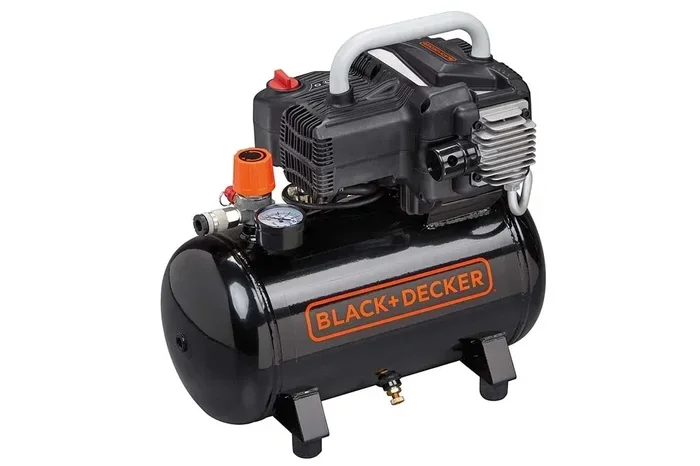
Hot dog compressors are tall and vertical. They have a single horizontal tank that sits upright. They are slightly larger than pancake compressors and offer more air capacity.
Best for: Medium-duty garage work and hobbyists. They typically deliver 2 to 5 CFM at 90 PSI. The vertical design takes up less floor space than horizontal tanks.
Downside: They are still not ideal for continuous heavy-duty work. The single tank limits their duty cycle compared to larger units.
Twin-Stack Compressors
Twin-stack compressors have two tanks stacked vertically. This design doubles the air capacity without adding much footprint. They hold more air and run longer between cycles.
Best for: Users who need more runtime from a portable unit. They typically deliver 4 to 6 CFM at 90 PSI. They are a sweet spot between portability and capacity.
Downside: They are heavier than single-tank models. If portability is your top priority, they may be too bulky.
Rotary Screw Compressors
Rotary screw compressors are built for heavy, continuous use. They use two rotating screws to compress air. These are the workhorses of professional shops and industrial settings.
Best for: Professional workshops, manufacturing, and continuous-use applications. They deliver 10+ CFM and have excellent duty cycles. They are more expensive but built to last.
Downside: They are large, heavy, and costly. They are overkill for home hobbyists with light-duty needs.
How to Match Your Compressor to Your Tools
Now that you know CFM, PSI, and compressor types, let us put it all together. Here is how to match your compressor to your specific air tools.
Step 1: List All Your Tools
Write down every air tool you plan to use. Include the CFM and PSI requirements for each one. You can find these numbers in the tool manual or on the manufacturer’s website.
Step 2: Find the Highest CFM Requirement
Look at your list and find the tool that needs the most CFM. That number becomes your baseline. Your compressor must meet or exceed that number.
Step 3: Add a Buffer
Never size your compressor to the exact number. Always add a buffer. A good rule is to multiply your highest CFM requirement by 1.5. This gives you room for peak demands and future tool additions.
For example, if your impact wrench needs 5.0 CFM, you should look for a compressor that delivers at least 7.5 CFM. That buffer makes a huge difference in performance and tool longevity.
Step 4: Check PSI Compatibility
Make sure your compressor’s maximum PSI meets or exceeds the highest PSI requirement of your tools. Most tools work at 90 PSI, so a compressor rated at 120 to 150 PSI max gives you plenty of headroom.
Step 5: Consider Tank Size and Duty Cycle
Tank size affects how long your compressor can run before it needs to refill. Duty cycle tells you what percentage of time the compressor can run continuously.
- Small tanks (1-6 gallons): Best for intermittent use. The compressor cycles on and off frequently.
- Medium tanks (6-20 gallons): Good for moderate use. They provide longer runtime between cycles.
- Large tanks (20+ gallons): Best for continuous use. They hold enough air to keep tools running without frequent cycling.
For a home workshop, a 6 to 20 gallon tank is usually the sweet spot. For professional work, go with 20 gallons or larger.
Common Mistakes When Choosing Compressor Size
Many people make the same mistakes when buying a compressor. Avoid these pitfalls to save money and frustration.
Mistake 1: Buying Based on Price Alone
The cheapest compressor is rarely the best choice. It may not deliver enough CFM or PSI for your tools. You end up replacing it or buying a second compressor later. Always prioritize performance over price.
Mistake 2: Ignoring Peak CFM Demands
Some tools need a burst of extra air when starting up. If you only look at the running CFM, you will miss these peak demands. Always check both the running and peak CFM ratings.
Mistake 3: Underestimating Future Needs
You might only own one or two tools today. But what happens when you buy a paint sprayer or a sandblaster next month? Sizing your compressor with future needs in mind prevents the need for another purchase soon.
Mistake 4: Overlooking the Power Source
Compressors need electricity to run. A large compressor might require a dedicated 240-volt circuit. Before you buy, check your electrical setup. If your shop only has standard 120-volt outlets, you may need a smaller unit or an electrical upgrade.
Also worth noting, if you plan to use a generator on job sites to power your compressor, make sure you understand what size generator to run a 1 compressor properly. An undersized generator will cause the compressor to underperform or shut down unexpectedly.
Quick Tips for Buying the Right Compressor
Here are some practical tips that will help you make a confident purchase.
- Buy for the worst tool, not the average. Size your compressor to the tool with the highest CFM and PSI demands.
- Look for oil-free compressors if you want low maintenance. They do not require oil changes and are great for home workshops.
- Check the duty cycle rating. A 50% duty cycle means the compressor can run for 10 minutes out of every 20 minutes. Higher is better for continuous work.
- Consider noise levels. Compressors can be loud. Look for units with lower decibel ratings if noise is a concern in your workspace.
- Read reviews from real users. Manufacturer specs can be optimistic. Real-world reviews give you a more honest picture of performance.
- Factor in the cost of ownership. A more expensive compressor with better efficiency may save you money on electricity over time.
- Think about portability. If you move between job sites, look for models with wheels and handles. A lightweight frame makes a big difference.
Expert Insights: What the Pros Look For
Professional air tool users have learned a few things the hard way. Here is what they look for when choosing a compressor size.
First, professionals always calculate total CFM demand. They add up the CFM of all tools they plan to run simultaneously. Then they multiply by 1.5 to get a comfortable buffer. This approach ensures they never run out of air mid-job.
Second, they pay close attention to duty cycle. A compressor that can only run for 10 minutes before overheating is a problem on a busy job site. Professionals look for compressors with a 70% or higher duty cycle for heavy work.
Third, they consider the compressor’s electrical requirements. A large rotary compressor might need a dedicated circuit and even a phase converter. Understanding these requirements upfront prevents costly installation surprises.
Finally, professionals know that what size compressor for air tools they need depends on the job, not just the shop. A contractor might need a different compressor than a full-time automotive mechanic. Matching the compressor to the actual work is the key to making the right choice.
Conclusion
Finding the right what size compressor for air tools does not have to be confusing. Start by understanding CFM and PSI. Then match those numbers to your tools’ requirements. Add a buffer for peak demands and future growth. Choose the right compressor type for your workspace and needs. Avoid the common mistakes that trip up so many buyers.
The right compressor makes every job faster and easier. Your tools perform better. You spend less time waiting for air pressure to build back up. And you avoid the frustration of an underpowered machine that cannot keep up.
Take the time to do your research. Check your tool requirements. Compare compressor specs. And when you make your choice, you will know it is the right one. A properly sized compressor is one of the best investments you can make for your workshop or job site.
Frequently Asked Questions
What size compressor do I need for a impact wrench?
A typical 1/2-inch impact wrench needs about 4 to 5 CFM at 90 PSI. To be safe, look for a compressor that delivers at least 7.5 CFM. This gives you a buffer for peak demand and ensures the wrench runs smoothly without stalling.
Can I run multiple air tools on one compressor?
Yes, you can. Just add up the CFM requirements of all the tools you plan to run at the same time. Then multiply that total by 1.5 to get the minimum CFM your compressor should deliver. This ensures you have enough air for all tools running simultaneously.
What is the difference between a 1-gallon and a 6-gallon compressor?
A 1-gallon compressor is very compact and best for light tasks like inflating tires or using a brad nailer. A 6-gallon compressor holds more air and can handle medium-duty tools like finish nailers and light impact wrenches for longer periods before needing to refill.
Do I need a 240-volt compressor?
It depends on your compressor size and your electrical setup. Large compressors with 5+ HP motors often require 240 volts. Smaller compressors under 3 HP usually run fine on standard 120-volt outlets. Check the compressor’s electrical requirements before purchasing.
Is an oil-free compressor good enough for air tools?
Yes, oil-free compressors work great for most users. They require less maintenance because you do not need to change oil. They are also lighter and more portable. Oil-free models are ideal for home workshops and light-to-medium professional use.
How often should I drain my compressor tank?
You should drain your compressor tank after every use or at least once a week. Moisture builds up inside the tank from compressed air condensation. This moisture can cause rust and reduce the tank’s lifespan. A quick drain takes only a few seconds and keeps your compressor running strong.
=== INTERNAL LINKS ===