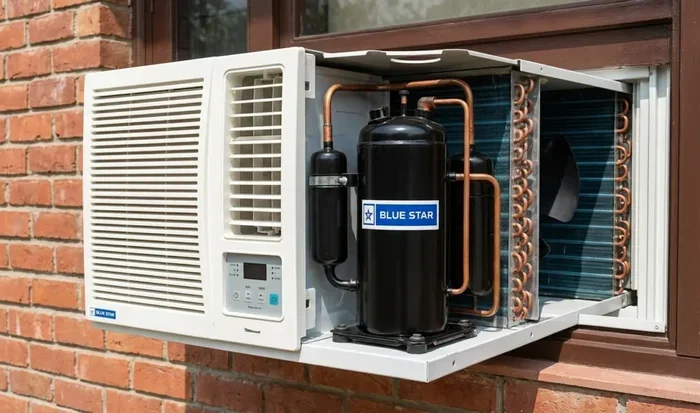
Why Your Window AC Compressor Not Working But Fan Is Running
A window ac compressor not working but fan is running means your cooling cycle has stalled while the blower still operates. This usually points to a dead capacitor, faulty contactor, low refrigerant, or an overheating compressor. We’ll walk you through the most common causes, how to diagnose them, and what to do next.
That first blast of cool air from your window AC is pure relief on a hot day. But when the fan keeps spinning and the room stays warm, the frustration sets in fast. You’re dealing with a window ac compressor not working but fan is running, and it is a very common comfort killer.
The fan is just moving air across the evaporator coils. The compressor is the heart of the cooling cycle. If it stays off, no refrigerant flows, and no heat is removed from your room. This guide breaks down exactly why this happens, what you can do about it, and when it is time to pick up the phone and call a technician.
We will look at the most frequent causes, give you simple diagnostic steps, and share practical fixes. Whether you are a DIYer or just want to understand the problem, you will find clear answers here. Let us get your cool air back.
Key Takeaways
- Fan running but compressor off: The fan can work independently, but the compressor needs a working capacitor, contactor, and refrigerant to start.
- Common culprits: A dead run capacitor, faulty contactor, thermostat failure, or refrigerant leak are the top reasons.
- DIY checks: You can safely test the capacitor and contactor with a multimeter before calling a pro.
- When to call a pro: If the compressor is humming, tripping breakers, or leaking refrigerant, professional repair is essential.
- Prevention: Regular filter cleaning, coil maintenance, and yearly professional tune-ups extend compressor life.
📑 Table of Contents
- Why Your Window AC Compressor Not Working But Fan Is Running: The Big Picture
- What Is Happening Inside Your AC When the Compressor Stays Off?
- Top 6 Reasons Your Window AC Compressor Won’t Start
- How to Diagnose a Window AC Compressor That Won’t Run
- DIY Fixes vs. Calling a Professional: What to Do Next
- How to Prevent Your Window AC Compressor from Failing Again
Why Your Window AC Compressor Not Working But Fan Is Running: The Big Picture
The window ac compressor not working but fan is running situation is not just an inconvenience. It means your air conditioner is running in fan-only mode, which does nothing to lower the temperature. Understanding why the compressor refuses to start helps you decide the next step.
Every window AC unit has two main motors: the condenser fan and the compressor. The fan can run on its own because it has a simple circuit. The compressor, however, needs a working capacitor, a good contactor, correct refrigerant levels, and a thermostat call for cooling. If any one of these fails, the compressor stays silent while the fan keeps blowing warm air.
This is different from a unit that short-cycles or makes strange noises. A compressor that simply does not start often points to an electrical or refrigerant issue. The Why Is My Ac Compressor Not Turning On guide covers the same root causes in more detail. We will focus specifically on window units where the fan still spins.
Before you panic, know that many of these issues are inexpensive and easy to fix. A failed capacitor can cost under $20, and a bad contactor is a simple swap. Even low refrigerant can sometimes be topped off. Let us look at the top reasons this happens.
What Is Happening Inside Your AC When the Compressor Stays Off?
To understand the fix, you need a quick look at how the system works. When you set the thermostat to cool, it sends a signal to the contactor. The contactor closes and sends power to the compressor and condenser fan. The compressor then pumps refrigerant through the system.
Inside the compressor, a motor spins a piston that compresses the gas. This raises the refrigerant pressure and temperature. The hot, high-pressure gas then flows to the condenser coil, where it releases heat. The refrigerant cools and becomes a liquid, then flows back inside to absorb heat from your room.
If the compressor motor fails to start, this entire cycle stops. The fan still runs because it is on a separate circuit. You might hear a faint hum or click, but the compressor never kicks in. This can happen because the motor is locked, the capacitor is dead, or the system is protecting itself from a low-charge condition.
The How Do You Know When Your Ac Compressor Is Bad article explains the signs of a failing compressor in depth. A compressor that will not start at all is one of the clearest warning signs.
Quick Tip: Always turn off the power at the breaker before you open the AC housing. Capacitors can hold a charge even when the unit is unplugged.
Top 6 Reasons Your Window AC Compressor Won’t Start
Now we get to the heart of the matter. Below are the six most common reasons the compressor stays off while the fan runs. Each one comes with a brief explanation and a quick check you can do.
1. A Dead Run Capacitor
The run capacitor gives the compressor motor a jolt of electricity to start spinning. Over time, capacitors weaken and fail. This is the single most common cause of a window ac compressor not working but fan is running. A dead capacitor means the compressor gets no start signal, even if power is reaching it.
You can test a capacitor with a multimeter set to capacitance mode. Look for a rating that matches the original value (often printed on the capacitor). If it reads zero or very low, the capacitor is bad. Replacing it is easy and safe once the unit is powered down.
Common Mistake: Do not try to test a capacitor while it is still connected. Always discharge it first with an insulated screwdriver. A charged capacitor can deliver a painful shock.
2. Faulty Contactor
The contactor is an electrical relay that sends power to the compressor and fan. It has moving contacts that can wear out or burn. A bad contactor may click but fail to close the circuit to the compressor. The fan might still run on a separate path, but the compressor stays dead.
You can inspect the contactor by removing the outer panel. Look for pitting or blackening on the contact points. If they look corroded, the contactor needs replacement. This is a $15 to $30 part and a simple swap.
Expert Insight: A contactor that vibrates or buzzes loudly is a sign of failing coils. Replace it before it leaves you without cooling entirely.
3. Thermostat Failure
The thermostat tells the AC when to call for cooling. If it is stuck in fan mode or has a faulty sensor, it will never send the signal to the compressor. The fan runs because it is always on in certain modes, but the compressor never gets the command.
Check your thermostat setting first. Make sure it is set to cool, not just fan. Then try lowering the temperature setting several degrees below the room temperature. If the compressor still does not kick on, the thermostat may need replacement.
Quick Tip: You can bypass the thermostat temporarily by jumping the R and Y wires at the contactor. If the compressor starts, the thermostat is the problem. But only do this if you know basic electrical safety.
4. Low Refrigerant or a Leak
Refrigerant is the lifeblood of the cooling cycle. If the system is low on charge, the compressor may refuse to start as a safety measure. Modern units have a low-pressure switch that shuts the compressor down when refrigerant drops too low.
You cannot simply add refrigerant without finding and fixing the leak first. A leak can be in the evaporator coil, the copper lines, or the connection points. The What Happens When The Ac Compressor Goes Out article explains how running a compressor on low refrigerant can destroy it completely.
Signs of a low refrigerant charge include ice buildup on the indoor coil, hissing sounds, and the unit blowing warm air even with the fan on. A professional must recover the remaining refrigerant, repair the leak, and recharge the system.
5. Compressor Overheating or Motor Failure
Compressors can overheat due to dirty condenser coils, blocked airflow, or a failing motor. When the motor windings get too hot, the thermal overload kicks in and shuts the compressor down. Once it cools, it may try to start again, or it may stay locked out.
Check the condenser coils on the back of the unit. If they are caked with dust and debris, clean them with a soft brush and vacuum. Also make sure the outdoor side of the window unit has clear airflow. A window ac compressor not working but fan is running can sometimes be traced to simple airflow blockage.
If the compressor motor has burned out, you will often smell a distinct burnt electrical odor. In that case, replacement is the only option. The How To Fix Ac Compressor guide covers motor testing and replacement steps in detail.
Common Mistake: Never try to cool an overheating compressor by spraying water on it directly. Let it cool naturally and then inspect the coils and filters.
6. Electrical Issues: Wiring, Breakers, and Switches
Loose wiring, a tripped breaker, or a faulty high-pressure switch can all prevent the compressor from starting. Window units are exposed to the elements, and vibration can loosen connections over time.
Start by checking your home breaker panel. Reset any tripped breaker for the AC circuit. Then inspect the power cord and the terminal connections inside the unit. Look for burnt or corroded wires. A How To Check If Ac Compressor Is Bad article can walk you through testing the compressor windings if you suspect an electrical fault.
Some units have a high-pressure switch on the compressor itself. If the system is overcharged or the condenser is blocked, this switch trips and locks the compressor out. A technician can reset it once the root cause is resolved.
Expert Insight: Use a voltage tester at the compressor terminals to confirm power is reaching it. If you have voltage but the compressor does not start, the problem is internal to the compressor or its starting components.
How to Diagnose a Window AC Compressor That Won’t Run
Diagnosis is the bridge between guessing and fixing. Here is a step-by-step approach you can follow safely.
- Check the thermostat. Set it to cool mode and lower the temperature. Listen for a click at the contactor when it calls for cooling.
- Listen to the compressor. Do you hear a hum or a click? A click suggests the contactor is engaging but the compressor is not starting. A hum followed by a trip may mean a bad capacitor or locked rotor.
- Inspect the capacitor. Remove it and test with a multimeter. Replace if the reading is far below the rated microfarads.
- Check the contactor. Look for worn contacts. You can also try energizing the contactor coil with a multimeter to see if it clicks closed.
- Verify refrigerant charge. This requires gauges and is best left to a professional. Low charge will trip the low-pressure switch.
- Test the compressor windings. If you have electrical experience, check for continuity between the common, start, and run terminals. An open winding means the motor is burned out.
If you are not comfortable with any of these steps, the best diagnosis is to call a qualified HVAC tech. The How Do You Know When Your Ac Compressor Is Bad guide lists the symptoms that should prompt a professional call.
Quick Tip: Keep a notebook of your AC’s model number and serial number. This makes ordering replacement parts and getting service faster.
DIY Fixes vs. Calling a Professional: What to Do Next
Some fixes are safe for a handy homeowner. Others require a licensed professional. Here is how to decide.
DIY-friendly fixes:
- Replacing a run capacitor (costs under $30 and takes 10 minutes).
- Cleaning condenser coils and removing debris from the unit.
- Resetting a tripped breaker or replacing a simple thermostat.
- Tightening loose wire connections with the power off.
Call a professional if:
- The compressor is humming but not starting (possible locked rotor).
- You suspect a refrigerant leak (requires EPA-certified handling).
- The compressor has burned out and needs replacement.
- You smell burning insulation or see scorch marks on wiring.
Replacing a compressor is a major job. The How To Fix Ac Compressor article explains the options of repair versus full replacement. In many cases, if the compressor is under warranty, the manufacturer will cover the cost. Check your warranty card or receipt.
Common Mistake: Do not keep resetting a tripped breaker repeatedly. Each restart attempt on a faulty compressor can cause further damage and increase repair costs.
How to Prevent Your Window AC Compressor from Failing Again
Once your compressor is running again, you want to keep it that way. Prevention is always cheaper than repair.
Regular maintenance tips:
- Clean or replace the air filter every 1 to 2 months during heavy use.
- Vacuum the condenser coils on the back of the unit at least once a year.
- Keep the area around the outdoor side of the window unit free of furniture, curtains, and debris.
- Run the unit on fan mode for a few minutes after turning off cooling to dry the evaporator coils and prevent mold.
- Schedule a professional tune-up every spring before the hottest months.
The How Long Should An Ac Compressor Last article notes that a well-maintained compressor can last 10 to 15 years. Simple care goes a long way.
Expert Insight: Use a surge protector for your window AC. Power surges are a leading cause of compressor failure, especially during thunderstorms.
Also, never set the thermostat below 70°F on a hot day. The system will struggle to reach that temperature, causing the compressor to overwork and short-cycle. Set it to a comfortable 72°F to 78°F and let the unit do its job.
A window ac compressor not working but fan is running is a frustrating problem, but it is rarely a mystery. In most cases, the culprit is a simple part like a capacitor, contactor, or thermostat. With a little patience and basic safety, you can often diagnose and fix the issue yourself.
If the problem points to a refrigerant leak or a burned-out compressor motor, it is time to call in a professional. Do not ignore the signs, because running a damaged compressor can lead to complete system failure and a much bigger bill.
Use the steps in this guide to troubleshoot your unit safely. Keep up with regular maintenance, and your window AC will keep you cool for years to come. A little attention today saves you from a sweltering night tomorrow.
Frequently Asked Questions
Why does my window AC fan run but the compressor does not?
The most common reason is a failed run capacitor or a faulty contactor. The fan has its own circuit, so it can keep running even when the compressor is not getting power. Low refrigerant or a tripped low-pressure switch can also prevent the compressor from starting.
Can I run my window AC with the compressor not working?
You can run it in fan-only mode, but it will not cool your room. The compressor is what moves the refrigerant and removes heat. Running the fan without the compressor just moves warm air around and wastes electricity.
How do I know if my window AC compressor is bad?
Signs include the unit blowing warm air, a humming noise that does not start, frequent tripping of the breaker, or a burning smell. The How Do You Know When Your Ac Compressor Is Bad guide lists these symptoms in detail.
What is the cost to repair a window AC compressor that will not start?
Replacing a capacitor costs under $50. A contactor is similar. If the compressor itself needs replacement, the cost can range from $300 to $800 or more, depending on the unit size and age. A professional can give you an exact quote.
Can low refrigerant cause the compressor to stop running?
Yes. Low refrigerant triggers the low-pressure switch, which shuts the compressor off to prevent damage. You must find and fix the leak before recharging the system. Simply adding refrigerant without fixing the leak will not solve the problem.
How can I prevent my window AC compressor from failing?
Regularly clean or replace the filter, keep the condenser coils clean, ensure good airflow, and schedule yearly professional maintenance. Using a surge protector also helps protect the compressor from electrical damage.


