How Much Does It Cost to Replace Compressor in Car
The average cost to replace a compressor in car ranges from $500 to $1,500, depending on your vehicle model, compressor type, and labor rates. Replacing a car AC compressor involves both parts and labor costs, with DIY options saving you hundreds. Understanding what drives the price helps you make smarter repair decisions and avoid overpaying.
Key Takeaways
- Average Cost Range: Most drivers pay between $500 and $1,500 for a full compressor replacement.
- Parts vs. Labor: The compressor part itself costs $200-$900, while labor typically runs $300-$600.
- DIY Saves Money: Skilled DIYers can cut labor costs entirely by replacing the compressor themselves.
- OEM vs. Aftermarket: OEM compressors cost more but come with warranties and guaranteed fit.
- Hidden Costs Add Up: Refrigerant recharge, clutch replacement, and system flushing can increase the total bill.
- Act Fast: Delaying replacement can lead to costly damage to other AC system components.
- Warranty Matters: Many compressors come with 1-3 year warranties that protect your investment.
📑 Table of Contents
- How Much Does It Cost to Replace Compressor in Car
- What Drives the Cost of Compressor Replacement
- Breaking Down the Compressor Replacement Cost
- Can You Replace a Car Compressor Yourself
- How Long Does a Car Compressor Last
- Signs Your Car Compressor Needs Replacement
- Repair vs Replace: Making the Right Decision
- Tips to Save Money on Compressor Replacement
- Final Thoughts on Compressor Replacement Costs
How Much Does It Cost to Replace Compressor in Car
Your car’s compressor is the heart of the air conditioning system. When it fails, your comfort drops fast, especially in hot weather. Many car owners search for how much does it cost to replace compressor in car because the answer isn’t always straightforward. The cost depends on several factors, including your vehicle make and model, the type of compressor you choose, and where you get the work done.
On average, you should budget between $500 and $1,500 for a complete compressor replacement. This includes both the parts and the labor. Some vehicles cost less, while luxury or rare models can push the price well above $2,000. Understanding what goes into this cost helps you plan your budget and avoid surprises at the repair shop.
The good news is that you have options. You can go with a dealership, an independent mechanic, or even tackle the job yourself if you have the skills. Each path has its own cost profile. Let’s break down everything you need to know about replacing a compressor in your car so you can make the best decision for your wallet and your vehicle.
What Drives the Cost of Compressor Replacement
Several factors influence the final price tag when replacing a car compressor. Knowing these helps you understand why one vehicle might cost $600 while another costs $1,800 for the same repair.
Vehicle Make and Model
Your car’s make and model is the biggest cost driver. A standard sedan like a Honda Civic or Toyota Corolla typically uses a common compressor that’s easy to find and install. These vehicles usually fall in the lower cost range, around $500 to $900 total.
Luxury vehicles or European brands like BMW, Mercedes, or Audi often use specialized compressors. These parts cost more, and the labor takes longer because of tight engine bay layouts. For these vehicles, you might pay $1,200 to $2,000 or more. Import vehicles also tend to have higher parts costs than domestic models.
OEM vs. Aftermarket Parts
When replacing your compressor, you’ll choose between OEM (Original Equipment Manufacturer) parts and aftermarket alternatives. OEM compressors are made by the same supplier that built the part for the factory. They fit perfectly and come with warranties, but they cost more.
Aftermarket compressors are made by third-party companies. Brands like Sanden, Delphi, and Zexel produce high-quality alternatives at lower prices. A good aftermarket compressor can save you $100 to $300 compared to OEM. The key is choosing a reputable brand with solid reviews.
Labor Rates in Your Area
Labor costs vary significantly by location. In major cities, hourly rates at dealerships and shops can exceed $150 per hour. In smaller towns, you might pay closer to $80 or $90 per hour. The compressor replacement typically takes 2 to 4 hours of labor, so the location of your shop matters a lot.
Dealerships generally charge the highest labor rates. Independent mechanics and mobile mechanics often offer better rates. If you’re handy with tools, doing it yourself eliminates labor costs entirely.
Breaking Down the Compressor Replacement Cost
Let’s look at the actual numbers so you know what to expect. The total cost breaks into two main categories: parts and labor. But there are also smaller costs that can sneak up on you.
Compressor Part Costs
The compressor part itself is the largest single expense. Here’s a general breakdown:
- Aftermarket Compressor: $200 to $500
- OEM Compressor: $400 to $900
- Compressor Clutch (if replaced separately): $50 to $150
- Compressor Pulley Bearing: $30 to $80
Some repair shops recommend replacing the clutch and pulley bearing at the same time as the compressor. This adds to the parts cost but prevents future comebacks. It’s often worth doing if your vehicle has high mileage.
Labor Costs
Labor for compressor replacement involves removing the old unit, installing the new one, and then recharging the AC system. Here’s what to expect:
- Simple Replacement: 2 to 3 hours of labor
- Complex Replacement (tight engine bay): 3 to 5 hours
- Typical Labor Cost Range: $200 to $600
If the system needs to be flushed due to contamination or if there’s significant debris in the lines, add another hour or two. This is common when a compressor fails catastrophically and sends metal fragments through the system.
Additional Costs to Watch For
Beyond parts and labor, several smaller costs can add up:
- Refrigerant Recharge: $100 to $200. After replacing a compressor, the system needs fresh refrigerant and oil.
- System Flush: $100 to $250. Needed if contaminants entered the lines during compressor failure.
- Receiver/Dryer Replacement: $100 to $200. Often replaced alongside the compressor to prevent moisture damage.
- AC Line Replacement: $150 to $400 per line. Required if the old compressor damaged the refrigerant lines.
These additional costs are why the total bill sometimes surprises people. Always ask your mechanic for a full written estimate before approving any work.
Can You Replace a Car Compressor Yourself
If you enjoy working on your car, replacing a compressor yourself can save you a significant amount of money. The parts cost stays the same, but you eliminate the labor charge entirely. For many drivers, this is the best way to keep AC compressor replacement costs low.
However, this is not a beginner-level repair. You need to be comfortable with refrigeration systems, which involve handling refrigerant. In most places, handling and releasing refrigerant is regulated by law and requires EPA certification. You’ll also need specialized tools like a refrigerant recovery machine, a vacuum pump, and a manifold gauge set.
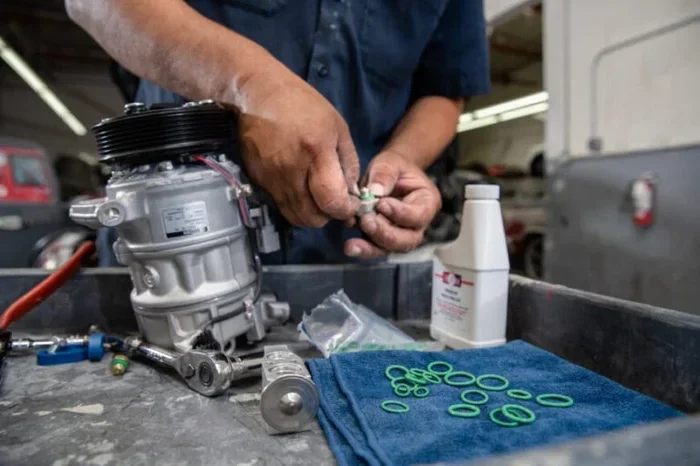
If you have the tools and the skills, here’s the general process:
- Recover the old refrigerant using a recovery machine.
- Disconnect the electrical connections and refrigerant lines.
- Remove the old compressor from the engine bay.
- Install the new compressor and reconnect all lines.
- Replace the receiver/dryer and expansion valve if needed.
- Evacuate the system with a vacuum pump for at least 30 minutes.
- Recharge the system with the correct amount of refrigerant and oil.
- Test the system for leaks and proper cooling performance.
The entire process takes most experienced DIYers about 4 to 6 hours. The biggest savings come from avoiding labor costs, which as we discussed can be $200 to $600 at a shop. But remember that mistakes can be expensive, so only attempt this if you’re confident in your abilities.
How Long Does a Car Compressor Last
Most car compressors last between 80,000 and 150,000 miles or about 10 to 15 years. However, lifespan varies based on how you use and maintain your vehicle. Some compressors fail at 60,000 miles, while others run strong past 200,000 miles.
Regular AC system maintenance helps extend compressor life. This includes running your AC for at least 10 minutes every few weeks, even in winter. This keeps the seals lubricated and prevents them from drying out. It also helps to address refrigerant leaks promptly before the compressor runs low on oil.
When a compressor fails, it’s often a sign of neglect or a related issue elsewhere in the system. Common causes of premature compressor failure include:
- Low refrigerant levels: This causes the compressor to work harder and overheat.
- Contaminated refrigerant: Moisture or debris in the system damages internal components.
- Electrical problems: Faulty wiring or a bad clutch relay can cause irregular compressor operation.
- Worn serpentine belt: A slipping belt puts extra strain on the compressor clutch.
Addressing these issues early can prevent the need for an early compressor replacement and save you from paying the how much does it cost to replace compressor in car price tag sooner than necessary.
Signs Your Car Compressor Needs Replacement
Catching compressor problems early can save you money. Here are the most common warning signs that your compressor is failing:
Warm Air From the Vents
This is the most obvious sign. If your AC blows warm air even after a full recharge, the compressor might not be engaging or pumping refrigerant properly. A failing compressor can’t maintain the pressure needed for cooling.
Strange Noises From the Engine Bay
Listen for grinding, squealing, or clicking noises when you turn on the AC. These sounds often indicate a worn bearing inside the compressor or a failing clutch. Ignoring these noises can lead to complete compressor failure.
Visible Refrigerant Leaks
If you see oily residue or fluid pooling under your car near the compressor, you likely have a refrigerant leak. Low refrigerant causes the compressor to overheat and eventually fail. Address leaks quickly to protect both your compressor and your wallet.
Compressor Clutch Not Engaging
The compressor clutch should spin when you turn on the AC. If it stays still, the clutch may be worn out or there could be an electrical issue. Sometimes the clutch can be replaced separately, which costs much less than a full compressor replacement.
Frequent AC Cycling
If your AC system keeps turning on and off rapidly, the compressor might be struggling to maintain proper pressure. This short cycling puts extra stress on the compressor and accelerates wear.
Repair vs Replace: Making the Right Decision
Sometimes the problem isn’t the compressor itself but a component that affects compressor performance. Before committing to a full replacement, consider these alternatives:
Clutch Replacement Only
If the compressor still pumps refrigerant but the clutch is faulty, replacing just the clutch costs much less. A clutch replacement typically runs $200 to $500 total, including parts and labor. This is a great option if the compressor body is still in good condition.
Compressor Rebuild
In some cases, a machine shop can rebuild your existing compressor. This involves replacing internal components like pistons, valves, and bearings. A rebuild costs less than a full replacement, usually around $300 to $700. However, rebuilds don’t always come with warranties, and the quality depends on the shop.
Seal Replacement
If the problem is a leaking front seal, replacing just the seal is the cheapest option. This costs around $150 to $400 and can extend the life of your compressor significantly. Not all compressors have replaceable seals, so check with your mechanic first.
When these options aren’t viable, a full replacement becomes the most practical choice. The key is getting a proper diagnosis so you don’t spend money on a new compressor when a simpler fix would have worked.
Tips to Save Money on Compressor Replacement
Nobody wants to overpay for car repairs. Here are proven ways to keep your compressor replacement costs as low as possible:
- Get multiple quotes: Visit at least two or three shops before committing. Labor rates and part sourcing vary widely.
- Choose aftermarket parts: A quality aftermarket compressor from a trusted brand performs just as well as OEM at a lower price.
- Ask about bundled deals: Some shops offer discounts when you replace the compressor, receiver/dryer, and expansion valve together.
- Check warranty coverage: Many compressors come with 1 to 3 year warranties. This protects you if the new part fails early.
- Compare dealership vs. independent shop costs: Dealerships charge more for labor but sometimes offer better part quality. Independent shops often provide better overall value.
- Maintain your AC system: Regular use and timely refrigerant recharges prevent premature compressor wear.
- Ask about payment plans: Some repair shops offer financing options for larger repairs, which can ease the upfront burden.
For those comparing costs across different vehicle systems, you might also want to check what it costs to install other types of equipment, similar to how much it costs to install a Generac 22Kw generator or how much a generator costs overall. The principle is the same: understanding the full scope of costs helps you make informed decisions.
Final Thoughts on Compressor Replacement Costs
The cost to replace a compressor in your car is a significant repair, but it’s also essential for keeping your vehicle comfortable and safe. Most drivers will pay between $500 and $1,500 for the full job, with the exact price depending on your vehicle, parts choice, and labor rates.
The best approach is to get a thorough diagnosis, understand all the costs involved, and then choose the repair path that fits your budget and vehicle needs. Whether you go with a dealership, an independent mechanic, or a DIY approach, being informed puts you in the best position to make a smart decision.
Don’t let a failing compressor leave you sweating on hot days. Address the problem quickly, compare your options, and invest in a quality repair that will keep your car’s AC system running strong for years to come.
Frequently Asked Questions
Is it worth replacing a car AC compressor?
Yes, replacing a car AC compressor is worth it if your vehicle is otherwise in good condition. A new compressor restores cooling comfort and prevents further damage to the AC system. The cost typically ranges from $500 to $1,500, which is reasonable compared to the cost of discomfort and potential system-wide failure if you delay the repair.
How long does it take to replace a compressor in a car?
A compressor replacement usually takes between 2 and 4 hours at a repair shop. The exact time depends on your vehicle model, how accessible the compressor is, and whether any additional components need replacement. DIY replacements may take longer, especially for first-timers.
Can I drive my car with a bad AC compressor?
Yes, you can drive with a bad compressor, but your AC won’t work. The compressor is not essential for engine operation, so your car will still run normally. However, if the compressor clutch is seized, it can put extra strain on the serpentine belt and affect other accessories like the power steering and alternator.
What happens if I don’t replace a failing AC compressor?
Ignoring a failing compressor can lead to more expensive repairs. A seized compressor can damage the serpentine belt, contaminate the entire AC system with metal debris, and cause refrigerant leaks. Over time, the repair bill grows significantly, potentially exceeding $2,000 when other components need replacement too.
Does car AC compressor replacement come with a warranty?
Most new compressors come with a warranty of 1 to 3 years, depending on the brand and where you purchase the part. Many repair shops also offer a labor warranty on their work, typically lasting 12 months or 12,000 miles. Always ask for warranty details before approving any repair.
What’s the difference between a remanufactured and new compressor?
A remanufactured compressor is a used unit that has been rebuilt with new internal components. It costs less than a new compressor, usually around $150 to $400, but the quality varies. A new compressor, whether OEM or aftermarket, offers better reliability and typically comes with a longer warranty. For most drivers, a new compressor is the safer choice.