
Air Compressor Wont Turn On Try These Proven Fixes Today
When your air compressor won’t turn on, it can stop your entire project in its tracks. This guide walks you through proven fixes that solve the most common reasons an air compressor fails to start, including tripped breakers, faulty pressure switches, and blown fuses. Whether you’re dealing with an electric compressor or a gas-powered unit, these troubleshooting steps will help you get back to work fast.
There’s nothing more frustrating than walking up to your air compressor won’t turn on right when you need it most. You flip the switch, press the button, and… nothing. No hum, no whir, no sign of life. Before you call a repair technician or start shopping for a replacement, take a deep breath. Most air compressor starting problems have simple, fixable causes that you can handle yourself in under 30 minutes.
This guide covers every major reason an air compressor might refuse to start. We’ll walk through each fix step by step, so you can diagnose the problem quickly and get back to your project. From basic power checks to internal component replacements, you’ll find everything you need right here. Let’s get your compressor running again.
Key Takeaways
- Check the power source first: Most air compressor starting issues come from a tripped breaker, loose plug, or damaged extension cord.
- The pressure switch is a common culprit: A stuck or faulty pressure switch prevents the compressor from receiving the signal to start.
- Don’t ignore the reset button: Many compressors have a thermal overload reset that trips when the motor overheats.
- Capacitor and relay failures cause hard starts: These small but critical parts wear out over time and need replacement.
- Regular maintenance prevents most problems: Draining the tank, changing oil, and cleaning filters keeps your compressor running smoothly.
- Know when to call a pro: Motor windings, refrigerant leaks, and internal mechanical failures require professional diagnosis.
📑 Table of Contents
- Why Your Air Compressor Won’t Turn On
- Internal Components That Can Prevent Startup
- Mechanical Issues That Block Startup
- How to Diagnose Your Compressor Problem Step by Step
- Prevention Tips to Keep Your Compressor Starting Reliably
- When to Call a Professional
- Common Mistakes People Make When Their Compressor Won’t Start
- Final Thoughts
Why Your Air Compressor Won’t Turn On
An air compressor that won’t start usually points to one of several common issues. Understanding these root causes helps you narrow down the problem fast. Most of the time, the fix is simpler than you think.
The air compressor not starting problem typically falls into one of these categories: power supply issues, internal component failures, or mechanical blockages. Each category has its own set of warning signs and solutions. Let’s break them all down.
Power Supply Problems
The number one reason compressors don’t start is a simple power issue. It sounds obvious, but you’d be surprised how often a loose cord or tripped breaker is the real problem.
- Tripped circuit breaker: Check your home’s breaker panel first. If the breaker for your compressor outlet has tripped, reset it and try again.
- Damaged power cord: Inspect the entire length of the cord. Frayed wires or visible damage mean the cord needs replacing.
- Faulty outlet: Plug another device into the same outlet to confirm it’s working.
- Wrong extension cord: Using an undersized extension cord can starve the compressor of power. Check what gauge extension cord for air compressor to make sure you’re using the right one.
Quick tip: Always plug your compressor directly into a wall outlet when possible. Extension cords introduce resistance that can prevent the motor from getting enough current to start.
Pressure Switch Issues
The pressure switch tells your compressor when to turn on and off based on tank pressure. When this switch fails, the compressor simply won’t start. It’s one of the most common reasons an air compressor won’t turn on even when power is flowing correctly.
Here’s what to look for with your pressure switch:
- Stuck contacts: The internal contacts can corrode or stick in the off position. You may need to clean or replace the switch.
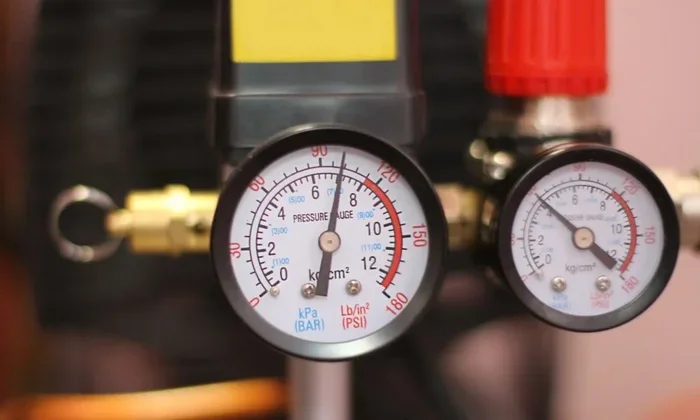
- Incorrect pressure settings: If the cut-in pressure is set too high, the compressor won’t know it’s time to start.
- Broken diaphragm: A damaged diaphragm prevents the switch from sensing pressure changes properly.
To test your pressure switch, listen for a click when you turn the compressor on. No click usually means the switch isn’t engaging. For more details on how to test compressor windings and related electrical components, visit how to test compressor windings.
Thermal Overload and Reset Button
Many compressors have a thermal overload protection system. When the motor gets too hot, this safety feature shuts everything down and trips a reset button. The compressor won’t turn on again until it cools down and you manually reset it.
Follow these steps to reset the thermal overload:
- Turn off the compressor and unplug it from the wall.
- Let the motor cool for at least 15 to 20 minutes.
- Locate the red reset button on the motor housing or near the pressure switch.
- Press the button firmly until it clicks into place.
- Plug the compressor back in and try starting it again.
If the reset button trips again immediately, there’s a deeper problem. The motor might be overheating due to low oil, a blocked ventilation port, or an electrical short. In that case, you’ll want to dig deeper into the cause rather than just resetting it repeatedly.
Internal Components That Can Prevent Startup
Sometimes the problem lives inside the compressor itself. Several internal parts work together to start the motor, and when one fails, the whole system goes down.
Start Capacitor Failure
The start capacitor gives the motor an extra burst of energy to kick into action. Without a working capacitor, the compressor hums but never actually starts. This is a very common issue with older units.
Signs of a bad start capacitor include:
- The compressor hums but the motor doesn’t spin.
- You hear a clicking sound when you press the start button.
- The compressor starts intermittently and then dies.
Capacitors are relatively cheap and easy to replace. Just make sure you match the voltage and capacitance ratings exactly. If you’re not comfortable working with electrical components, call a professional.
Run Capacitor and Relay Problems
Some compressors use a run capacitor and a start relay in addition to the start capacitor. The relay directs power to the start winding during the initial startup phase. When the relay fails, the compressor gets no signal to begin running.
To check the relay, you’ll need a multimeter to test for continuity. If the relay shows no continuity or makes a rattling sound when shaken, it needs replacement. These parts are inexpensive and widely available at hardware stores.
Motor Windings and Wiring
The motor windings are the coils of wire inside the motor that create the magnetic field needed to spin the compressor. Damaged or burned windings prevent the motor from running at all.
Common causes of winding damage include:
- Overheating from prolonged use without breaks.
- Power surges that spike voltage through the motor.
- Moisture or corrosion inside the motor housing.
- Worn insulation that causes short circuits between windings.
If you suspect winding damage, you’ll need to test the resistance with a multimeter. For a detailed walkthrough, check how to test compressor windings. Damaged windings often mean the motor needs to be rewound or replaced entirely.
Mechanical Issues That Block Startup
Not every problem is electrical. Sometimes something physical is preventing the compressor from turning over, even though the motor is getting power.
Seized or Stuck Motor
Over time, old oil can thicken and gum up the motor bearings. This creates too much friction for the motor to overcome, and the compressor won’t turn on. In severe cases, the motor can actually seize completely.
Here’s what you can try:
- Drain the old oil and add fresh oil for your air compressor.
- Try to manually rotate the flywheel. If it won’t budge, the motor is likely seized.
- Apply a penetrating lubricant to the bearings and let it sit for a few hours.
If the flywheel still won’t move after lubrication, the motor may need professional repair or replacement.
Blocked or Clogged Air Filter
A dirty air filter restricts airflow to the motor, which can cause overheating and prevent startup. This is an easy fix that many people overlook.
Replace your air filter every three to six months if you use the compressor regularly. A clean filter ensures proper ventilation and helps the motor run cool. This simple maintenance step can prevent many air compressor not starting issues before they happen.
Clogged Condenser or Cooling Fins
Dust, dirt, and debris can build up on the condenser fins and block heat dissipation. When the motor can’t cool down properly, the thermal overload trips and shuts everything off. Clean the fins regularly with a soft brush or compressed air to keep airflow unobstructed.
How to Diagnose Your Compressor Problem Step by Step
Diagnosing an air compressor that won’t start doesn’t have to be complicated. Follow this systematic approach to find the problem quickly.
- Check the power source. Verify the outlet works, the breaker hasn’t tripped, and the cord is intact.
- Look at the pressure switch. Make sure it’s set correctly and the contacts aren’t stuck.
- Press the reset button. Wait for the motor to cool and reset the thermal overload.
- Listen for sounds. A hum without a start means the capacitor or relay might be bad. Total silence points to a power or switch issue.
- Inspect the motor and flywheel. Try to turn the flywheel by hand. If it’s stuck, address the mechanical issue first.
- Test electrical components. Use a multimeter to check the capacitor, relay, and windings for proper function.
This diagnostic flowchart covers most air compressor troubleshooting scenarios. By working through each step, you’ll identify the root cause without wasting time on unnecessary repairs.
Prevention Tips to Keep Your Compressor Starting Reliably
The best fix is the one you never need. Regular maintenance keeps your compressor healthy and prevents most startup problems.
- Drain the tank after every use. Moisture buildup causes corrosion and can eventually affect the pressure switch and valves.
- Change the oil on schedule. Clean oil keeps the motor running smoothly and prevents overheating.
- Inspect cords and plugs regularly. Catching damage early prevents unexpected failures.
- Keep the compressor clean. Dust and debris around the motor and condenser reduce cooling efficiency.
- Store the compressor properly. Keep it in a dry, temperature-controlled area when not in use.
- Don’t exceed the duty cycle. Running the compressor continuously beyond its rated duty cycle causes overheating and premature wear.
If you’re setting up a new compressor or replacing an old one, make sure you choose the right size for your needs. Check how big of a compressor do I need to find the right unit for your workshop or job site.
When to Call a Professional
Not every problem should be a DIY fix. Some issues require the expertise of a qualified technician, especially when safety is on the line.
Call a professional if you notice any of the following:
- The motor hums but never starts, even after replacing the capacitor and relay.
- You smell burning insulation or see smoke coming from the motor housing.
- The compressor trips the breaker every time you try to start it.
- You’ve checked all the simple fixes and the compressor still won’t turn on.
- The pressure switch tests fine but the compressor still won’t start.
A trained technician can safely diagnose electrical faults, test motor windings with specialized equipment, and handle refrigerant-related issues on HVAC-connected compressors. Trying to repair complex electrical problems yourself can be dangerous and may void your warranty.
For compressors connected to air conditioning systems, low refrigerant levels can also prevent the compressor from starting. Learn more about will low freon cause compressor not to come on to understand how refrigerant affects compressor operation.
Common Mistakes People Make When Their Compressor Won’t Start
Avoid these common pitfalls that make compressor problems worse or delay the fix:
- Ignoring the reset button: Many people don’t even know their compressor has a thermal overload reset. Check it first before assuming something is broken.
- Using the wrong extension cord: A thin or long extension cord can drop too much voltage, preventing the compressor from starting. Always use a heavy-duty, properly sized cord.
- Skipping the pressure switch check: People often jump to electrical testing while overlooking the simplest mechanical cause.
- Forcing the flywheel: If the motor is seized, forcing it can damage the winding or the starting mechanism further.
- Neglecting regular maintenance: Most startup problems are preventable with basic upkeep like oil changes and tank draining.
By avoiding these mistakes, you’ll save time and money while keeping your compressor in top shape for years to come.
Final Thoughts
An air compressor won’t turn on for a reason, and in most cases, that reason is something you can fix yourself. Start with the basics: power, pressure switch, and reset button. Work your way through the electrical and mechanical components systematically. Most compressor problems are the result of simple wear and tear, not catastrophic failure.
Regular maintenance is your best defense against startup problems. Drain the tank, change the oil, clean the filters, and inspect your cords. These small habits keep your compressor reliable and extend its lifespan significantly. When in doubt, don’t hesitate to consult a professional, especially for complex electrical or refrigerant issues.
Now that you know how to diagnose and fix the most common reasons an air compressor won’t start, you’re equipped to handle the problem with confidence. Grab your multimeter, check your connections, and get back to the work that matters. Your compressor should be up and running in no time.
Frequently Asked Questions
Why does my air compressor hum but not start?
A humming compressor usually means the start capacitor or run capacitor has failed. The motor receives power but lacks the extra boost needed to begin spinning. Replace the capacitor with one that matches the original voltage and capacitance ratings, and the compressor should start normally.
How do I reset my air compressor if it won’t turn on?
Unplug the compressor and let the motor cool for 15 to 20 minutes. Locate the red thermal overload reset button on the motor housing or near the pressure switch. Press it firmly until it clicks. Plug the compressor back in and try starting it again. If the button trips immediately, there’s an underlying issue that needs further diagnosis.
Can a clogged air filter prevent my compressor from starting?
Yes, a severely clogged air filter restricts airflow to the motor, causing it to overheat. The thermal overload protection then shuts the compressor down before it can start. Replace the air filter regularly, typically every three to six months, to prevent this issue.
What should I do if my air compressor trips the breaker every time I try to start it?
This usually indicates an electrical short or a failing motor. Check the power cord for damage first. If the cord is fine, the problem is likely inside the compressor. A shorted winding or failing capacitor can draw too much current and trip the breaker. In this case, professional repair is the safest option.
How do I know if the pressure switch is bad?
Listen for a clicking sound when you turn the compressor on. No click means the switch isn’t engaging. You can also use a multimeter to test for continuity across the switch contacts. If there’s no continuity when the switch should be closed, the pressure switch needs replacement.
Can old oil cause an air compressor not to start?
Yes, old or degraded oil thickens over time and increases friction on the motor bearings. This extra resistance can prevent the motor from turning over. Draining the old oil and refilling with fresh, manufacturer-recommended oil often resolves this problem immediately.
=== CONCLUSION ===
Dealing with an air compressor won’t turn on situation is frustrating, but it’s almost always fixable. The key is to work through the problem systematically, starting with the simplest and most common causes. Power supply issues, pressure switch failures, thermal overload trips, and capacitor problems account for the vast majority of startup failures. With the right tools and a little patience, you can diagnose and fix most of these issues yourself.
Remember that prevention goes a long way. Regular maintenance like draining the tank, changing the oil, and cleaning filters keeps your compressor healthy and reduces the chance of unexpected failures. When the problem is beyond a simple fix, don’t hesitate to bring in a professional. Your safety matters more than any repair job.
Now you have the knowledge and confidence to tackle this problem head-on. Get out there, check those connections, and get your air compressor running again today.




2 Comments