Best Tire Service Truck Air Compressor Options Available
Finding the right tire service truck air compressor can transform your fleet maintenance. A high-quality truck air compressor delivers fast, reliable inflation for truck tires, saving time and money. This guide covers the best on-board air systems, key features, and top models to suit any mobile air service need. Read on to discover the perfect portable air compressor for your tire service truck.
A tire service truck air compressor is the heart of any mobile tire business. Without a reliable truck air compressor, you cannot inflate truck tires quickly or safely. Fleets depend on fast tire inflation to stay on the road. A good on-board air system turns a slow job into a quick stop.
Choosing the right tire service truck air compressor can feel overwhelming. There are diesel units, electric models, and portable options. Each has its own strengths. This guide breaks down the choices in simple terms. You will learn what features matter most. You will also see the best air compressor for tire service models on the market today.
Whether you run a small fleet or a large mobile air service, the right compressor saves time and money. It keeps your truck tire service running smoothly. Let us explore the options together.
Key Takeaways
- Right compressor boosts productivity: A dedicated tire service truck air compressor cuts tire change time dramatically.
- Diesel vs. electric matters: Choose diesel for heavy-duty jobs or electric for cleaner, quieter operation.
- CFM and PSI are critical: Match the compressor’s output to your truck tire pressure and volume needs.
- Portability adds flexibility: Portable units let you service multiple trucks or move to remote sites.
- Regular maintenance extends life: Simple checks like draining the tank and changing filters keep your compressor running.
- Top models balance price and performance: Several options fit different budgets and fleet sizes.
📑 Table of Contents
- Why a Tire Service Truck Air Compressor Is a Game-Changer
- Types of Air Compressors for Tire Service Trucks
- Must-Have Features for Tire Service Truck Compressors
- Best Tire Service Truck Air Compressor Options
- Installation and Maintenance Tips for Longevity
- Final Verdict: Choosing the Right Compressor for Your Fleet
Why a Tire Service Truck Air Compressor Is a Game-Changer
The Cost of Downtime Without On-Board Air
Imagine a truck pulling into your bay with a flat truck tire. You need to inflate it fast. Without a tire service truck air compressor, you must wait for a shop compressor. That delay costs you money. Every minute a truck sits idle is a lost dollar. Fleet managers know this pain well.
A dedicated truck air compressor eliminates that wait. You can start inflating the moment the truck arrives. This speed keeps your workflow moving. It also improves customer satisfaction. Drivers appreciate a quick turnaround. Your reputation grows with every fast service.
How a Truck-Mounted Compressor Boosts Productivity
An on-board air system lets you work anywhere. You are not tied to a fixed shop air line. This freedom is a huge advantage. You can service trucks at loading docks, job sites, or remote yards.
With a portable air compressor on your truck, you carry your own power source. No need to plug into external outlets. This independence means more jobs per day. It also reduces the need for extra equipment. Your tire service truck becomes a mobile service hub.
Types of Air Compressors for Tire Service Trucks
Diesel-Powered Truck Air Compressors
Diesel units are the workhorses of the industry. They deliver high volume and pressure. A diesel air compressor can handle multiple truck tires in a row. They run strong even in cold weather.
These compressors are perfect for heavy-duty fleet maintenance. They do not rely on the truck’s electrical system. This means less strain on the engine. However, diesel units are louder and heavier. They also need fuel and regular oil changes. The trade-off is raw power and durability.
Electric Truck Tire Inflator Systems
Electric truck tire inflator systems are cleaner and quieter. They plug into the truck’s battery or a generator. Many air compressor for trucks electric models are compact and lightweight. They are ideal for urban fleets or noise-sensitive areas.
An electric tire service truck air compressor is easy to install. You do not need fuel lines or exhaust management. The downside is lower peak output. They work best for single-truck service or light-duty fleets. For most daily truck tire service, an electric unit is more than enough.
Portable vs. Integrated Units
Portable air compressor units sit on a cart or in a toolbox. You move them between trucks easily. They are great for small operations. An integrated unit is built into the truck body. It stays with the vehicle and uses its fuel or power.
Integrated onboard compressor setups are more convenient. They are always ready to go. Portable units offer flexibility if you service many different trucks. Both types have their place. Your choice depends on fleet size and job site needs.
Must-Have Features for Tire Service Truck Compressors
CFM and PSI Ratings Explained
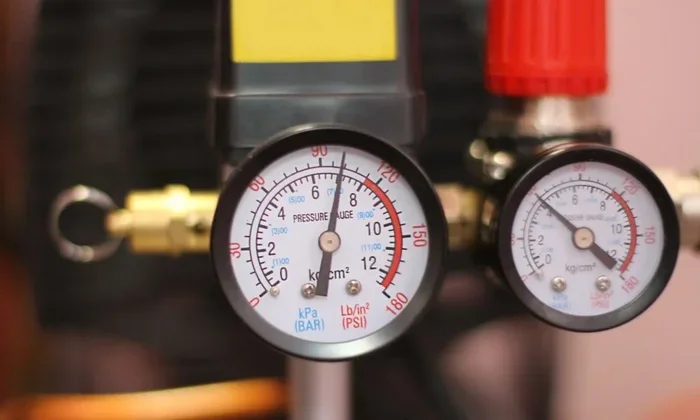
CFM stands for cubic feet per minute. It measures air volume. PSI means pounds per square inch. It measures air pressure. Truck tires typically need 100 to 130 PSI. You need enough CFM to reach that pressure quickly.
A good tire service truck air compressor delivers at least 5 to 10 CFM at 100 PSI. Higher CFM means faster inflation. Check the duty cycle too. A 100% duty cycle means the compressor can run continuously. This is vital for busy fleet maintenance shops.
Tank Size and Duty Cycle
Tank size affects how long you can work without the motor kicking in. A larger tank holds more compressed air. It gives you bursts of high volume for quick tire inflation. However, a bigger tank adds weight.
For a tire service truck, a 6 to 20-gallon tank is common. Smaller tanks are fine for single-truck jobs. Larger tanks suit high-volume operations. Always match the tank to your daily workload.
Noise Level and Portability
Noise matters in residential areas or late-night service. A quiet truck air compressor keeps you compliant with local noise rules. Look for units rated under 70 decibels. Electric models are generally quieter than diesel.
Portability includes weight and wheel design. A mobile air service unit should have sturdy wheels and a handle. Some models fold into a compact footprint. This makes storage easy in a tight truck bed.
Best Tire Service Truck Air Compressor Options
Below is a comparison of four top air compressor for tire service models. Each offers a different balance of power, price, and portability.
| Model | Type | CFM @ PSI | Tank Size | Power Source | Price Range | Best For |
|---|---|---|---|---|---|---|
| Rolair CT19WP | Portable Electric | 5.3 @ 90 PSI | 9 gallons | 115V Electric | $600–$800 | Light-duty fleets and mobile tire vans |
| DeWalt DWFP55130 | Portable Electric | 7.5 @ 90 PSI | 6 gallons | 120V Electric | $500–$700 | Quick inflation for single truck service |
| Campbell Hausfeld FP209600AV | Stationary Electric | 5.0 @ 100 PSI | 60 gallons | 230V Electric | $900–$1,200 | High-volume shop-style truck service |
| VMAC UNDERDOG | Truck-Mounted Diesel | 18.5 @ 100 PSI | Integrated | Diesel Engine | $4,000–$6,000 | Heavy-duty fleet and roadside recovery |
The Rolair CT19WP is a solid electric portable air compressor. It fits easily in a truck bed. It delivers enough CFM for most truck tire inflation tasks. The DeWalt DWFP55130 offers a higher CFM rating at a lower price. It is a great entry-level choice for tire service truck owners.
The Campbell Hausfeld FP209600AV is a large stationary unit. It is best for a fixed truck that stays in a yard. Its big tank allows continuous work. The VMAC UNDERDOG is a premium diesel truck-mounted compressor. It is built for serious fleet maintenance and high-pressure demands.
Installation and Maintenance Tips for Longevity
Proper Mounting and Wiring
Install your tire service truck air compressor on a stable, vibration-free surface. Use rubber mounts to reduce noise and wear. For electric units, ensure the wiring matches the amp draw. Use a dedicated circuit with the correct gauge wire.
Diesel units need a secure base and proper exhaust routing. Always follow the manufacturer’s installation guide. A wrong mount can shorten the compressor’s life. Take the time to do it right the first time.
Routine Maintenance Checklist
Keep your truck air compressor in top shape with simple daily and weekly checks.
- Daily: Drain the tank moisture after each use. Check the oil level on diesel models.
- Weekly: Inspect hoses and quick couplers for leaks or wear.
- Monthly: Clean or replace the intake filter. Check the belt tension if applicable.
- Quarterly: Test the pressure switch and safety valve.
- Annually: Change the oil and inspect the pump for unusual noise.
These steps prevent costly breakdowns. A well-maintained air compressor truck will serve you for many years.
Final Verdict: Choosing the Right Compressor for Your Fleet
Matching Compressor to Fleet Size
Small fleets of 1 to 5 trucks can use a portable electric tire service truck air compressor. Look for 5 to 7 CFM at 100 PSI. Medium fleets of 6 to 20 trucks benefit from a larger electric or diesel unit. Consider a 10+ CFM model with a big tank. Large fleets with dedicated service bays should invest in a heavy-duty truck-mounted compressor like the VMAC UNDERDOG.
Budget Considerations
Portable electric compressors start around $500. They offer the best value for most small operators. Mid-range electric units cost $800 to $1,500. They add tank capacity and higher CFM. Diesel truck-mounted systems run $3,000 to $6,000. They are an investment that pays off through speed and uptime.
Think of the compressor as a tool that earns money. A faster truck tire service means more jobs per day. The right tire service truck air compressor pays for itself quickly.
Choosing a tire service truck air compressor does not have to be complicated. Focus on CFM, PSI, tank size, and power type. Match these to your fleet’s daily needs. A reliable truck air compressor keeps your tires inflated and your business moving. Start with a solid unit from the list above. You will feel the difference in every job.
Frequently Asked Questions
What size air compressor do I need for a tire service truck?
You need a compressor that delivers at least 5 to 10 CFM at 100 PSI. This is enough to inflate a standard truck tire in a few minutes. For larger fleets or high-volume work, choose a model with 10+ CFM. Always check the duty cycle to ensure it can run continuously.
Is a diesel or electric compressor better for a tire service truck?
Diesel compressors offer the most power and are ideal for heavy-duty, high-volume work. They do not rely on the truck’s electrical system. Electric compressors are quieter, cleaner, and easier to install. They work well for light to medium-duty truck tire service and urban fleets.
Can I use a portable air compressor for on-site truck tire service?
Yes, a portable air compressor is perfect for mobile tire service. It fits in a truck bed or on a cart. You can move it between vehicles or job sites. Just make sure it has enough CFM and PSI for truck tires.
How often should I maintain my tire service truck air compressor?
Perform daily draining of the tank moisture. Check the oil weekly on diesel models. Clean or replace the intake filter monthly. Inspect hoses and couplings for leaks quarterly. Change the oil annually. Regular maintenance keeps your truck air compressor running smoothly and extends its life.
What is the difference between a tire inflator and a full air compressor?
A tire inflator is a small, portable unit that only inflates tires. A full air compressor for tire service can also power impact wrenches, grinders, and other tools. For a tire service truck, a full compressor gives you more versatility. It lets you offer more services beyond just tire inflation.
How much does a tire service truck air compressor cost?
Portable electric models range from $500 to $1,500. Mid-size electric units cost $800 to $1,200. Heavy-duty diesel truck-mounted systems run from $3,000 to $6,000. The price depends on power, tank size, and features. Choose the model that fits your fleet size and daily workload.
Conclusion
The right tire service truck air compressor is a smart investment for any fleet operator. It brings speed, reliability, and independence to your truck tire service. Whether you pick a portable electric unit or a powerful diesel truck-mounted compressor, the key is matching it to your needs. Consider your fleet size, job sites, and budget. Follow the maintenance tips to keep it running strong. With the right on-board air system, you will inflate tires faster, serve more customers, and keep your trucks on the road. Start your search today and feel the difference a quality truck air compressor makes.