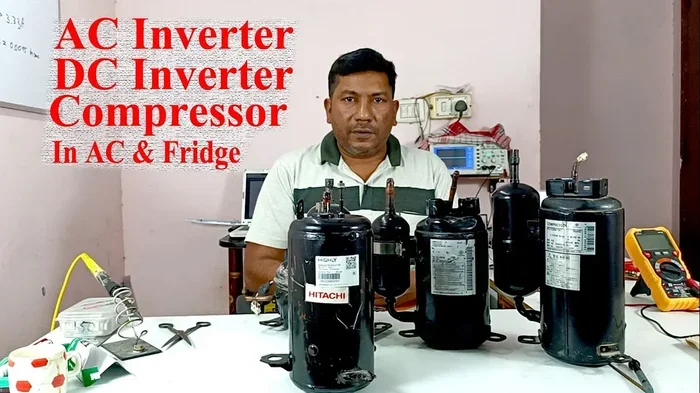
How Does an Inverter Compressor Work Inside Your AC
An inverter compressor adjusts its speed to match cooling demand, making your AC more efficient and comfortable. Unlike traditional compressors that only run at full power or off, inverter technology continuously varies motor speed. This means lower energy bills, quieter operation, and longer equipment life for your air conditioning system.
This is a comprehensive guide about how does an inverter compressor work.
Key Takeaways
- Variable Speed Technology: An inverter compressor adjusts its motor speed in real time to match your cooling needs.
- Energy Efficiency: By running at lower speeds for longer, inverter compressors use significantly less electricity than traditional units.
- Quieter Operation: Because the compressor never cycles on and off aggressively, it runs much more quietly.
- Longer Lifespan: Reduced wear and tear from soft-starting and variable speeds extends the life of your AC unit.
- Cost Savings: Lower energy consumption translates directly into reduced utility bills over time.
- Precise Temperature Control: Inverter compressors maintain set temperatures within a narrow range for consistent comfort.
[FEATURED_IMAGE_PLACEHOLDER]
What Is an Inverter Compressor and Why Does It Matter?
Your air conditioning system relies on a compressor to cool your home. It is the heart of the entire cooling system. Without it, refrigerant would never move, and your indoor air would stay hot and humid.
An inverter compressor works differently from a regular compressor. Instead of turning on and off at full blast, it adjusts its speed continuously. Think of it like the cruise control in your car. A traditional compressor is more like flooring the gas pedal and then taking your foot off repeatedly.
This technology has changed how we think about home comfort. More homeowners are choosing inverter air conditioners because they save energy and reduce noise. But how does the magic actually happen inside that metal box? Let us break it down.
The inverter compressor uses a variable frequency drive to control the electrical supply to the motor. This changes the compressor speed based on how much cooling your space needs. The result is a system that works smarter, not harder.
The Key Components Inside an Inverter Compressor
Understanding what is inside the unit helps you appreciate how it operates. Each part plays a specific role in the refrigerant cycle and the overall compressor operation.
The Variable Frequency Drive (VFD)
The VFD is the brain of the inverter compressor. It converts incoming AC power into DC power, then inverts it back to AC at the desired frequency. This controls the motor speed precisely. Without the VFD, the compressor would run at one fixed speed all the time.
The VFD reads signals from the thermostat and adjusts output accordingly. If your room is already cool, it slows down. If the temperature rises, it speeds up. This constant adjustment is what makes inverter technology so efficient.
The Compressor Motor
The motor is what physically drives the compressor. In an inverter compressor, this motor is typically a brushless DC motor or a special AC motor designed for variable speed. It responds quickly to changes in the VFD signal.
Traditional compressors use a single-speed motor. It either runs at full capacity or stops completely. The inverter motor, on the other hand, can operate at as low as 20% of its maximum capacity. This wide range is key to the energy savings.
The Rotary or Scroll Mechanism
Most modern inverter compressors use either a rotary or scroll mechanism. A rotary compressor uses a rotating cylinder to compress refrigerant gas. A scroll compressor uses two spiral-shaped pieces that mesh together. Both types work well with variable speed control.
The design of these mechanisms allows for smooth operation at different speeds. This is why inverter compressors tend to vibrate less and last longer than their traditional counterparts.
How Does an Inverter Compressor Work Step by Step?
Now let us walk through the actual compressor operation in real time. Understanding each step makes the technology much easier to grasp.
Step 1: The Thermostat Sends a Signal
When your room temperature rises above the set point, the thermostat sends a signal to the air conditioning unit. The inverter compressor receives this signal and begins to ramp up. It does not jump straight to full power. Instead, it starts at a low speed and gradually increases.
This soft start is a game-changer. Traditional compressors experience a huge power surge every time they kick on. The inverter compressor avoids this entirely, which reduces strain on the electrical system.
Step 2: The Refrigerant Gets Drawn In
As the compressor motor spins, it creates a low-pressure area. This draws in warm gaseous refrigerant from the evaporator coil. The refrigerant has absorbed heat from your indoor air and is now ready to be compressed.
At low speeds, the compressor draws in less refrigerant. At higher speeds, it draws in more. This is how the variable speed compressor matches output to demand. Your system never wastes energy cooling more than needed.
Step 3: Compression Happens
Inside the compression chamber, the refrigerant gas gets squeezed. This raises its pressure and temperature significantly. The hot, high-pressure gas then moves toward the condenser coil outside your home.
The speed of compression depends on the cooling load. On a mild day, the compressor might run at 40% speed. On a scorching afternoon, it could climb to 80% or higher. This dynamic response is the core advantage of inverter technology.
Step 4: Heat Release and Expansion
The compressed gas flows through the condenser coil and releases heat outside. It then passes through an expansion valve, which drops its pressure and temperature. The cool refrigerant returns to the evaporator coil to absorb more indoor heat.
The inverter compressor adjusts its speed throughout this entire cycle. It constantly monitors the return temperature and modifies output. This continuous loop keeps your home at a steady, comfortable temperature.
Step 5: Ramping Down When Cooling Is Sufficient
Once your room reaches the set temperature, the compressor does not shut off. Instead, it slows way down. It might drop to 20% speed or even lower. This “maintenance mode” uses a tiny fraction of the energy that a full-power cycle would require.
Traditional compressors would shut off completely and then restart when the temperature drifted. Each restart causes a power spike and adds wear to the motor. The inverter compressor avoids all of this by simply easing off the throttle.
Inverter Compressor vs. Traditional Compressor
How do these two types really compare? Let us look at the key differences that matter for your home and your wallet.
Energy Consumption
The inverter compressor wins this category by a wide margin. Because it runs at variable speeds, it avoids the energy-hungry startup spikes that plague traditional units. Studies show inverter ACs can use 30% to 50% less electricity than conventional models.
If you are curious about how much power your cooling system draws, you might also want to learn about how much gas a generator uses per hour, since both topics relate to home energy efficiency.
Noise Levels
Traditional compressors are loud. You hear the unit kick on, rumble at full power, and then click off. The inverter compressor is much quieter, especially during low-speed operation. Many modern units run so softly that you barely notice them.
Temperature Stability
A traditional compressor creates temperature swings. It cools the room fast, shuts off, the temperature rises, and it kicks back on. The inverter compressor maintains a much narrower temperature band. You feel more consistent comfort without the hot-cold cycles.
Lifespan and Maintenance
Because the inverter compressor soft-starts and runs at varied speeds, it experiences less mechanical stress. This typically means a longer lifespan and fewer repair calls. The compressor unit simply does not work as hard, so components last longer.
However, inverter compressors do require specialized technicians for repairs. The electronic components in the VFD can be more complex than those in a traditional unit. Always make sure your HVAC service provider has experience with inverter technology.
Initial Cost
Inverter AC units tend to cost more upfront. The advanced technology and electronic components add to the manufacturing expense. However, the energy savings over time often offset this higher initial cost. Many homeowners recoup the difference within a few years through lower utility bills.
When considering the total cost of ownership, it is also worth thinking about how much a whole home generator costs, especially if you want backup cooling during power outages.
| Feature | Inverter Compressor | Traditional Compressor |
|---|---|---|
| Speed Control | Variable speed (20%-100%) | Fixed speed (on/off only) |
| Energy Use | 30%-50% less electricity | Higher consumption due to startup surges |
| Noise Level | Quiet, especially at low speeds | Loud on/off cycling |
| Temperature Control | Very precise, narrow range | Wider swings between cycles |
| Lifespan | Longer due to reduced wear | Shorter due to frequent startups |
| Upfront Cost | Higher | Lower |
| Maintenance | Requires specialized tech | Widely available service |
Benefits of Choosing an Inverter Compressor for Your Home
Still not sure if an inverter compressor is right for you? Here are the real-world benefits that homeowners love most.
Lower Energy Bills
The biggest selling point is energy savings. An inverter compressor uses only the power it needs at any given moment. Over a hot summer, these savings add up quickly. Many homeowners report a noticeable drop in their monthly electricity costs after switching to an inverter AC.
Better Indoor Air Quality
Because the inverter compressor runs for longer periods at lower speeds, it filters and dehumidifies your air more effectively. The steady airflow pulls more moisture and pollutants through the filter. You breathe cleaner, healthier air inside your home.
Environmentally Friendly
Less energy consumption means a smaller carbon footprint. If you care about reducing your environmental impact, an inverter air conditioner is a smart choice. Many modern inverter units also use eco-friendly refrigerants that are less harmful to the ozone layer.
Works Great with Solar and Backup Power
Inverter compressors are more efficient, which means they pair well with solar power systems. If you have a solar generator or are considering one, an inverter AC will draw less power and run longer on stored energy. This makes it an excellent match for off-grid or hybrid home energy setups.
Similarly, if you rely on a backup generator during outages, the lower power draw of an inverter compressor means your generator can run your AC for a longer time. You can learn more about how a generator works to understand how it powers your home during emergencies.
Smart Home Compatibility
Most modern inverter compressors work with smart thermostats and home automation systems. You can adjust cooling remotely, set schedules, and monitor energy usage from your phone. The variable speed control makes it easy for smart systems to fine-tune comfort throughout the day.
Common Issues with Inverter Compressors and How to Fix Them
Inverter compressors are reliable, but they are not immune to problems. Here are the most common issues and what you can do about them.
Refrigerant Leaks
Low refrigerant levels cause the compressor to work harder and run at higher speeds than necessary. If you notice your AC is not cooling as well as it used to, check for leaks. A professional HVAC technician can inspect the system and recharge the refrigerant if needed.
VFD or Inverter Board Failure
The variable frequency drive is an electronic component and can fail over time. Power surges, moisture, and age can all contribute to this. If your compressor makes unusual noises or stops responding to thermostat changes, the inverter board may need replacement.
Dirty Coils and Filters
Even the best inverter compressor will struggle if the coils and filters are clogged. Dirty filters restrict airflow, forcing the compressor to run longer and harder. Regular maintenance, including cleaning or replacing filters every 1-3 months, keeps everything running smoothly.
Thermostat Sensor Issues
The inverter compressor relies on accurate temperature readings to adjust its speed. If the thermostat sensor is faulty or poorly placed, the compressor may not respond correctly. Make sure your thermostat is away from direct sunlight, vents, and heat-producing electronics.
Quick Tips for Maximizing Your Inverter Compressor’s Performance
- Keep your thermostat set at a consistent temperature. Frequent large changes force the compressor to work harder.
- Seal windows and doors properly. Less cool air escaping means the compressor runs less overall.
- Schedule annual professional maintenance. A technician can spot small issues before they become expensive repairs.
- Use ceiling fans to circulate cool air. This helps the compressor maintain temperature at lower speeds.
- Clean the outdoor condenser unit regularly. Remove debris, leaves, and dirt to ensure proper heat release.
- Consider the size of your space carefully. An oversized or undersized unit will cause the compressor to cycle inefficiently. If you are unsure, learn how to size a generator or AC system properly for your home.
Expert Insights on Inverter Compressor Technology
HVAC professionals agree that inverter technology represents the future of home cooling. The ability to vary compressor speed has fundamentally changed how we think about energy efficiency and comfort. Experts recommend inverter compressors for almost every residential application.
The technology continues to improve each year. Newer models feature smarter controls, better refrigerants, and even higher efficiency ratings. Some advanced units can adjust compressor speed in tiny increments, providing incredibly precise temperature management.
One thing experts emphasize is the importance of proper installation. Even the best inverter compressor will underperform if it is not installed correctly. Always hire a licensed and experienced technician who understands variable speed systems.
Conclusion
The inverter compressor is a remarkable piece of engineering that has transformed home cooling. By adjusting its speed to match real-time demand, it delivers superior comfort, significant energy savings, and a longer equipment lifespan. Whether you are replacing an old AC unit or building a new system, inverter technology is the clear choice for modern homeowners.
Understanding how the inverter compressor works inside your AC gives you the knowledge to make better decisions about your home comfort. You can have confidence that your system is running efficiently, quietly, and effectively. The investment pays off in lower bills and a more comfortable living space for years to come.
Take the time to maintain your system properly, choose the right size for your home, and work with qualified professionals. Your inverter compressor will reward you with reliable, efficient cooling season after season.
Frequently Asked Questions
What is the main difference between an inverter compressor and a regular compressor?
A regular compressor runs at full speed or turns off completely. An inverter compressor adjusts its speed continuously to match the cooling demand. This variable speed control is what makes inverter units more energy-efficient and quieter than traditional models.
Does an inverter compressor really save money on electricity bills?
Yes, inverter compressors can save 30% to 50% on cooling costs compared to traditional compressors. Because they run at lower speeds for longer periods, they avoid the energy-hungry startup surges that waste electricity. Most homeowners see the payback within a few years.
Can an inverter compressor be repaired, or does it need to be replaced entirely?
Most inverter compressor issues can be repaired by a qualified technician. Common fixes include refrigerant recharging, inverter board replacement, and cleaning coils. However, if the compressor motor itself fails, a full unit replacement may be necessary.
Is an inverter compressor louder than a traditional compressor?
No, inverter compressors are significantly quieter. They run at low speeds for most of the time and avoid the loud startup noise that traditional compressors produce. Many homeowners notice a big difference in noise levels after switching to an inverter unit.
How long does an inverter compressor typically last?
With proper maintenance, an inverter compressor can last 15 to 20 years or more. The reduced mechanical stress from variable speed operation means less wear on components. Regular filter changes and annual professional checkups help maximize its lifespan.
Can I use an inverter compressor with a solar power system or backup generator?
Absolutely. Inverter compressors are ideal for solar setups because they draw less power and can run efficiently on lower energy supplies. They also work well with backup generators, including portable units. If you are exploring backup options, you might check how to plug a generator into your house safely to support your AC system.


