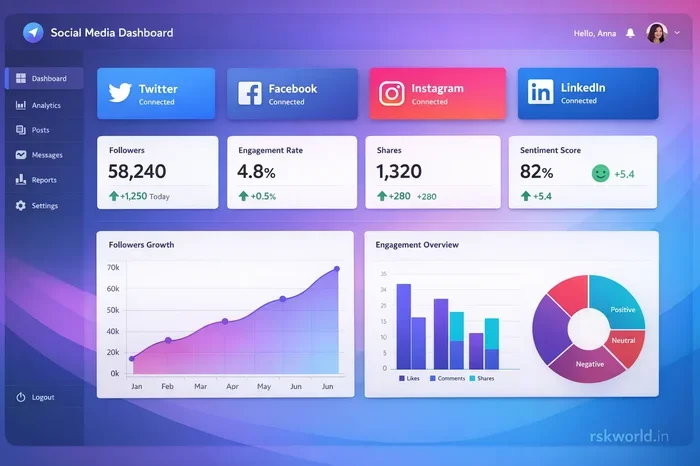
Social Media Customer Service Tools That Actually Work
Social media customer service tools help businesses respond faster, track conversations, and keep customers happy across every platform. The right customer service software can cut response times and boost customer satisfaction significantly. This guide covers the top tools, key features, and tips to pick the best fit for your team.
Running a business today means being available where your customers already are. And right now, that place is social media. People don’t just post reviews anymore. They reach out directly through Facebook, X, Instagram, and LinkedIn looking for help. That is why social media customer service tools have become essential for any team that wants to keep up.
But here is the thing. Not all tools are created equal. Some are bloated with features you will never use. Others are too simple and fall apart the moment your inbox fills up. The goal of this guide is to cut through the noise. We will look at what makes these tools work, which ones actually deliver, and how to pick the right one for your business.
Whether you run a small shop or a large support team, the right customer service software can change the way you interact with people online. Let us dive in.
Key Takeaways
- Faster responses matter: The best social media customer service tools let your team reply in minutes, not hours.
- Omnichannel support is key: Managing all platforms from one dashboard saves time and reduces errors.
- Automation saves effort: Smart automation tools handle routine questions so your team focuses on complex issues.
- Social listening gives insight: Tracking mentions and sentiment helps you stay ahead of problems.
- Choosing the right tool depends on your needs: Team size, budget, and platform mix all matter.
- Avoid common mistakes: Ignoring metrics and skipping team training can undo even the best software investment.
📑 Table of Contents
Why Social Media Customer Service Tools Matter
Customers expect quick answers. They expect personal touches. And they expect you to be where they already are. Social media has changed the game. A single public comment can turn into a brand crisis overnight if it is not handled fast.
Social media customer service tools give your team the power to manage all of this from one place. They do more than just reply to messages. They track conversations, measure performance, and help you build a stronger brand reputation over time.
Here is why these tools have become so important:
- Speed is everything. Studies show that customers expect a reply within an hour on social media. Response time directly affects customer satisfaction.
- Public visibility. Every interaction is visible. A great reply can earn you a loyal customer. A slow or rude one can cost you thousands.
- Volume is growing. More people are reaching out through social channels every year. Your team needs help managing that load.
- Context matters. Good tools keep a full history of each customer so your team never has to ask the same question twice.
Without the right tools, your customer support team is flying blind. With them, you get clarity, speed, and control.
Top Social Media Customer Service Tools That Deliver
Now let us talk about the tools themselves. There are many options out there, but some stand out because of real results, solid features, and honest user feedback. Here are the social media customer service tools that actually work in 2024 and beyond.
Tools Built for Speed and Simplicity
Some teams just need a fast way to manage their social media inbox. They do not need a hundred extra features. Tools in this category focus on speed, clean design, and easy setup. They let you assign tickets, set priorities, and reply from a single screen.
These tools are perfect for small to mid-sized businesses. They keep things simple without sacrificing power. A good example of how specialized tools work comes from industries that rely on dedicated service platforms. Think about how Atlas Copco Air Compressor Service provides focused support for specific equipment. The same idea applies here. A tool built for a specific need often outperforms a generic one.
Tools That Handle High Volume
Larger teams need different capabilities. They need to manage hundreds or even thousands of conversations per day. These platforms offer advanced ticketing systems, routing rules, and team collaboration features.
They also include social listening features that track brand mentions across the web. This helps you catch issues before they blow up. You can monitor keywords, hashtags, and competitor activity all in one place.
Much like how Air Compressor Parts And Service ensures every component of a system works together smoothly, these high-volume tools connect all your social channels into one unified workflow.
Tools With Strong Automation
Automation is a game changer for customer service teams. The best tools let you set up auto-replies, chatbots, and smart routing. This means routine questions get answered instantly, even when your team is offline.
Some platforms use AI to suggest replies based on past conversations. Others automatically tag and categorize incoming messages so nothing falls through the cracks. The result is faster real-time engagement and a happier customer service team.
And just as Compressor Pump And Service keeps critical machinery running without constant human intervention, automation tools keep your social support engine humming around the clock.
Key Features to Look For
Not every tool has the same strengths. Before you commit, make sure the platform you choose has the features that matter most for your situation.
Omnichannel Support
The best customer service software lets you manage messages from Facebook, Instagram, X, LinkedIn, email, and even WhatsApp in one place. This is called omnichannel support. It means your team never has to switch between apps to find the next conversation.
Omnichannel support also gives you a full picture of each customer. You can see their past messages, orders, and preferences all in one view. This leads to better customer engagement and fewer repeated questions.
Team Collaboration
Your customer support team needs to work together. Look for tools that allow internal notes, role assignments, and shared inboxes. These features keep everyone on the same page.
Some platforms also offer collision detection. This prevents two agents from replying to the same message at the same time. Small features like this save a lot of headaches.
Reporting and Analytics
You cannot improve what you do not measure. The best platforms offer detailed social media metrics and reports. Look for dashboards that show:
- Average response time
- First reply time
- Resolution rate
- Customer satisfaction scores
- Volume by channel
These numbers help you spot trends and make smart decisions about your social media strategy.
Comparison Table: What to Look For
Use this table to compare the core features you should prioritize when choosing a social media customer service tool.
| Feature | Why It Matters | Look For |
|---|---|---|
| Omnichannel Inbox | One place for all conversations | Supports all major platforms |
| Automation | Saves time on routine tasks | Chatbots, auto-replies, smart routing |
| Social Listening | Catches brand mentions early | Keyword tracking, sentiment analysis |
| Team Collaboration | Keeps your team aligned | Internal notes, assignment, collision detection |
| Reporting | Measures what matters | Custom dashboards, exportable data |
| Integrations | Connects with your existing stack | CRM, help desk, e-commerce tools |
How to Choose the Right Tool for Your Business
Choosing the right social media customer service tools can feel overwhelming. There are so many options, and they all promise the same things. But the right choice depends on your specific situation.
Start With Your Team Size
A solo operator does not need the same platform as a 50-person support team. Be honest about your needs. If you only handle a few messages a day, a simple inbox tool will do the job just fine.
If you manage a larger customer service team, look for platforms with advanced routing, reporting, and collaboration features. The goal is to match the tool to your scale.
Consider Your Budget
Prices vary widely. Some tools charge per user, while others offer flat-rate pricing. Think about your budget, but also think about the value you will get. A tool that saves your team ten hours a week is worth more than a cheaper one that causes frustration.
Think About Your Customers
Where does your audience spend time? If most of your customers are on Instagram, make sure your tool supports Instagram well. If you serve a business audience, LinkedIn and X integrations may matter more.
Also consider what kind of customer feedback you receive most often. If people ask simple questions, automation features become more important. If they raise complex issues, you need strong routing and collaboration tools.
Common Mistakes to Avoid
Even with the best customer service software, mistakes can happen. Here are the most common ones and how to avoid them.
- Ignoring analytics. If you do not look at your social media metrics, you will never know what is working. Check your reports weekly.
- Over-automating. Automation is great, but customers can tell when they are talking to a robot. Use it for simple tasks, not for everything.
- Skipping team training. The best tool in the world will fail if your team does not know how to use it. Invest time in onboarding.
- Neglecting response time. Speed matters on social media. Set internal goals and track them.
- Using too many tools. More tools does not mean better results. Keep your stack lean and focused.
Avoiding these mistakes will help you get the most out of your social media customer service tools and protect your customer satisfaction scores.
Expert Insights
We spoke with support leaders who have been using these tools for years. Here is what they had to say about making social media customer service tools work in the real world.
Start small and grow. Do not try to implement every feature at once. Roll out one tool, train your team, and expand from there. This keeps things manageable and reduces resistance to change.
Listen before you respond. Use social listening to understand what customers are saying even before they reach out. This gives your team a head start on solving problems.
Make it a team effort. Customer service is not just for the support team. Your marketing and sales teams should also be involved. When everyone works together, your customer engagement improves across the board.
Review and adapt. The tools and platforms you use today may not be the right fit in two years. Review your setup every six months. Stay flexible and ready to adjust your social media strategy as your business grows.
Final Thoughts
The right social media customer service tools can transform the way your business connects with people online. They speed up replies, improve customer satisfaction, and protect your brand reputation when things go wrong.
The key is to choose tools that fit your team, your budget, and your customers. No single tool is perfect for everyone. But with the right approach, you can build a support system that actually works.
Start by identifying your biggest pain points. Do you need faster replies? Better team collaboration? Deeper insights into your audience? Once you know what matters most, finding the right customer service software becomes much easier.
Invest in the right tools. Train your team well. And always put the customer first. That is the formula that makes social media customer service tools truly work.
Frequently Asked Questions
What are social media customer service tools?
Social media customer service tools are platforms that help businesses manage customer conversations on social media. They bring all messages, comments, and mentions into one place so your team can respond faster and track every interaction.
Why is response time important on social media?
Customers expect quick replies on social platforms. A fast response time shows you care and builds trust. Slow replies can lead to frustration and even public complaints that hurt your brand reputation.
Can small businesses benefit from these tools?
Absolutely. Many tools are designed for businesses of all sizes. Even a solo entrepreneur can use a simple customer service software to stay on top of messages and provide better customer support without working around the clock.
Do these tools support automation?
Yes, most modern platforms include automation tools like chatbots, auto-replies, and smart routing. These features handle routine questions so your customer service team can focus on more complex issues.
How do I know which tool is right for my team?
Start by assessing your team size, budget, and the platforms your customers use most. Look for features like omnichannel support, collaboration tools, and reporting dashboards that match your specific needs.
Are social media customer service tools expensive?
Prices vary widely. Some tools offer affordable plans for small teams, while enterprise solutions cost more. The best approach is to compare features against your budget and choose a tool that delivers real value without unnecessary extras.