Refrigerator Compressor Replacement Guide and Costs
Refrigerator compressor replacement is one of the most common and important repairs homeowners face. The cost typically ranges from $200 to $1,500 depending on your fridge model, age, and labor charges. This guide covers everything from early warning signs to the step-by-step replacement process so you can make a smart, informed decision.
Your refrigerator works hard every single day. It keeps your food fresh, your drinks cold, and your kitchen running smoothly. But when the refrigerator compressor replacement becomes necessary, it can throw a serious wrench into your routine. The compressor is the heart of your cooling system. Without it, your fridge becomes nothing more than an oversized cabinet. If you have noticed strange noises, warm air, or your fridge just not cooling like it used to, you are probably wondering what to do next. This guide walks you through every aspect of refrigerator compressor replacement, from understanding the costs to deciding whether to call a pro or tackle the job yourself.
Many homeowners feel overwhelmed when they hear the words “compressor replacement.” The thought of a big repair bill can be stressful. But here is the good news: knowing what to expect takes away most of the fear. You will learn how to spot the warning signs early, understand what drives the cost, and figure out the best path forward for your situation. Whether your fridge is a trusty old model or a newer high-efficiency unit, this guide has you covered. Let us dive in and take the mystery out of compressor replacement so you can make a confident decision.
Key Takeaways
- Compressor replacement costs vary widely: expect $200 to $1,500 depending on your refrigerator type and model.
- Early detection saves money: recognizing signs like humming, clicking, or overheating can prevent a full system failure.
- DIY is possible for experienced homeowners: but professional installation is recommended for most people to avoid costly mistakes.
- A new compressor isn’t always the answer: sometimes replacing the entire refrigerator makes more financial sense.
- Regular maintenance extends compressor life: cleaning coils and checking refrigerant levels keeps your fridge running efficiently.
- Warranty and age matter: if your fridge is under warranty or less than 8 years old, replacement parts are often covered.
📑 Table of Contents
- What Is a Refrigerator Compressor and Why Does It Matter?
- Signs Your Refrigerator Compressor Is Failing
- Refrigerator Compressor Replacement Cost Breakdown
- How the Compressor Replacement Process Works
- DIY vs. Professional Replacement: Which Is Right for You?
- Preventing Future Compressor Problems
- When to Replace the Entire Refrigerator Instead
- Conclusion
What Is a Refrigerator Compressor and Why Does It Matter?
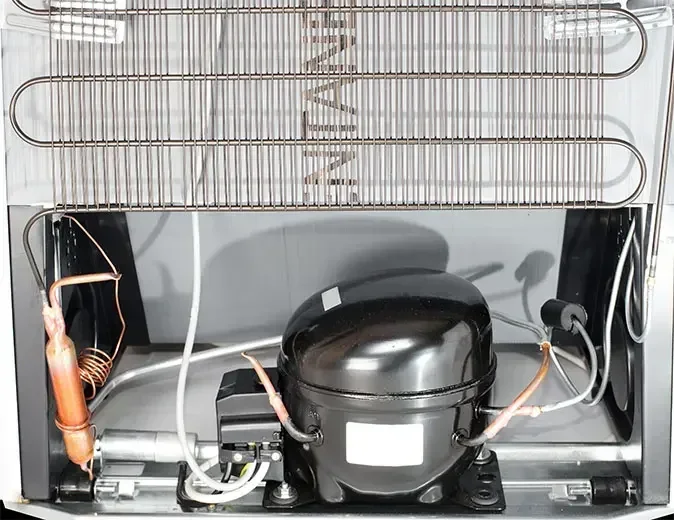
The compressor is the engine of your refrigerator. It pumps refrigerant through the system, creating the cold air that keeps your food safe. Without a working compressor, the entire cooling cycle stops. Think of it like the motor in your car. If the motor dies, the car does not move. Same idea here. If the compressor fails, your fridge stops cooling.
How the Compressor Works in Simple Terms
The refrigerator compressor takes low-pressure gas and compresses it into high-pressure gas. This process generates heat. The hot gas then moves through the condenser coils, where it releases heat and turns into a liquid. The liquid refrigerant flows through the evaporator coils inside your fridge, absorbing heat from the food and air. Then it turns back into a gas and returns to the compressor to start the cycle again. It is a continuous loop that keeps your food cold and fresh.
Several components work alongside the compressor to make this happen. The compressor relay helps start the motor. The overload protector shuts the compressor off if it gets too hot. The start capacitor gives the compressor a boost when it first kicks on. When any of these parts fail, your fridge can develop cooling problems that sometimes look like a compressor issue even when the compressor itself is fine.
Common Types of Refrigerator Compressors
Not all compressors are the same. Most modern refrigerators use one of two types:
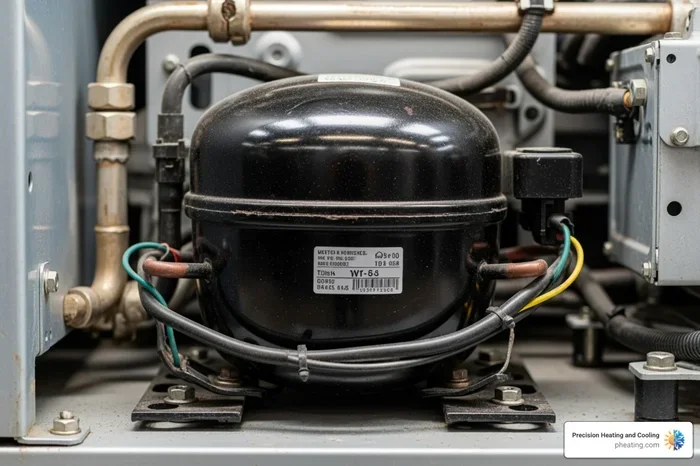
- Hermetic compressors: These are sealed units that cannot be repaired inside. If they fail, the entire unit must be replaced. Most household fridges use this type.
- Open compressors: These are found in larger commercial units and allow for internal repairs. They are not common in home kitchens.
Knowing which type your fridge uses matters when you are budgeting for compressor replacement. Hermetic compressors require a full unit swap, which drives up the cost but also means the repair is usually straightforward once the part arrives.
Signs Your Refrigerator Compressor Is Failing
Catching compressor problems early can save you hundreds of dollars. A failing compressor often gives clear warning signs before it completely dies. Here are the most common signals that something is wrong with your refrigerator compressor.
1. Your Fridge Is Not Cooling Properly
This is the most obvious sign. If you open your fridge and the food feels warm, or the freezer has ice melting, the compressor may not be running. Before you jump to conclusions, check the thermostat setting and make sure the fridge is plugged in. But if everything looks normal and the fridge still will not cool, the compressor could be the culprit.
2. Unusual Noises from the Back of the Fridge
A healthy compressor makes a low, steady hum. If you hear loud clicking, rattling, or a high-pitched squealing sound, pay attention. A compressor clicking repeatedly often means the start relay is failing. A grinding or buzzing noise can point to a mechanical problem inside the compressor motor itself.
3. The Compressor Runs Constantly
Your compressor should cycle on and off throughout the day. If it runs nonstop without stopping, it may be struggling to maintain the right temperature. This could indicate a refrigerant leak, a failing compressor, or a problem with the condenser coils. Running continuously also drives up your energy bills significantly.
4. Ice Buildup Around the Compressor Area
If you notice frost or ice forming near the compressor housing at the back of the fridge, this is a red flag. It can signal a refrigerant leak or an internal compressor issue that is causing the system to malfunction. Ice buildup should never be ignored.
5. Higher Energy Bills Without Explanation
A struggling compressor works harder and uses more electricity. If your energy bills have spiked and your fridge seems to be running all the time, a failing compressor could be to blame. This is one of those sneaky signs that many homeowners overlook.
Quick Tips: Diagnosing Compressor Issues
- Unplug the fridge and pull it away from the wall to inspect the compressor area.
- Listen carefully for humming, clicking, or silence when the fridge is running.
- Check the condenser coils for dust and debris buildup.
- Use a multimeter to test the compressor windings if you have electrical experience.
- Call a professional if you are unsure about any diagnostic steps.
Refrigerator Compressor Replacement Cost Breakdown
The refrigerator compressor replacement cost is the question most homeowners want answered first. The truth is, the price varies a lot depending on several factors. Understanding what drives the cost helps you budget and avoid surprises.
Factors That Affect Replacement Cost
Several things influence how much you will pay for a compressor replacement:
- Refrigerator brand and model: Premium brands like Sub-Zero and Wolf cost more for parts than budget brands.
- Age of the refrigerator: Older models may have compressors that are harder to find, increasing the part cost.
- Labor charges: HVAC technicians and appliance repair pros charge between $100 and $200 per hour depending on your location.
- Additional repairs needed: If the refrigerant leak damaged other parts of the sealed system, the repair becomes more complex and expensive.
- Warranty coverage: Fridges under warranty may have the compressor replaced at no cost to you.
Average Cost Ranges by Repair Type
Here is a general breakdown of what you can expect to pay. Keep in mind these are national averages and your actual cost may differ based on your location and specific situation.
| Repair Type | Part Cost | Labor Cost | Total Cost |
|---|---|---|---|
| Compressor replacement only | $200 – $500 | $150 – $300 | $350 – $800 |
| Compressor + refrigerant recharge | $200 – $500 | $200 – $400 | $400 – $900 |
| Compressor + sealed system repair | $300 – $600 | $300 – $500 | $600 – $1,100 |
| Full sealed system replacement | $500 – $1,200 | $400 – $600 | $900 – $1,800 |
As you can see, a simple compressor replacement sits in the middle range. But add in refrigerant leaks or other sealed system issues, and the bill climbs quickly. This is why early detection matters so much.
Is a Compressor Replacement Worth It?
This is the big question. A general rule of thumb is to compare the repair cost to half the price of a new refrigerator. If the replacement cost exceeds 50% of a new fridge price, you are usually better off buying a new unit. Most new refrigerators cost between $800 and $2,500. So if your refrigerator compressor replacement costs more than $400 to $1,250, it might be time to shop for a new fridge.
Expert Insight: When Repair Makes Sense
Appliance repair experts agree that if your refrigerator is less than 8 years old and the compressor fails without damaging other components, replacement is usually the right call. Newer fridges are more energy efficient anyway, so you save money on electricity over time. But for older fridges with a solid reputation for durability, a new compressor can add years of reliable service.
How the Compressor Replacement Process Works
Understanding the replacement process helps you know what to expect and why the cost is what it is. A professional technician follows a careful, systematic approach to ensure the repair is done safely and correctly.
Step 1: Diagnosis and Testing
The technician starts by confirming that the compressor is actually the problem. They check the compressor relay, the overload protector, and the start capacitor. They also measure the compressor windings with a multimeter to rule out electrical issues. This diagnostic step usually costs $50 to $100, which is often credited toward the repair if you proceed.
Step 2: Recovering the Refrigerant
Before removing the old compressor, the technician must recover the refrigerant. Refrigerants are regulated by environmental laws and cannot be released into the air. The technician uses a special recovery machine to safely extract and store the refrigerant for proper recycling or recharging.
Step 3: Removing the Old Compressor
The technician disconnects the electrical connections, removes the mounting bolts, and carefully pulls the old compressor out. This step requires care because the compressor is heavy and connected to delicate refrigerant lines.
Step 4: Installing the New Compressor
The new compressor is positioned, bolted in place, and connected to the refrigerant lines. The technician then brazes the connections to create a airtight seal. After installation, the system is evacuated to remove any moisture or air before the refrigerant is recharged.
Step 5: Testing the System
Once the new compressor is installed, the technician runs the fridge for several hours to make sure everything is working correctly. They check for proper cooling, listen for unusual noises, and verify that the system is holding refrigerant pressure. A final inspection confirms the repair is complete.
Common Mistakes to Avoid
- Skipping the diagnosis: Many people assume the compressor is the problem when it is actually a faulty relay or capacitor. Always get a proper diagnosis first.
- Ignoring refrigerant leaks: If you replace the compressor without fixing a leak, the new compressor will fail again quickly.
- Choosing the cheapest option: Bargain repairs sometimes use refurbished or incompatible parts that lead to more problems down the road.
- Not checking the warranty: Many homeowners do not realize their fridge is still covered, leaving them paying for a repair that should be free.
DIY vs. Professional Replacement: Which Is Right for You?
Some homeowners love a good DIY project. But refrigerator compressor replacement is not like swapping out a light bulb or even a water filter. It involves handling refrigerant, working with electrical components, and using specialized tools like brazing torches and vacuum pumps. Here is a honest look at both options.
When DIY Might Work
DIY replacement is realistic only if you have significant experience with HVAC or appliance repair. You need to be comfortable with:
- Handling and recharging refrigerant safely
- Using a vacuum pump to evacuate the system
- Brazing copper tubing without damaging components
- Reading wiring diagrams and testing electrical components
- Disposing of old refrigerant according to local regulations
If you check all those boxes, you can save on labor costs. The compressor part itself typically runs $200 to $500. But keep in mind that mistakes during a DIY replacement can void your warranty and cause further damage.
Why Most People Should Hire a Professional
For the vast majority of homeowners, hiring a professional is the safest and smartest choice. Here is why:
- Proper certification: Technicians who handle refrigerant must be EPA certified. This is a legal requirement in the United States.
- Right tools and equipment: Professional shops have vacuum pumps, refrigerant scales, and recovery machines that most homeowners do not own.
- Warranty protection: Professional repairs often come with a warranty on both parts and labor, giving you peace of mind.
- Safety: Working with refrigerant and electrical components carries real risks. Professionals know how to stay safe.
- Correct diagnosis: A pro can tell the difference between a compressor problem and a simpler issue that costs much less to fix.
The average cost for professional refrigerator compressor replacement ranges from $400 to $1,000 including parts and labor. This is a worthwhile investment for most families who depend on their fridge every day.
Preventing Future Compressor Problems
Once your compressor is replaced, you probably want to avoid going through this process again. The good news is that regular maintenance goes a long way toward keeping your compressor healthy and your fridge running efficiently for years to come.
Simple Maintenance Habits
- Clean the condenser coils every 6 months: Dust and pet hair build up on the coils, forcing the compressor to work harder. Use a coil brush or vacuum attachment to keep them clean.
- Check the door seals regularly: Worn gaskets let cold air escape, which makes the compressor run longer cycles. Replace them if they look cracked or loose.
- Do not overstuff the fridge: Blocked air vents force the compressor to compensate. Leave some space for air to circulate freely.
- Keep the fridge away from heat sources: Placing your fridge near the oven or in direct sunlight makes it work harder and wear out faster.
- Set the temperature correctly: Keep your fridge at 37°F and your freezer at 0°F. Setting them colder than necessary puts extra strain on the compressor.
The Role of Refrigerant Levels
Low refrigerant is one of the biggest enemies of your compressor. When the refrigerant level drops, the compressor has to work harder to maintain the temperature. Over time, this extra strain causes overheating and premature failure. If you notice your fridge not cooling well or ice buildup on the lines, get a technician to check the refrigerant level right away. Addressing a small refrigerant leak early can prevent a costly compressor replacement later.
Key Takeaways for Compressor Longevity
- Clean coils mean a happy compressor: Simple maintenance prevents overworking.
- Watch for early warning signs: unusual noises or warm food should never be ignored.
- Address refrigerant leaks immediately: low refrigerant is the fastest way to kill a compressor.
- Follow the manufacturer’s maintenance schedule: it is designed to keep your fridge running at peak efficiency.
When to Replace the Entire Refrigerator Instead
Sometimes the smartest decision is not to replace the compressor at all. Here are the situations where buying a new refrigerator makes more sense than a compressor replacement.
Your Fridge Is More Than 10 Years Old
Most refrigerators last 10 to 15 years with proper care. If your fridge is pushing 10 years and the compressor fails, the rest of the unit may not be far behind. Investing in a new, energy-efficient model can save you money on electricity bills and give you modern features like smart connectivity and better temperature control.
The Repair Cost Exceeds Half the Price of a New Fridge
This is the golden rule of appliance repair. If the compressor replacement cost is more than 50% of the price of a new refrigerator, go with the new one. You get a warranty, better energy efficiency, and peace of mind that the entire unit is fresh and reliable.
Multiple Systems Are Failing
If your compressor fails and you also notice problems with the condenser fan, evaporator fan, or control board, the repair costs add up fast. When multiple components are failing at once, the fridge is usually at the end of its useful life. Replacing the entire unit is the more practical choice.
You Want Better Energy Efficiency
New refrigerators use 40% less energy than models made before 2005. If you are paying high electricity bills and your fridge is aging, a new unit will pay for itself over time through lower utility costs. Look for models with the ENERGY STAR label for the best savings.
Conclusion
Refrigerator compressor replacement is a significant repair that requires careful consideration. Whether you are dealing with a noisy compressor, warm food, or a complete cooling failure, understanding the costs, process, and alternatives puts you in a much better position to make the right decision. The key is to act quickly when you notice warning signs. Delaying a repair can turn a $400 fix into a $1,200 disaster when the compressor damages other parts of the sealed system.
For most homeowners, hiring a certified professional is the safest and most cost-effective route. They have the tools, training, and experience to diagnose the problem correctly and complete the repair safely. If you do choose to go the DIY route, make sure you have the skills and equipment to handle refrigerant and electrical components properly.
Regular maintenance is your best defense against future compressor problems. Clean your condenser coils, check the door seals, and keep an eye on your energy bills. These small habits add up to a longer-lasting, more efficient refrigerator that saves you money and keeps your food safe.
Remember, your refrigerator is one of the most important appliances in your home. Taking care of it pays off in reliable performance and lower energy costs for years to come. If you are facing a compressor replacement right now, use the information in this guide to make a confident, informed decision that fits your budget and your needs.
Frequently Asked Questions
How long does a refrigerator compressor replacement take?
A professional technician typically completes the replacement in 2 to 4 hours. The timeline depends on the fridge model, accessibility of the compressor, and whether additional repairs like refrigerant recharge are needed. If the sealed system has other issues, the repair may take longer.
Can I run my refrigerator during compressor replacement?
No, the fridge needs to be unplugged during the entire replacement process. The technician will need to recover the refrigerant, remove the old compressor, install the new one, and test the system before you can plug it back in. Plan to use coolers with ice for your perishable items during the repair.
How long should a refrigerator compressor last?
A well-maintained refrigerator compressor typically lasts 10 to 15 years. Factors like usage patterns, maintenance habits, and the quality of the unit all play a role. Regular coil cleaning and proper temperature settings help extend compressor life significantly.
Is refrigerator compressor replacement covered by warranty?
Many refrigerators come with a compressor warranty that lasts 5 to 10 years. If your fridge is within the warranty period, the compressor replacement may be fully covered including parts and labor. Check your warranty documentation or contact the manufacturer to confirm your coverage details.
What is the difference between a compressor and a condenser fan motor?
The compressor is the pump that circulates refrigerant through the cooling system. The condenser fan motor blows air over the condenser coils to help release heat. Both are located at the back or bottom of the fridge, but they serve different functions. A failing condenser fan can mimic compressor symptoms, which is why proper diagnosis is essential before starting any repair.
Will a new compressor make my refrigerator more energy efficient?
Yes, a new compressor restores your fridge to its original cooling performance, which can improve energy efficiency. However, if your refrigerator is more than 10 years old, a new compressor alone may not match the efficiency of a modern ENERGY STAR rated model. Consider the age of your unit when deciding between repair and replacement.