How Does a Generator Transfer Switch Work During Outages
A generator transfer switch is the safety device that connects your generator to your home’s electrical panel during a power outage. It automatically or manually shifts the electrical load, preventing backfeed and protecting your appliances. Understanding how this switch works helps you choose the right type, install it correctly, and keep your home powered when the grid fails.
When the lights go out, you want power back fast. A generator transfer switch makes that happen safely. It sits between your generator and your home’s electrical panel. Without it, you risk damaging appliances or even harming utility workers. This guide explains exactly how a generator transfer switch works during outages. You will learn the types, the step-by-step process, and what to watch for during installation.
A backup power system is only as good as its connection. The transfer switch is that connection. It ensures your generator feeds power into your home without touching the grid. This simple device can mean the difference between a smooth outage and a dangerous mess. Let us break down everything you need to know.
Key Takeaways
- A transfer switch safely links your generator to your home: It isolates your system from the utility grid and directs power only to selected circuits.
- Automatic switches act in seconds: They detect an outage, start the generator, and transfer the load without you lifting a finger.
- Manual switches require human action: You must start the generator and flip the switch yourself, which adds a step but costs less.
- Proper sizing is critical: The switch must match your generator’s wattage and your home’s electrical panel rating.
- Backfeeding is dangerous and illegal: A transfer switch prevents generator power from flowing back into utility lines, protecting linemen.
- Installation often requires a permit: Hiring a licensed electrician ensures code compliance and safety.
- Regular testing keeps it reliable: Exercising the switch and generator before storm season prevents surprises.
📑 Table of Contents
- What Is a Generator Transfer Switch?
- Types of Transfer Switches: Automatic vs Manual
- Step-by-Step: How a Transfer Switch Works During an Outage
- Installing a Transfer Switch: What You Need to Know
- Common Mistakes and How to Avoid Them
- Benefits of Using a Transfer Switch
- Maintaining Your Transfer Switch for Long Life
- Frequently Asked Questions
- Conclusion
What Is a Generator Transfer Switch?
A generator transfer switch is an electrical device that connects a portable or standby generator to your home. It controls which power source feeds your circuits. The switch can be manual or automatic. Both types serve the same core purpose: safe load transfer.
How It Connects to Your Home
The switch mounts next to your main electrical panel. A generator inlet box on the outside of your home connects to the switch via a dedicated generator cord. Inside, the switch links to your circuit breakers. When power is needed, the switch disconnects your home from the utility grid and connects it to the generator. This process is called load transfer.
The switch also contains a mechanical or electrical interlock. This interlock prevents both the utility and the generator from powering your home at the same time. That prevents backfeed, which can electrocute line workers or destroy your generator.
Types of Transfer Switches: Automatic vs Manual
Not all transfer switches are the same. The two main types are automatic and manual. Each has its own pros and cons. The right choice depends on your budget, your generator type, and how much automation you want.
| Feature | Automatic Transfer Switch | Manual Transfer Switch |
|---|---|---|
| Operation | Fully automatic. Detects outage and starts generator. | Requires you to start the generator and flip the switch. |
| Speed | Restores power in seconds. | Takes minutes, depending on your response time. |
| Cost | Higher upfront cost, $500 to $1,500+. | Lower cost, $200 to $800. |
| Installation | Needs professional wiring and often a permit. | Can be simpler, but still benefits from an electrician. |
| Best For | Standby generators, whole-house backup, busy households. | Portable generators, budget setups, occasional use. |
| Monitoring | Can send alerts to your phone. | No remote monitoring. |
Automatic Transfer Switch Explained
An automatic transfer switch (ATS) is the brain of a backup power system. It constantly monitors the utility power. When it senses a voltage drop or outage, it sends a signal to the standby generator. The generator starts up within seconds. Once it reaches the correct speed and voltage, the ATS moves the load from the grid to the generator.
This entire process happens without you touching anything. When utility power returns, the ATS transfers the load back and lets the generator cool down. You might not even know an outage occurred.
Manual Transfer Switch Explained
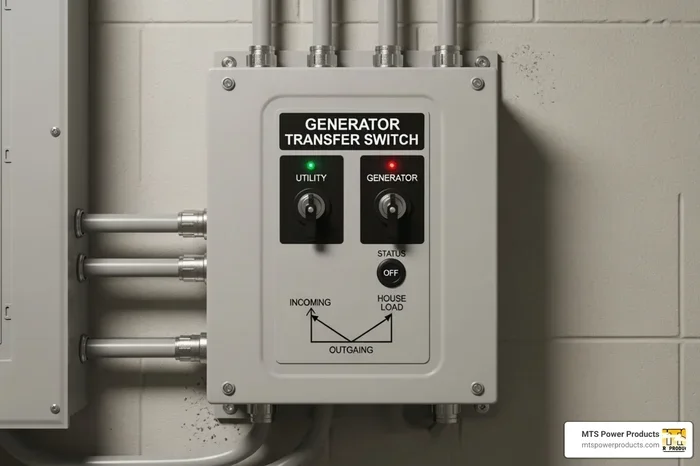
A manual transfer switch requires you to be present and act. When the power goes out, you must start the generator outside. Once it is running, you go to the switch panel and move the handle from “Utility” to “Generator.” The switch then connects your home circuits to the generator.
Manual switches are simpler and cheaper. They work well with portable generators. However, you must be home to operate them. If you are away during an outage, your home stays dark.
Step-by-Step: How a Transfer Switch Works During an Outage
The switching process is quick and precise. Whether automatic or manual, the sequence follows a clear path. Understanding this path helps you troubleshoot issues and appreciate the safety features.
The Switching Process
Here is what happens inside a generator transfer switch during an outage:
- Detection: The switch senses that utility power has dropped below a safe threshold.
- Signal to Generator: In automatic mode, a signal is sent to start the generator. In manual mode, you start it yourself.
- Generator Stabilization: The generator reaches full operating speed and voltage. The switch waits for this stable signal.
- Load Transfer: The switch disconnects the utility line and connects the generator line to your home’s panel.
- Power Delivery: Your home circuits now run on generator power. Only the circuits you have selected receive electricity.
- Return to Utility: When grid power returns, the switch waits a few minutes, then reconnects to the utility and signals the generator to shut down.
Safety Mechanisms Inside the Switch
A transfer switch is packed with safety mechanisms. The most important is the interlock. This physical barrier ensures that only one power source can be active at a time. You cannot accidentally energize both the utility and the generator.
Many switches also include a time delay. This delay prevents the generator from cycling on and off if the utility power flickers. It also protects the generator from damage during sudden load changes. Some advanced models have load shedding, which temporarily turns off non-essential circuits to prevent the generator from overloading.
Installing a Transfer Switch: What You Need to Know
Installing a generator transfer switch is not a weekend DIY project for most people. It involves electrical wiring, panel work, and code compliance. However, understanding the process helps you plan and budget.
DIY vs Professional Installation
Some manual transfer switches come with a simple wiring diagram. A handy homeowner with electrical experience might install one. But for automatic switches or any work inside the main panel, a licensed electrician is essential.
Professional installation typically costs between $200 and $500 on top of the switch price. The electrician will pull permits, ensure proper grounding, and verify that the circuit breaker ratings match the generator’s output. This step protects your home and your insurance coverage.
Permits and Local Codes
Most municipalities require a permit for generator transfer switch installation. The permit ensures the work meets the National Electrical Code (NEC) and local amendments. An inspector will check the wiring, the inlet box placement, and the generator cord rating. Skipping this step can lead to fines or insurance denial after a fire.
Sizing the Switch Correctly
The switch must handle the total amperage of the circuits you want to power. A typical home has a 200-amp main panel. A 30-amp or 50-amp transfer switch is common for portable generators. For a whole-house standby generator, you may need a 100-amp or 200-amp switch. Mismatched sizing leads to overheating or failure during an outage.
Common Mistakes and How to Avoid Them
Even with the best backup power plan, mistakes happen. Here are the most common errors homeowners make with generator transfer switches and how to fix them.
Backfeeding Dangers
Backfeeding occurs when generator power flows backward through your panel into the utility lines. This can kill a utility worker repairing a downed power line. It can also fry your generator’s engine. A transfer switch prevents this by physically breaking the utility connection before the generator connects. Never use a double-male adapter or a “generator cord” that plugs into a wall outlet. These are illegal and deadly.
Sizing the Switch Too Small
A small switch on a large generator causes overheating. The internal contacts can weld together under heavy load. Always match the switch amperage to the generator’s output and the panel rating. If you run a 7,500-watt generator on a 15-amp switch, you will exceed the limit and risk a fire.
Forgetting to Test the System
A transfer switch sits idle for months or years. When an outage hits, you want it to work. Test the switch every three months. Run your generator under load for at least 30 minutes. Check the switch operation and the generator cord for damage. This exercise also keeps the generator’s engine and battery in good shape.
Benefits of Using a Transfer Switch
A generator transfer switch does more than just turn on lights. It provides a safe, reliable, and code-compliant way to use your backup power. Here are the top benefits.
Protecting Your Appliances
Without a switch, a generator can send unstable power into your home. Voltage spikes can ruin refrigerators, computers, and HVAC systems. The transfer switch ensures clean, stable power from the generator reaches your circuits. It also prevents overloads by letting you choose which circuits to power.
Seamless Power Transition
With an automatic switch, the transition from grid power to generator power takes less than 10 seconds. Your computers and sensitive electronics stay online. You do not have to unplug and replug devices. This seamless transition is especially important for home offices, medical equipment, and security systems.
Peace of Mind During Storms
Knowing your home has a safe power outage solution reduces stress. You can focus on weathering the storm instead of worrying about backfeed or tripped breakers. A generator transfer switch is the foundation of a reliable home backup plan.
Maintaining Your Transfer Switch for Long Life
Like any electrical device, a transfer switch needs occasional care. Dust and corrosion can affect the internal contacts. A simple inspection keeps it working for decades.
Visually check the switch every six months. Look for rust, burn marks, or loose wires. Tighten any terminal connections with the power off. Test the switch by running your generator and flipping the switch to generator mode. Listen for unusual clicks or delays. If the switch feels hot to the touch, turn it off and call an electrician.
Also, keep the area around the switch clear. The generator inlet box on the outside wall should be free of debris, snow, and vegetation. Good airflow prevents heat buildup and extends the life of the switch and your generator.
Frequently Asked Questions
Can I install a generator transfer switch myself?
Manual switches are sometimes installable by a handy homeowner, but automatic switches and any work inside the main panel should be done by a licensed electrician. Electrical work carries serious risks and must meet local codes. Always pull the required permits and have the work inspected.
What happens if I don’t use a transfer switch?
Without a switch, you risk backfeeding power into the utility grid, which can electrocute line workers. You also risk overloading your home’s wiring and damaging your generator. A transfer switch is the only safe and legal way to connect a generator to your home.
How long does a transfer switch last?
A quality transfer switch can last 20 years or more with proper maintenance. The moving parts inside the switch may wear out sooner if it is used frequently, but most switches only operate a few times a year during outages.
Do I need a transfer switch for a portable generator?
Yes. Even a portable generator needs a transfer switch or an interlock kit to connect safely to your home. Plugging a generator directly into a wall outlet is dangerous and violates electrical codes in most areas.
Can a transfer switch power my entire house?
It depends on the switch size and your generator capacity. A large standby generator with a 200-amp switch can power the whole house. A smaller portable generator with a 30-amp switch can only power essential circuits like the refrigerator, lights, and furnace.
What is the difference between a transfer switch and an interlock kit?
A transfer switch is a full device that physically disconnects the utility and connects the generator. An interlock kit is a simpler, cheaper device that prevents both sources from energizing the panel at the same time. Both provide safe backup power, but a transfer switch offers more convenience and often more circuit control.
Conclusion
A generator transfer switch is the unsung hero of home backup power. It keeps your family safe, your appliances protected, and your lights on during the darkest moments. Whether you choose an automatic transfer switch for seamless convenience or a manual transfer switch for budget-friendly control, the device does the same critical job: safe load transfer.
Understanding how the switch works helps you make smart buying and installation decisions. You now know the switching process, the safety mechanisms, and the common pitfalls to avoid. The next time the power goes out, you will feel confident that your backup power system is ready. Take the time to test your switch regularly, maintain your generator, and always respect the power of electricity. A little preparation today keeps your home running tomorrow.