The Best MLA Generator to Format Your Citations Quickly
An MLA generator is a powerful online tool that automatically formats your citations and bibliography in MLA style. Whether you are writing a research paper, essay, or thesis, using the right MLA generator saves hours of tedious formatting work. This guide walks you through how these tools work, what features matter most, and which options deliver the best results for your academic needs.
Writing a research paper or academic essay can feel overwhelming. You have ideas to share, sources to track, and a formatting style to follow. On top of all that, you need to build a Works Cited page and insert in-text citations throughout your text. It is tedious work, and one small mistake can cost you points.
This is where an MLA generator changes everything. Think of it like a home generator that produces power automatically — except this tool produces perfectly formatted citations on demand. Instead of flipping through the MLA Handbook for the tenth time, you type in a few details and let the tool do the heavy lifting. In this article, we will explore what an MLA generator is, how it works, and which options deserve your attention.
Key Takeaways
- Time Saver: An MLA generator formats your citations in seconds, cutting hours of manual work.
- Accuracy: Automated tools reduce human error and keep your Works Cited page spot-on.
- Free Options Exist: Many reliable MLA generators cost nothing and work right in your browser.
- MLA 9th Edition Support: The best tools stay updated with the latest MLA citation rules.
- Multiple Source Types: Top generators handle books, websites, journals, videos, and more.
- Easy Integration: Most tools let you export or copy citations directly into your document.
📑 Table of Contents
- What Is an MLA Generator?
- How Does an MLA Generator Work?
- Benefits of Using an MLA Generator
- Key Features to Look For in an MLA Generator
- Common Mistakes When Using an MLA Generator
- How to Choose the Best MLA Generator for Your Needs
- How MLA Generators Compare to Manual Formatting
- Final Thoughts on MLA Generators
What Is an MLA Generator?
An MLA generator is a software tool that creates citations in the Modern Language Association format. This citation style is widely used in humanities courses like English, literature, philosophy, and cultural studies. The tool takes your source information — author name, title, publication date, and so on — and turns it into a properly formatted entry.
The MLA format has specific rules for everything from punctuation to capitalization to italics. A manual citation builder requires you to memorize or look up these rules every single time. An online citation generator removes that burden entirely. You input the details once, and the tool outputs a clean, correct citation every time.
Most MLA citation tools today support the 9th edition of the MLA Handbook. This edition introduced some updates, including new guidelines for containers, abbreviations, and digital sources. A good generator keeps pace with these changes so you do not have to.
Why MLA Style Matters
MLA style gives your academic writing a consistent, professional appearance. It also helps readers locate your sources easily. When you use a reference generator that follows MLA rules precisely, you show your professor or instructor that you take your research seriously. Proper citations also protect you from accidental plagiarism, which can have serious academic consequences.
How Does an MLA Generator Work?
Using an MLA citation maker is straightforward, but the technology behind it is impressive. Here is a simple breakdown of the process.
First, you select the type of source you are citing. Is it a book, a website, a journal article, or maybe a YouTube video? Each source type has its own citation template in the MLA format. The generator uses these templates as a foundation.
Next, you enter the source details. Most tools ask for the author, title, container, other contributors, version, number, publisher, publication date, and location. You fill in the fields, and the tool organizes the information according to MLA rules.
Finally, the generator produces your citation. You can copy it directly into your paper or export it in bulk if you are working with multiple sources. Some tools even let you build an entire Works Cited page with one click.
Think of it this way. Just as you would not refuel a generator while it is running without proper care, you should not trust just any citation tool without checking its accuracy. The best generators make the process smooth, but a quick review of the output always helps.
Step-by-Step: Using an MLA Generator
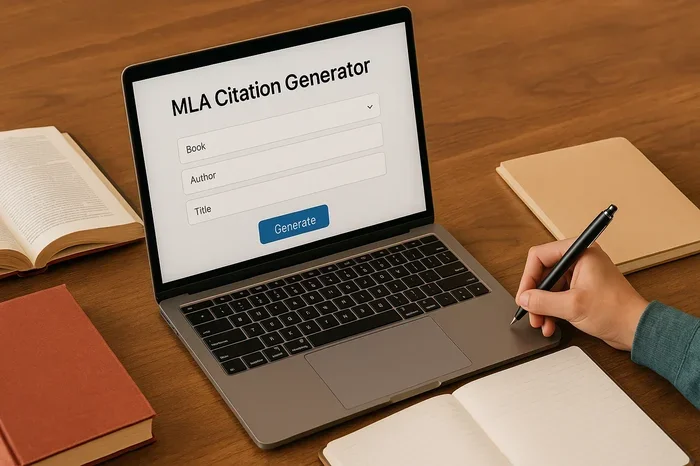
Here is a quick walkthrough of what a typical session looks like:
- Step 1: Open your chosen MLA generator website.
- Step 2: Select the source type (book, website, article, etc.).
- Step 3: Enter the required details into the form fields.
- Step 4: Click “Generate” or “Create Citation.”
- Step 5: Review the output for accuracy.
- Step 6: Copy or export the citation into your document.
The whole process takes less than a minute per source. Over the course of a research paper with 20 or 30 sources, that is hours of time you save.
Benefits of Using an MLA Generator
There are many reasons students and professionals turn to an MLA format tool. Let us break down the biggest advantages.
1. Speed and Efficiency
Manual citation formatting is slow. You have to check the MLA Handbook for punctuation, order of elements, and formatting rules. An MLA citation generator handles all of that instantly. What takes you 10 minutes manually might take the tool 10 seconds.
2. Accuracy and Consistency
Human error is real, especially when you are tired or working on a tight deadline. A reference maker applies the same rules every time. It does not forget a comma or mix up the author name order. This consistency makes your Works Cited page look polished and professional.
3. Support for Many Source Types
Modern research involves all kinds of sources. You might cite a printed book, an online journal, a podcast episode, or a social media post. The best MLA citation tools support dozens of source types, from traditional print sources to digital media.
4. Free Access
Many high-quality MLA generators are completely free. You do not need to buy expensive software or subscribe to a service. A quick search will reveal several reliable options that cost nothing at all.
5. Plagiarism Prevention
Proper citations are your first line of defense against plagiarism. When you use a citation builder that formats your sources correctly, you make it easy for readers to verify your research. This protects your academic integrity and your reputation.
Key Features to Look For in an MLA Generator
Not all MLA format generators are created equal. Some are basic and limited, while others offer powerful features. Here is what you should look for when choosing a tool.
MLA 9th Edition Compatibility
The MLA Handbook has been updated to its 9th edition. Your chosen tool should reflect the latest guidelines, including proper handling of containers, URLs, and DOIs. If a generator still follows older rules, it may produce citations that do not meet current standards.
Multiple Source Type Support
A strong citation tool handles books, articles, websites, films, interviews, and more. The wider the range of supported sources, the more useful the tool becomes for complex research projects.
Easy Copy and Export
Look for a generator that lets you copy citations with one click or export an entire bibliography as a document. Some tools even integrate directly with word processors, which saves even more time.
Error Checking
The best MLA generators include built-in error checks. They flag missing fields or incomplete information before you finalize your citations. This feature alone can save you from embarrassing mistakes on your Works Cited page.
User-Friendly Interface
You do not need to be a tech expert to use a good citation tool. The interface should be clean, intuitive, and easy to navigate. If you find yourself struggling to input source details, the tool is probably not the right fit.
No Sign-Up Required
Some generators force you to create an account before you can use them. The best online MLA tools let you start formatting citations immediately, with no registration required.
Common Mistakes When Using an MLA Generator
Even the best tools can lead to problems if you are not careful. Here are common mistakes to watch out for.
Blindly Trusting the Output
An MLA generator is a helpful assistant, not a replacement for your own review. Always double-check the generated citation against the MLA Handbook or a trusted style guide. Small errors in your input can lead to incorrect output.
Missing or Incomplete Source Information
If you skip a required field, the generator may produce an incomplete citation. Make sure you have all the necessary details before you start. Just like you need enough fuel to keep a generator running through the night, you need complete source information to produce a proper citation.
Ignoring Updated Rules
Citation styles evolve over time. Using a generator that has not been updated to reflect the MLA 9th edition can result in outdated formatting. Always check when the tool was last updated.
Copying Citations Without Reviewing Them
It is tempting to generate a citation and move on. But taking a few extra seconds to review each entry can prevent problems later. Pay attention to punctuation, capitalization, and italicization.
Using the Wrong Source Template
Each source type has its own template in MLA format. Using a book template for a website will produce incorrect results. Make sure you select the right source type before entering your details.
How to Choose the Best MLA Generator for Your Needs
With so many options available, picking the right MLA citation tool can feel tricky. Here are some tips to help you decide.
Consider Your Typical Sources
If your research relies heavily on academic journals, choose a generator that handles scholarly sources well. If you frequently cite websites and digital media, look for a tool with strong support for online sources.
Check for Free vs. Premium Features
Many MLA generators offer a solid free version with basic features. Premium versions may add advanced options like annotation support or bulk citation export. Evaluate whether the extra features justify the cost.
Read User Reviews
Before committing to a tool, check what other users say. Look for feedback on accuracy, ease of use, and customer support. Real-world experiences can guide you toward the best choice.
Test Multiple Tools
Do not settle on the first tool you try. Test two or three different generators with the same source and compare the results. This quick comparison can reveal which tool produces the cleanest, most accurate citations.
Look for Regular Updates
The best citation tools are maintained and updated regularly. Check the developer’s website for recent updates and version information. A well-maintained tool is more likely to support the latest MLA guidelines.
How MLA Generators Compare to Manual Formatting
Let us put things in perspective. Here is a quick comparison between manual formatting and using an MLA generator.
- Time per citation: Manual formatting takes 5-10 minutes per source. An MLA generator takes under a minute.
- Error rate: Manual work is prone to typos, missing punctuation, and incorrect formatting. Automated tools apply rules consistently.
- Scalability: Manual formatting becomes exponentially harder as your source list grows. A generator handles 10 or 100 sources with equal ease.
- Learning curve: Manual formatting requires memorizing MLA rules or constant reference to the handbook. A generator requires no prior knowledge of the style.
- Flexibility: Manual formatting allows full control but demands more effort. A generator gives you speed with a quick review for quality control.
The clear winner for most people is the MLA generator. It gives you speed, accuracy, and consistency without requiring you to memorize complex formatting rules.
Just as a well-maintained generator can run reliably for years, a quality citation tool will serve you well across many papers and projects. The key is choosing a reputable tool and using it wisely.
Final Thoughts on MLA Generators
An MLA generator is one of the most practical tools a student or researcher can have. It takes a tedious, error-prone task and turns it into something quick and painless. Whether you are working on a short essay or a lengthy research paper, the right citation tool makes a real difference.
The best tools are free, easy to use, and updated to reflect current MLA guidelines. They support a wide range of source types and give you clean, professional output every time. By avoiding common mistakes and reviewing your citations carefully, you can trust your Works Cited page to be accurate and complete.
So the next time you sit down to write a paper, skip the manual formatting headache. Let an MLA citation generator handle the details while you focus on what really matters — your ideas and your writing. Your future self will thank you when you submit a polished, properly cited paper with confidence.
Remember, the goal of any citation tool is to support your academic work, not replace your attention to detail. Use these generators wisely, review your output, and enjoy the extra time you gain for research and writing.
Frequently Asked Questions
What is the best free MLA generator available?
Several free MLA generators deliver excellent results. Popular options include Citation Machine, BibMe, and EasyBib. Each of these tools supports the MLA 9th edition and handles multiple source types. The best choice depends on your specific needs, so it is worth testing a couple to see which one feels the most comfortable for your workflow.
Can an MLA generator handle online sources like websites and videos?
Yes, most modern MLA generators support a wide range of online sources. You can cite websites, YouTube videos, online journal articles, social media posts, and more. Just make sure to select the correct source type when you input your information, and always double-check the generated citation for completeness.
Do I still need to learn MLA format if I use a generator?
Absolutely. An MLA generator is a helpful tool, but understanding the basics of MLA format makes you a stronger writer. Knowing how to structure in-text citations and build a Works Cited page helps you catch errors and avoid plagiarism. Think of the generator as an assistant, not a replacement for your own knowledge.
Are MLA generators accurate?
Most reputable MLA generators produce highly accurate citations when you enter correct source information. However, no tool is perfect. Always review the generated output against the official MLA Handbook or a trusted style guide. Small input mistakes can lead to formatting errors in the final citation.
How do I know if an MLA generator supports the 9th edition?
Check the tool’s website or its FAQ section for edition information. The best generators clearly state that they follow MLA 9th edition guidelines. They should include proper handling of containers, DOIs, URLs, and other updates introduced in the latest edition. If you cannot find this information, look for a different tool.
Can I use an MLA generator for group projects or collaborative work?
Yes, many MLA generators allow you to save and export your citations, making them great for group projects. Some tools even offer shared libraries where multiple users can access the same source list. Just make sure everyone on the team uses the same generator and follows the same MLA guidelines for consistency.
=== CONCLUSION ===
An MLA generator is a must-have tool for any student or researcher working in the humanities. It saves time, reduces errors, and keeps your citations consistent with the latest MLA standards. From books and journal articles to websites and videos, a good generator handles it all with ease.
The key is to choose a reliable tool, review your output carefully, and use the generator as part of a smart, organized research workflow. With the right MLA citation tool by your side, you can focus on writing great content while leaving the formatting to the experts. Start exploring your options today, and experience how much easier academic writing can be.