Ac Compressor Wont Start Common Causes And Easy Solutions
A ac compressor won’t start can leave your home hot and uncomfortable. This guide covers the most common reasons, from electrical faults to refrigerant problems, and provides simple, actionable fixes you can try yourself. Learn how to diagnose the issue safely and know when to call a professional.
There’s nothing worse than a hot day and an air conditioner that refuses to start. When your ac compressor won’t start, the whole cooling system shuts down. You stand there watching the indoor temperature climb while the unit sits silently. Before you panic or call for expensive repairs, it helps to understand what could be causing the problem. Many reasons are simple and easy to fix yourself. Others need a trained technician. This guide walks you through every common cause and gives you clear, step-by-step solutions. You’ll learn how to check your electrical connections, test key components like capacitors and contactors, and spot refrigerant issues before they get worse. By the end, you’ll know exactly what to do when your ac compressor won’t start.
A compressor not starting is different from a unit that runs but doesn’t cool. When the compressor fails to kick on, you often hear nothing at all. No hum, no click, no rattling. Sometimes you get a single click and then silence. That click might be a relay trying and failing to engage. Other times the air conditioner compressor simply draws no power. The root cause can lie in the electrical supply, the control board, the capacitor, the contactor, or even the refrigerant system itself. Understanding these possibilities puts you in control. You can make safe, informed decisions instead of guessing. Let’s dive into the most common reasons your ac compressor won’t start and how to address each one.
Key Takeaways
- Capacitor failure is the #1 reason an ac compressor won’t start, especially in older units.
- Tripped breakers or faulty wiring can cut power to the compressor before it even tries to run.
- Low refrigerant triggers a safety switch that prevents the compressor from starting.
- A bad contactor or relay stops the electrical signal from reaching the compressor.
- Hard start kits are an affordable fix for compressors that struggle to kick on.
- Thermostat issues might mimic compressor failure when the real culprit is a simple setting.
- Regular maintenance prevents most causes of an ac compressor won’t start.
📑 Table of Contents
Why Your Ac Compressor Won’t Start
The Role of the Compressor
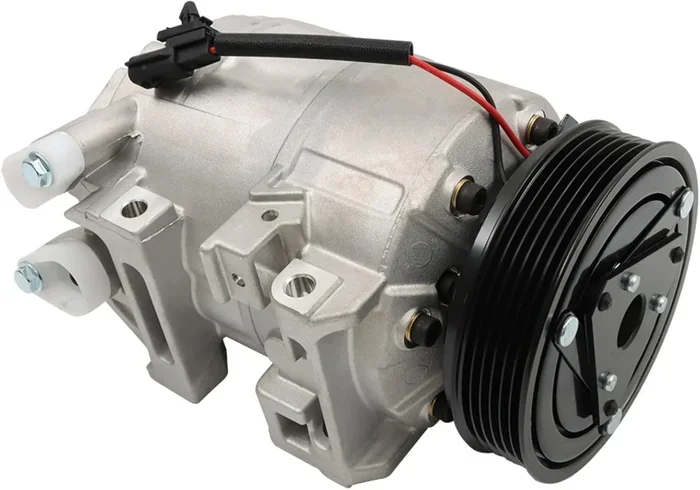
The compressor is the heart of your cooling system. It pumps refrigerant through the coils, enabling heat exchange. Without a working compressor, your AC unit not cooling is just a fan blowing warm air. The compressor needs three things to start: power, a signal from the thermostat, and a healthy electrical and mechanical condition. If any one of those fails, the compressor not starting becomes a reality. Most modern compressors have built-in protection. A low-pressure switch, a high-pressure switch, or an overload protector will shut the unit down before damage occurs. These safeguards are good, but they also mean a simple low refrigerant level can mimic a major compressor failure.
Common Warning Signs
Watch for these clues that your ac compressor won’t start:
- The indoor fan runs but no cool air comes out.
- You hear a single click followed by silence.
- The outdoor unit makes a humming sound but the compressor never engages.
- The breaker trips immediately when you turn the AC on.
- The unit short cycles, turning on and off every few minutes.
- You smell a burning odor near the outdoor unit.
Why Diagnosing Early Matters
Ignoring a compressor not starting can lead to bigger problems. A stuck compressor draws locked rotor amperage, which overheats the windings. That can melt wire insulation and cause a fire. A failing capacitor can damage the contactor and the control board. The earlier you find the cause, the cheaper the repair. Many fixes cost under $150. Waiting can turn a $200 capacitor job into a $2,000 compressor replacement. So when you notice your ac compressor won’t start, take action the same day.
Electrical Issues That Prevent Startup
Electrical problems are the most common reason a ac compressor won’t start. The compressor needs a steady 240-volt supply (in most U.S. homes) to run. Any interruption in that supply stops everything. Let’s break down the electrical culprits.
Tripped Breakers and Blown Fuses
Start here every time. Walk to your electrical panel and look for a tripped breaker or a blown fuse. The AC compressor usually has its own dedicated circuit. If the breaker tripped, reset it once. If it trips again immediately, you have a short circuit or a grounded compressor winding. Do not keep resetting the breaker. That’s a fire hazard. Instead, call a professional. A blown fuse in an older panel needs replacement with the correct amperage. Never put a higher-amp fuse in to stop the tripping.
Faulty Capacitors
The capacitor gives the compressor a jolt of energy to start. Think of it like a spring that pushes the motor into motion. When a capacitor fails, the ac compressor won’t start but you might hear a faint hum. The compressor tries to start and then stalls. A capacitor test with a multimeter is easy and safe if you discharge the capacitor first. A bad capacitor often shows a reading far below its rated microfarads. Replacing a run capacitor or a start capacitor costs under $30 for the part and takes about 15 minutes. This is the most common DIY fix for a compressor not starting.
Bad Contactor or Relay
The contactor is an electrically controlled switch. When the thermostat calls for cooling, it sends 24 volts to the contactor coil, which closes the contacts and sends 240 volts to the compressor. If the contactor is worn or burned, it won’t close. You might hear a clicking sound but no power reaches the compressor. A contactor test involves checking for continuity across the contacts with the coil de-energized. Pitted or corroded contacts need replacement. This is a simple, inexpensive part that prevents a compressor not starting.
Wiring Problems
Loose connections, corroded wires, or a broken disconnect switch can all stop the compressor. The disconnect box near the outdoor unit often gets overlooked. If the pull-out disconnect handle is partially pulled out, it breaks the circuit. Also, check the low-voltage wiring between the thermostat and the air handler. A loose wire at the thermostat or the control board can stop the signal entirely. Use a multimeter to verify voltage at the compressor terminals. If you have voltage at the contactor output but no compressor run, the wiring between the contactor and compressor is suspect.
| Electrical Symptom | Likely Cause | Solution |
|---|---|---|
| No sound at all, breaker not tripped | Bad capacitor or open contactor | Test capacitor, replace contactor |
| Single click, then silence | Failed start capacitor or bad relay | Replace start capacitor |
| Humming but compressor doesn’t spin | Seized motor or bad run capacitor | Check for mechanical lock, replace capacitor |
| Breaker trips immediately | Short circuit, grounded winding | Call a professional, do not reset |
| Intermittent starting | Loose wiring, failing contactor | Tighten connections, replace contactor |
Quick Tip: Always turn off the power at the breaker and the disconnect box before touching any electrical components inside the outdoor unit. Use a non-contact voltage tester to confirm the power is off.
Common Mistake: Don’t assume a reset breaker means the problem is fixed. A breaker that trips repeatedly indicates a serious fault. Forcing it back on can cause an electrical fire.
Expert Insight: Capacitors can hold a dangerous charge even when the unit is off. Always discharge them with an insulated screwdriver across the terminals before handling. A multimeter is your best friend for diagnosing electrical issues safely.
Mechanical Problems That Stop the Compressor
Even with perfect power, a compressor not starting can happen due to mechanical failures. These are less common than electrical issues but often more expensive to fix.
Seized Compressor Motor
Over time, the compressor motor windings can burn out. The insulation breaks down, and the windings short to ground. A seized compressor will not spin freely by hand (if you can turn the fan blade, the compressor isn’t seized). You can test this by trying to turn the compressor with a wrench on the pulley bolt (only when power is completely off). If it won’t budge, the motor is locked. A seized compressor usually means a full compressor replacement. In some cases, a hard-start kit can temporarily free a slightly stuck compressor, but this is a band-aid, not a cure.
Faulty Compressor Relay
Some systems use a separate compressor relay on the control board. This relay sends power to the compressor contactor. If the relay coil fails, the contactor never gets the signal. You can test the relay with a multimeter for continuity. A dead relay needs replacement. This is a simple fix that costs under $50 and can be done in minutes.
Hard Starting Conditions
Compressors can struggle to start when the refrigerant charge is low or when the ambient temperature is very high. A hard start kit includes a bigger capacitor and a potential relay that gives the compressor a stronger boost. This is especially helpful in hot climates or with older units. A hard start kit costs around $50 to $100 and installs between the compressor and the run capacitor. It’s one of the best upgrades you can make if your ac compressor won’t start on hot days but works fine in the morning.
Quick Tip: If the compressor hums but doesn’t start, try the hard start kit approach before replacing the whole unit. It solves many hard-starting problems and extends compressor life.
Common Mistake: Never try to manually spin a seized compressor with a tool. You risk injury if the compressor suddenly frees and the fan blade rotates. Always disconnect power first.
Expert Insight: A compressor that draws high starting current but fails to start often has a weakened run capacitor. Replacing the capacitor first is cheaper than replacing the compressor. A capacitor test should always come before major repairs.
Refrigerant and System-Related Causes
The refrigerant system and the compressor are deeply connected. Low refrigerant, clogged lines, or airflow problems can all prevent the compressor from starting.
Low Refrigerant Levels
A refrigerant leak drops the system pressure. Most compressors have a low-pressure switch that prevents startup when the charge is too low. This protects the compressor from running dry and burning out. If your ac compressor won’t start and you hear a click from the low-pressure switch, the refrigerant is likely the culprit. You need to find the leak, repair it, and recharge the system. Do not just add refrigerant and ignore the leak. The compressor will fail again, and the new refrigerant will escape.
Clogged Expansion Valve or Filter-Drier
A clogged expansion valve restricts refrigerant flow, causing a pressure drop that can lock out the compressor. The filter-drier, which removes moisture and debris from the system, can also become blocked. When it clogs, the compressor can’t start because the system can’t establish proper pressure. Replacing the filter-drier and flushing the lines often solves this. This is a common issue in older systems or after a compressor burnout.
Airflow Blockages
If the evaporator coil or the condenser coil is dirty, the system can’t transfer heat properly. This causes the pressure to rise on the high side and drop on the low side, triggering the high-pressure switch. A blocked condenser coil with leaves, dirt, or pet hair is a frequent cause of a compressor not starting. Clean the coils with a garden hose (power off first) and make sure there’s at least two feet of clearance around the outdoor unit. A dirty air filter can also restrict airflow enough to cause a lockout.
Quick Tip: Check your air filter every month during cooling season. A clogged filter reduces airflow, causes the evaporator coil to freeze, and can prevent the compressor from starting.
Common Mistake: Never add refrigerant without finding the leak first. Adding refrigerant to a leaking system is illegal in many areas and just delays the inevitable compressor damage.
Expert Insight: If you suspect a refrigerant issue, listen for the hiss of escaping refrigerant. Even a small leak will eventually cause the ac compressor won’t start condition. A professional can use electronic leak detectors or UV dye to find even tiny leaks.
Easy DIY Fixes You Can Try Today
Many causes of a ac compressor won’t start are simple enough for a homeowner to check. Here are the fixes you can do safely without calling a technician.
Check the Thermostat
Sounds too simple, but it’s not. A thermostat set to heat or fan-only mode will never call for cooling. Make sure the mode is set to cool and the temperature is set at least 5 degrees below the room temperature. Replace the batteries if the thermostat is wireless. A dead thermostat battery can mimic a compressor not starting. If the thermostat is old and inaccurate, consider upgrading to a programmable or smart thermostat.
Reset the Breaker and Check the Disconnect
Go to your electrical panel and reset the AC breaker. Then go to the outdoor disconnect box and pull it out fully, wait 30 seconds, and push it back in. This resets the compressor’s internal overload protector in some cases. If the breaker trips again immediately, stop and call for help.
Test and Replace the Capacitor
A capacitor test is the most valuable DIY diagnostic you can do. Buy a multimeter that can test capacitance. Disconnect power, discharge the capacitor, and read the value. If it’s more than 10% below the rated microfarads, replace it. Match the voltage rating and microfarad rating exactly. This single part fixes more ac compressor won’t start calls than any other component.
Install a Hard Start Kit
If the compressor hums and tries to start but gives up, a hard start kit can be the solution. It provides a temporary boost of energy during startup. The kit includes a potential relay and a capacitor. It’s a straightforward install for anyone comfortable with basic electrical work. Turn off power, connect the kit between the compressor and the existing run capacitor, and secure the wiring. This fix can breathe new life into an aging compressor.
| DIY Fix | Cost | Difficulty | Best For |
|---|---|---|---|
| Thermostat check | $0 | Easy | No power, wrong mode |
| Breaker reset | $0 | Easy | Tripped breaker, temporary overload |
| Capacitor replacement | $20-$50 | Moderate | Clicking, humming, no start |
| Hard start kit | $50-$100 | Moderate | Hard starting, humming, old units |
| Contactor replacement | $30-$70 | Moderate | Clicking sound, no power to compressor |
| Clean condenser coils | $0 | Easy | Overheating, high pressure lockout |
Quick Tip: Keep a spare capacitor and contactor in your garage. When your ac compressor won’t start on the hottest day of the year, having the part on hand means a same-day fix instead of waiting for a service call.
Common Mistake: Replacing a capacitor with the wrong microfarad rating. Too high a value can damage the compressor motor. Too low a value means the compressor still won’t start properly. Always match the original part number or the markings on the old capacitor.
Expert Insight: When you test a capacitor, discharge it properly. A charged capacitor can deliver a painful shock or even damage your multimeter. Use an insulated screwdriver with a known good handle and short the terminals through a resistor if possible.
When to Call a Professional for Compressor Problems
Some problems are beyond DIY. Knowing when to call a professional saves you time, money, and dangerous mistakes.
Signs You Need an Expert
Call a technician if you notice any of these:
- The breaker trips repeatedly when you try to start the AC.
- You see burn marks or melted wires at the contactor or compressor terminals.
- The compressor makes a grinding or squealing noise.
- You smell burning insulation or ozone.
- The compressor starts but immediately shuts off (short cycling).
- You have refrigerant lines sweating or icing up.
What a Technician Will Check
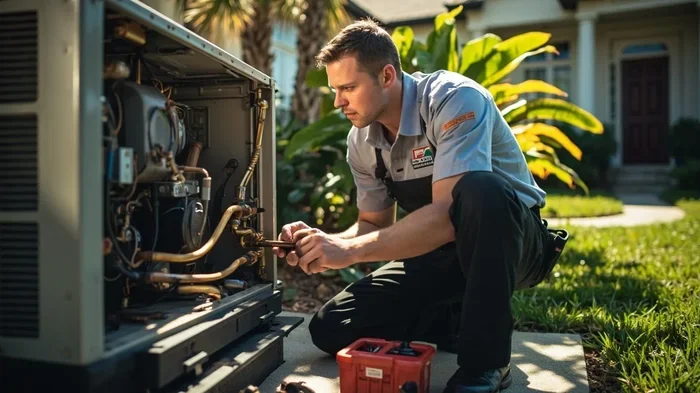
A professional will perform a full diagnostic. They measure suction and discharge pressures with gauges. They check the temperature split across the evaporator coil. They test the compressor windings for resistance and ground faults. They inspect the contactor, capacitor, and relay with specialized tools. They also check the refrigerant charge with a refrigerant leak detector. This thorough approach finds the root cause, not just the symptom.
Cost Expectations
A simple capacitor or contactor replacement costs $150 to $300 including parts and labor. A hard start kit install runs $200 to $400. If the compressor itself is faulty, replacement costs $1,500 to $3,000 or more, depending on the unit size and refrigerant type. In older systems with R-22 refrigerant, a compressor replacement often doesn’t make financial sense. A new unit with R-410A refrigerant is more efficient and reliable. A technician can help you weigh the options.
Expert Insight: Always get a written estimate before authorizing a compressor replacement. Ask the technician to show you the failed component and explain why it failed. A good tech will also check the system for the root cause, like a refrigerant leak or electrical issue, to prevent a repeat failure.
What to Do When Your Ac Compressor Won’t Start
When your ac compressor won’t start, stay calm and follow a logical sequence. Start with the simplest checks: thermostat setting, breaker position, and disconnect switch. Then move to the electrical components: capacitor, contactor, and wiring. Finally, consider the refrigerant system and mechanical condition. Most of the time, the fix is a $30 capacitor or a reset breaker. You don’t need to be a HVAC expert to handle these checks. The key is to be safe, be methodical, and know your limits. If the problem persists after basic checks, call a licensed professional. Your comfort and safety are worth it.
Prevention is the best medicine for a compressor not starting. Schedule annual maintenance with a qualified technician. They clean the coils, check refrigerant levels, tighten electrical connections, and test capacitors before they fail. A little prevention keeps your air conditioner compressor running smoothly for years. It also catches small problems before they become expensive compressor failure situations. Stay proactive, and your AC will keep you cool when you need it most.
Frequently Asked Questions
Why does my ac compressor won’t start even though the fan is running?
The indoor fan can run independently of the compressor. If the compressor is not starting, the fan might still operate because it’s on a separate circuit or the air handler is running in fan-only mode. The most common causes are a bad capacitor, a failed contactor, or a tripped compressor overload. Check the capacitor first, as it’s the easiest and cheapest fix.
Can a bad capacitor cause ac compressor won’t start?
Absolutely. A failed start capacitor prevents the compressor from getting the initial boost it needs to begin rotating. A failed run capacitor causes the compressor to hum, draw high current, and overheat. Testing the capacitor with a multimeter is the first step in diagnosing any ac compressor won’t start issue.
How much does it cost to fix an ac compressor that won’t start?
It depends on the cause. A capacitor replacement costs $150 to $250. A contactor replacement is similar. A hard start kit install runs $200 to $400. A full compressor replacement can range from $1,500 to $3,000 or more. Always get a diagnosis before committing to a major repair.
What does it mean when your ac compressor won’t start but the breaker isn’t tripped?
This usually points to an internal component failure rather than an electrical supply problem. The capacitor, contactor, or compressor relay could be bad. The thermostat might not be sending a cooling call. Or the low-pressure switch might have tripped due to low refrigerant. A systematic check of each component will reveal the culprit.
Is it worth replacing a compressor that won’t start?
It depends on the age and condition of the unit. If the compressor is less than 10 years old and the rest of the system is in good shape, a new compressor can be a smart investment. If the unit is over 15 years old and uses R-22 refrigerant, replacing the entire unit is often more cost-effective and energy-efficient. A professional can help you decide.
How can I prevent my ac compressor from not starting again?
Schedule annual maintenance to clean coils, check refrigerant levels, and test capacitors and contactors. Keep the outdoor unit clear of debris and ensure proper airflow. Replace air filters regularly. Install a surge protector to shield electrical components from power spikes. These steps dramatically reduce the chances of a compressor not starting in the future.