Compressor Wiring Made Easy Step By Step For Beginners
Compressor wiring can feel overwhelming, but this guide makes it simple. You will learn how to read wiring diagrams, connect wires safely, and avoid common errors. Whether you work with a single phase compressor or a three phase unit, this step by step tutorial covers everything you need. Follow along and wire your compressor like a pro in no time.
Compressor wiring might look scary at first glance. All those wires, terminals, and diagrams can make anyone feel lost. But here is the truth. With the right guidance, compressor wiring is something anyone can learn. This guide walks you through every single step. You will understand how your compressor motor gets powered. You will learn what each wire does. And you will feel confident when it is time to make your own wiring connections. Let us dive in and make this easy.
Whether you are a DIY enthusiast or a new technician, compressor wiring is a skill worth mastering. A wrong connection can damage your unit. It can even create serious safety hazards. That is exactly why this guide exists. We break everything down into simple, clear steps. No jargon. No confusion. Just straightforward electrical wiring advice you can use right away. By the end, you will know how to wire a compressor safely and correctly.
Key Takeaways
- Always disconnect power before starting any compressor wiring work. Safety comes first every single time.
- Understanding your compressor wiring diagram is the foundation. It tells you exactly where each wire goes.
- Use the right tools and safety gear to protect yourself. Insulated gloves and a voltage tester are essential.
- Common mistakes include loose connections and wrong terminal assignments. Double check every wiring connection before powering on.
- Regular maintenance of your electrical connections prevents future failures. A little care goes a long way.
- When in doubt, consult a licensed electrician. Professional help ensures code compliance and safety.
📑 Table of Contents
- Understanding Compressor Wiring Basics
- Tools and Materials You Will Need
- Reading a Compressor Wiring Diagram
- Step by Step Compressor Wiring Process
- Common Compressor Wiring Mistakes to Avoid
- Troubleshooting Compressor Wiring Issues
- Expert Tips for Safe Compressor Wiring
- Key Takeaways
- FAQs
- Conclusion
Understanding Compressor Wiring Basics
Before you touch a single wire, you need to understand the basics. Compressor wiring is all about connecting the right wires to the right terminals. Every compressor has a specific way it needs to be wired. This depends on the type of unit and the voltage supply it requires. Let us explore what makes compressor wiring work.
What Is Compressor Wiring?
Compressor wiring refers to the process of connecting electrical wires to your compressor’s terminals. These connections deliver power to the compressor motor. They also control how the motor starts and runs. A typical setup includes a power supply, a contactor, a capacitor, and the compressor leads themselves. Each component plays a vital role.
Think of it like a road map for electricity. The power comes from your electrical panel. It travels through wires and components. It reaches the compressor motor. And it makes the compressor run. If any part of that path is wrong, the compressor will not work. That is why compressor wiring must be done correctly.
Why Proper Wiring Matters
Proper compressor wiring is not just about making the unit work. It is about safety and longevity too. Wrong electrical connections can cause overheating. They can burn out your compressor motor. They can even lead to electrical fires. On the other hand, correct wiring connections ensure smooth operation. They protect your equipment. They keep you safe.
Here is a quick list of why proper wiring matters:
- Prevents electrical shorts and fires
- Protects your compressor motor from damage
- Ensures the unit runs efficiently
- Extends the lifespan of your equipment
- Keeps you safe from electrical shock
Tools and Materials You Will Need
Before you start compressor wiring, gather everything you need. Having the right tools makes the job faster and safer. You do not want to stop mid-project because you are missing something. Here is what you will need.
Essential Tools for Compressor Wiring
You do not need a fancy toolbox. A few basic tools will get the job done. Here are the essentials:
- Screwdrivers — flathead and Phillips head
- Wire strippers — for preparing wire ends
- Multimeter — to test voltage and continuity
- Voltage tester — to confirm power is off
- Wire nuts — for securing connections
- Electrical tape — for insulating connections
- Pliers — for gripping and bending wires
Safety Gear You Should Never Skip
Safety gear is not optional. It is a must. When working with electrical wiring, always wear:
- Insulated gloves — to protect your hands
- Safety goggles — to protect your eyes
- Non-slip footwear — to stay grounded
Never skip these items. Even if you think the power is off. Always double check with your voltage tester before touching any wires.
Reading a Compressor Wiring Diagram
A compressor wiring diagram is your best friend. It shows you exactly how to connect every wire. Without it, you are guessing. And guessing with electrical wiring is dangerous. Let us learn how to read one.
Common Terminal Layouts
Most compressors have three main terminals. These are labeled Common, Start, and Run. Each one has a specific job:
- Common (C) — This is the shared terminal. It connects to the voltage supply and the overload relay.
- Start (S) — This terminal connects to the start relay and the compressor run capacitor.
- Run (R) — This terminal connects to the power supply through the contactor.
Understanding these three terminals is the key to compressor wiring. Once you know what C, S, and R stand for, everything else falls into place.
Understanding the Schematic
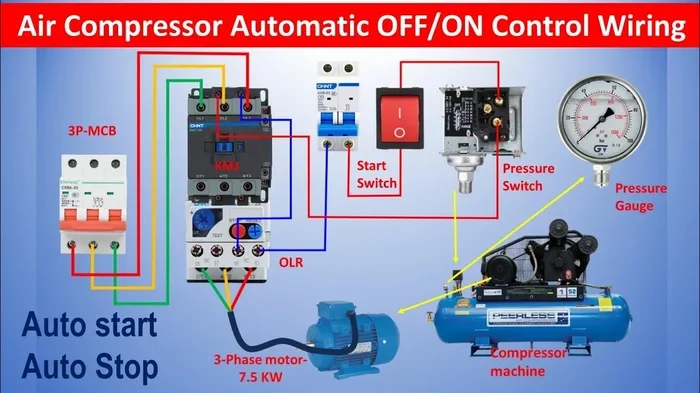
A compressor wiring diagram uses symbols to represent components. Lines show wires. Little shapes show relays, capacitors, and contactors. At first, it might look like a foreign language. But it is really quite simple once you learn the basics.
The electrical wiring diagram will show you the path electricity takes. It starts at the power supply. It goes through the contactor. Then it reaches the compressor motor. The start relay and capacitor help the motor get going. And the overload relay protects the motor from overheating. Follow the lines on your diagram, and you will see how it all connects.
Step by Step Compressor Wiring Process
Now for the part you have been waiting for. The actual compressor wiring process. We will go through it step by step. Take your time. Do not rush. And remember to always turn off the power first.
Step 1: Turn Off the Power
This is the most important step. Before you do anything, turn off the power at the circuit breaker. Then use your voltage tester to confirm there is no electricity flowing to the unit. Never skip this step. Electrical safety is not something you want to take lightly.
Step 2: Identify the Terminals
Open up your compressor’s terminal box. You will see three terminals. Look for the labels Common, Start, and Run. If the labels are faded or missing, check your compressor wiring diagram. The diagram will tell you which terminal is which. Use a multimeter if you need to double check. This step is the foundation of everything that follows.
Step 3: Connect the Wires
Now it is time to make the wiring connections. Here is the general process for a single phase compressor:
- Connect the ground wire to the compressor’s ground terminal. This is usually green or bare copper.
- Connect the power supply wire to the Common terminal.
- Connect the run wire from the contactor to the Run terminal.
- Connect the start capacitor and start relay between Common and Start.
- Secure all connections with wire nuts or terminal screws.
For a three phase compressor, the process is slightly different. You will have three power wires instead of two. Each wire connects to a different terminal. Always refer to your specific compressor wiring diagram for the exact setup.
Step 4: Test the Connection
Once all the wiring connections are in place, it is time to test. First, double check every connection. Make sure no wires are loose. Then turn the power back on at the breaker. Listen to the compressor. Does it start smoothly? Does it run steadily? If something sounds off, turn the power off again and recheck your work.
Use your multimeter to verify voltage at the terminals. You should see the correct voltage supply at each terminal. If the readings are off, something is wrong. Go back and check your electrical connections.
Common Compressor Wiring Mistakes to Avoid
Even experienced people make mistakes with compressor wiring. The good news is that most of these errors are easy to avoid. Here are the most common ones.
Skipping the Wiring Diagram
This is the number one mistake. People think they can wire a compressor from memory. They cannot. Every compressor model is different. Always use the compressor wiring diagram that came with your unit. If you lost it, look it up online or contact the manufacturer.
Loose Wiring Connections
Loose electrical connections are a fire hazard. They can cause arcing. They can overheat. And they can damage your compressor motor. Always tighten every terminal screw. Use quality wire nuts. Wrap connections with electrical tape for extra protection.
Wrong Voltage Supply
Connecting your compressor to the wrong voltage supply can destroy it instantly. A 220V compressor wired to 110V will not run properly. A 110V compressor wired to 220V will burn out. Always check your compressor wiring diagram for the correct voltage requirement before you start.
Ignoring the Ground Wire
Some people skip the ground wire to save time. This is a dangerous mistake. The ground wire protects you from electrical shock. It also protects your equipment. Always connect the ground wire properly.
Troubleshooting Compressor Wiring Issues
Even with perfect compressor wiring, problems can happen. The key is knowing how to troubleshoot. Here are the most common issues and how to fix them.
Compressor Won’t Start
If your compressor will not start, the first thing to check is the power supply. Is the breaker tripped? Is there voltage at the terminals? Next, check the start relay and compressor run capacitor. A faulty capacitor is one of the most common reasons a compressor fails to start. Use your multimeter to test the capacitor. If it reads zero or infinite, it needs to be replaced.
Compressor Runs but Overheats
Overheating often points to a problem with the overload relay or wiring connections. Loose electrical connections create resistance. Resistance creates heat. Check every terminal and connection point. Tighten anything that feels loose. Also make sure the voltage supply matches the compressor’s requirements.
Compressor Trips the Breaker
If your compressor keeps tripping the breaker, there may be a short circuit in your electrical wiring. Check for frayed wires. Look for bare copper touching the metal housing. Inspect the compressor leads for damage. A short in the wiring connections will cause the breaker to trip repeatedly.
Expert Tips for Safe Compressor Wiring
Here are some expert tips that will make your compressor wiring projects safer and easier. These are the things professionals do every day.
- Always label your wires before disconnecting anything. Take a photo of the original wiring if possible.
- Use color coded wires when possible. Black for hot, white for neutral, and green for ground.
- Keep your work area clean and dry. Moisture and electrical wiring do not mix.
- Take your time. Rushing through compressor wiring is how accidents happen.
- Keep your compressor wiring diagram handy throughout the entire process.
- When in doubt, call a licensed electrician. There is no shame in asking for help.
These tips might seem simple. But they make a huge difference. Following them will keep you safe. They will also help your compressor run smoothly for years to come.
Compressor wiring is a skill that builds confidence. Every time you wire a compressor correctly, you get better. You learn more about how these machines work. You become more comfortable with electrical connections. And that confidence is worth every bit of effort you put in.
Remember, compressor wiring is not about being perfect on the first try. It is about being safe, careful, and willing to learn. Use your compressor wiring diagram. Take your time. Check your work twice. And do not be afraid to ask for help when you need it.
Key Takeaways
- Always disconnect power before starting any compressor wiring work. Safety comes first every single time.
- Understanding your compressor wiring diagram is the foundation. It tells you exactly where each wire goes.
- Use the right tools and safety gear to protect yourself. Insulated gloves and a voltage tester are essential.
- Common mistakes include loose connections and wrong terminal assignments. Double check every wiring connection before powering on.
- Regular maintenance of your electrical connections prevents future failures. A little care goes a long way.
- When in doubt, consult a licensed electrician. Professional help ensures code compliance and safety.
FAQs
What is compressor wiring and why is it important?
Compressor wiring is the process of connecting electrical wires to your compressor’s terminals to deliver power to the motor. Proper wiring ensures safe operation, prevents damage to the compressor motor, and keeps your equipment running efficiently for years.
Can I wire a compressor myself as a beginner?
Yes, you can learn compressor wiring as a beginner as long as you follow the right steps. Always use the compressor wiring diagram that came with your unit, turn off the power first, and take your time. If you ever feel unsure, do not hesitate to call a licensed electrician for help.
What tools do I need for compressor wiring?
The essential tools for compressor wiring include screwdrivers, wire strippers, a multimeter, a voltage tester, wire nuts, electrical tape, and pliers. Having these tools ready before you start makes the process smoother and safer.
What are the common terminal labels on a compressor?
Most compressors have three main terminals labeled Common (C), Start (S), and Run (R). The Common terminal connects to the power supply, the Start terminal connects to the start relay and capacitor, and the Run terminal connects to the contactor and power supply.
How do I know if my compressor wiring is correct?
After completing your wiring connections, use a multimeter to check voltage at each terminal. The readings should match the voltage supply specified in your compressor wiring diagram. Also listen for smooth startup and steady operation when you power the unit on.
What should I do if my compressor won’t start after wiring?
First, check that the power is on and the breaker has not tripped. Then verify all electrical connections are tight and correct according to the compressor wiring diagram. A faulty start relay or compressor run capacitor is often the culprit when a compressor will not start.
Conclusion
Compressor wiring does not have to be intimidating. With the right knowledge, the right tools, and a little patience, anyone can do it. We covered the basics of compressor wiring in this guide. You learned how to read a compressor wiring diagram. You learned the step by step process for making safe wiring connections. And you learned the common mistakes to avoid.
The key to successful compressor wiring is preparation. Know your compressor leads. Understand your electrical connections. Follow the diagram. And never skip safety steps. Whether you are wiring a single phase compressor or a three phase compressor, the principles remain the same.
Now it is your turn. Gather your tools. Find your compressor wiring diagram. And start your compressor wiring project with confidence. You have got this. And remember, every job you do makes you better. Happy wiring!